Politics & Government
Legislative Committee Votes To Expand Audit Of Education Freedom Account Program
Both the residency of participants and their academic attainment will now be included in the audit.

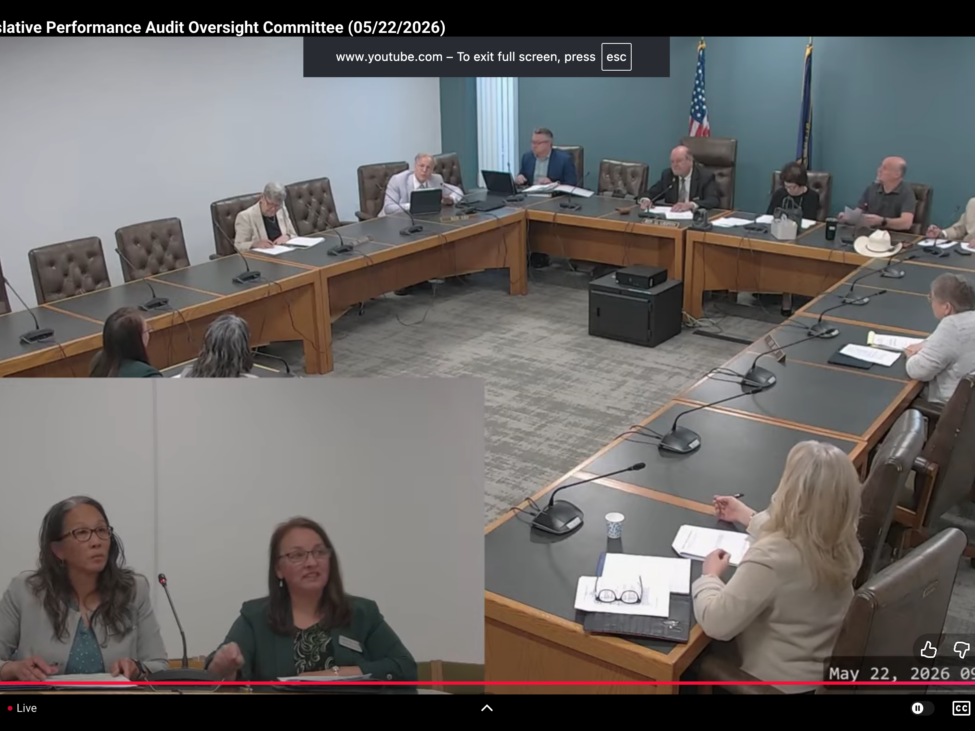
CONCORD, NH — Lawmakers decided Friday to expand the performance audit of the Education Freedom Account program to include the residency of participants and their academic attainment, both areas previously off-limits to Legislative Budget Assistant auditors.
Christine Young, LBA Director of Audits, told the committee her office is working with the Department of Education to finalize a cooperation agreement to present to the program’s administrator, Children’s Scholarship Fund NH, to make data available to determine if students in the program last school year and this school year are residents of the state and students’ educational attainment over the same two years.
Find out what's happening in Across New Hampshirefor free with the latest updates from Patch.
Currently the LBA has been auditing the department’s oversight of the program after the scholarship organization refused to share data with LBA auditors to complete a performance audit of the program required by law.
Initially the organization was cooperating with auditors until former commissioner Frank Edelblut raised separation of powers concerns between the legislative and executive branch over the information needed for the audit.
Find out what's happening in Across New Hampshirefor free with the latest updates from Patch.
He claimed and the attorney general’s office agreed the legislature could not have access to the data from an executive branch contract with the program’s administrator.
However, with new leadership at the Department of Education, the agency has agreed to be an intermediary between the legislative auditors and the private contractor, Sen. Timothy Lang, R-Sanborton, told his fellow committee members of the Legislative Performance Audit and Oversight Committee.
From last school year to the current school year the program has nearly doubled from 5,765 students to 10,510 after lawmakers opened the program to all New Hampshire students. For the first four years of the program family income could not be greater than 350 percent of the federal poverty level or about $115,500 for a family of four and $75,740 for a family of two.
The scholarship organization receives up to 10 percent of the grants for administering the program but has averaged a little less than 8 percent for administrative costs.
This year the program is projected to cost $52 million, and spent more than $30 million last school year. Since the voucher program began in the 2021-2022 school year, the state has spent $129 million mostly for tuition payments to religious and private schools, and homeschool programs for students who were not attending public schools when they joined the program.
The average student grant is about $5,000 although some students may receive nearly $9,000 with differentiated aid.
Lang said there had been so many letters after a number of towns passed warrants articles this spring opposing the program or further expansion without greater oversight.
As a result he raised the issue of expanding the audit at the committee's April meeting to include residency of students and educational achievement in the current audit.
At Friday’s meeting, the committee approved a draft letter outlining the expansion of the scope of the performance audit.
Vilay Skidds, LBA senior audit manager, explained the expanded audit would determine if the students were state residents when they qualified for the program and during their time in the program.
She said the administrator has expanded the number of documents from earlier in the program that can be used to prove state residency.
She said students currently have three options for proving educational progress: national standardized tests, the state assessment test and a portfolio reviewed by a teacher.
Skidds said the expanded scope would be contingent on the three parties reaching a written agreement on auditor access to necessary CSF personnel; source documents, records, and data; and CSF policies, procedures, manuals, and other internal guidance.
Young said they hope to present a proposal to the scholarship fund after they reach agreement with the department, which they hope to do soon.
The auditors are wrapping up their work on the audit of the department’s oversight, Young said, and have written drafts for 29 of the 43 observations they found.
When it will be completed is uncertain with the expanded scope, she noted.
“We’d like to schedule a meeting as soon as the details are finalized,” she said.
The department raised five concerns in the draft of the agreement, including changing educational progress to educational attainment requirements, Young said.
She said the auditors will need the same access to CSF data as the department’s program administrator had when he issued a compliance report two years ago.
That report found 25 percent of the 100 applications monitored over the first two years of the program contained errors impacting residency and differential aid students receive for poverty, special education and English language learners.
The CSF updated its guidelines and reimbursed the state for overpayments due to the errors.
Sen. Cindy Rosenwald, D-Nashua, asked when a student moves out of state during a school year, do he or she continue to receive state money.
Skidds said money is sent for the parents to the CSF four times a year and parents are asked to report just prior to the payments, but some leave near the payment date and do receive a payment that needs to be returned.
The department does a reconciliation once at the end of the year to determine if money needs to be returned, she said.
Lang said the Joint Legislative Committee on Administrative Legislative Rules has taken care of that issue by requiring the department to draft new rules for doing reconciliations much more frequently.
“That is so we can get our money back much more quickly,” Lang said, and put it back into the Education Trust Fund.
He said between $1 million and $2 million is returned to the state every year for various reasons, mostly because it is not used.
Several of the members of the committee wanted to see the cooperative agreement from the LBA and Young said they are trying to finalize it now, but it is a draft.
Young said they are trying to get in front of the situation and have a written document of the access they need to do the expanded audit, because without access to the information they will not be able to do the audit for residency and educational attainment.
“We do not want to start work and then hit roadblocks as we go forward,” Young said.
Rep. Lucy Webber, D-Walpole, said she is glad they are expanding the scope of the audit, but she has been frustrated since the beginning of the process by the lack of cooperation after the department stepped in and said it was inappropriate for the legislative branch to have that information.
She said the contract with CSF clearly says the data belongs to the state, but the department and attorney general said it does not.
“We are tracking tax dollars to the maximum extent and suddenly there is a bar in this one case,” Webber said. “I just think that is wrong and I am very glad we are proceeding with caution to get the information we need.”
Rosenwald said she agreed the contract says in plain English the date belongs to the state as it does for the Medicaid expansion contract with the managed care organizations.
The problem the attorney general expressed was not that the department of education could not get the information from the CSF, but that the legislative branch was asking an executive branch contractor for the data, Rosenwald said.
She said she hopes there is no problem reaching agreement with the contractor, but if the information cannot be shared directly with the legislative branch, it can be shared with the DOE, which in turn can share it with the legislative branch.
Lang said the department has agreed to be an intermediary and there has been movement in the right direction.
He noted there are limits, such as they cannot force CSF employees to sit for an interview and they cannot have unlimited access to the data system.
Rep. Keith Erf, R-Weare, said he would like to see the draft agreement, noting there are some inaccuracies that need to be resolved.
He said he did not want to approve anything until he had more information, but Lang said all he wants to do is to approve two statements in the draft letter for expanding the scope on residency and educational attainment so the LBA could go forward.
Eventually the committee agreed unanimously to approve the two statements on residency and educational attainment.
Garry Rayno may be reached at garry.rayno@yahoo.com.
This article first appeared on InDepthNH.org and is republished here under a Creative Commons license.