Politics & Government
'Let Them Eat Choice': Warmington Says Parents Can Choose — If They Can Pay
Cinde Warmington reiterated her opposition to Education Freedom Accounts on WMUR-TV; advocates say she made false claims about the program.


Education Freedom Account opponent Cinde Warmington says New Hampshire parents already have school choice.
They can send their children to any school they want. As long as they can afford it.
Find out what's happening in Across New Hampshirefor free with the latest updates from Patch.
Ryan Bilodeau of the Children’s Scholarship Fund New Hampshire agrees. The difference is that he thinks limiting school choice because of income is a bad thing.
“But before 2021, school choice was only for the wealthy. The EFAs have offered us a way forward for the less well-off to actually have school choice,” Bilodeau said.
Find out what's happening in Across New Hampshirefor free with the latest updates from Patch.
Warmington, the Democratic nominee for governor, made her remarks during Sunday’s episode of WMUR’s “Conversations With the Candidates,” reiterating her opposition to the state’s EFA program, which allows students to use the state portion of their K-12 education funding to fund other options, including private school, parochial school or homeschool.
Warmington called the EFA program a “pickpocket scheme,” claiming it takes $100 million from working people and hands it to the state’s wealthiest families. She said the money should instead go into public school budgets.
“It is driving up property taxes across the state. It is undermining public education,” Warmington said.
As for the argument that parents should be able to pick the best education available for their children, even if that’s not the local public school they’ve been assigned to, Warmington said they already can—if they have the money.
“People have school choice. Parents can choose to send their children wherever they want to send them. But this education voucher scheme needs to stop,” Warmington said.
“I was a product of public education, and I believe that without it, many kids will never have the opportunity to meet their potential,” she added.
What Warmington didn’t add is that both of her children attended the elite Tilton School for secondary education, an independent boarding and preparatory school in New Hampshire. Tilton charges $47,000 for day school and nearly $75,200 for boarding school.
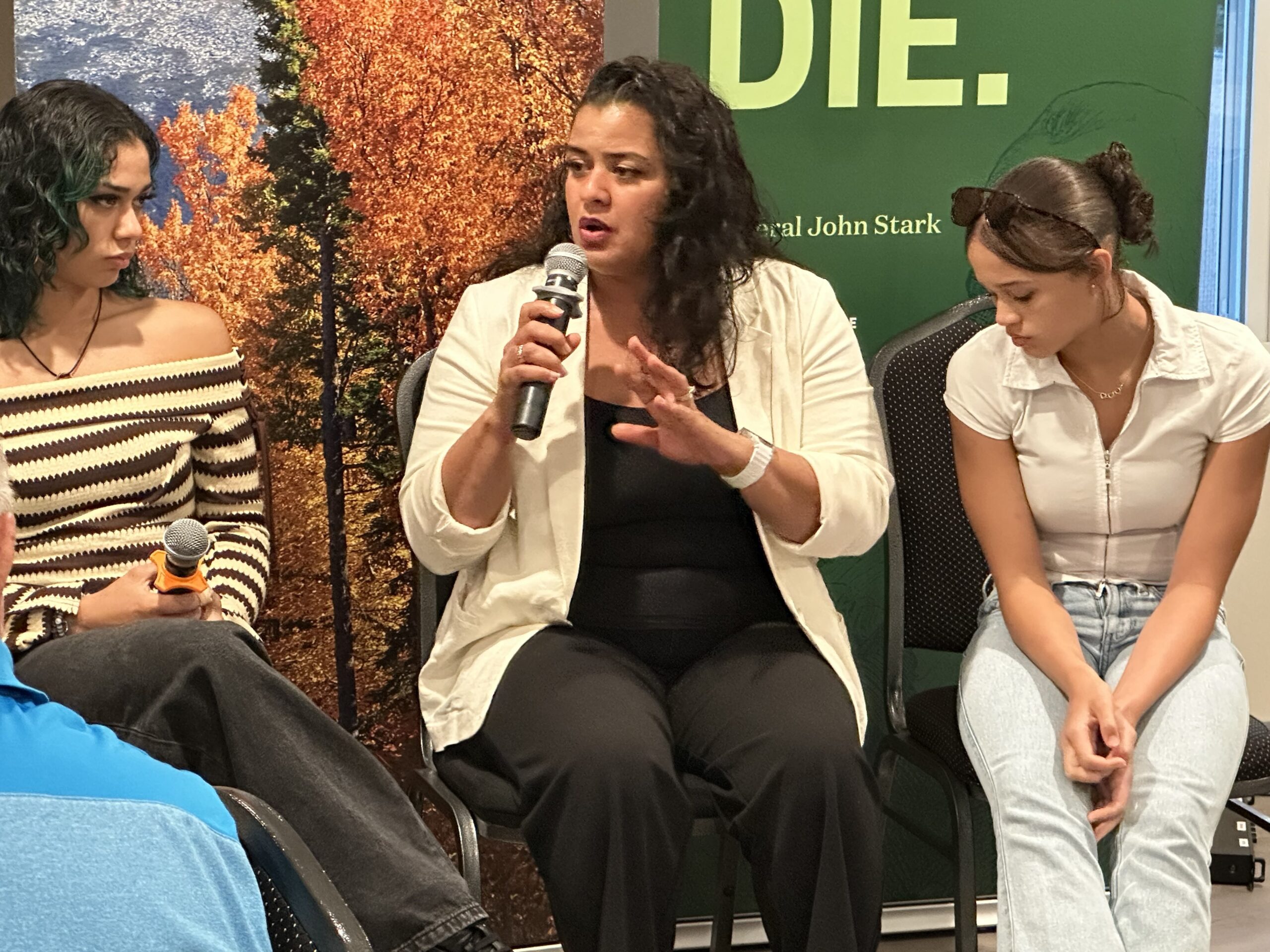
Bilodeau made his comments last week at a school choice roundtable in Windham hosted by Americans for Prosperity.
Asked about elected officials who used private schools for their own children but oppose helping other families do the same, Rep. Erica Layon, R-Derry, did not mince words.
“I think it’s elitism of the worst kind,” Layon said. “The idea that because I have money, I can give my kids this opportunity, but not allowing anybody else that same opportunity, I think it’s disgusting.”
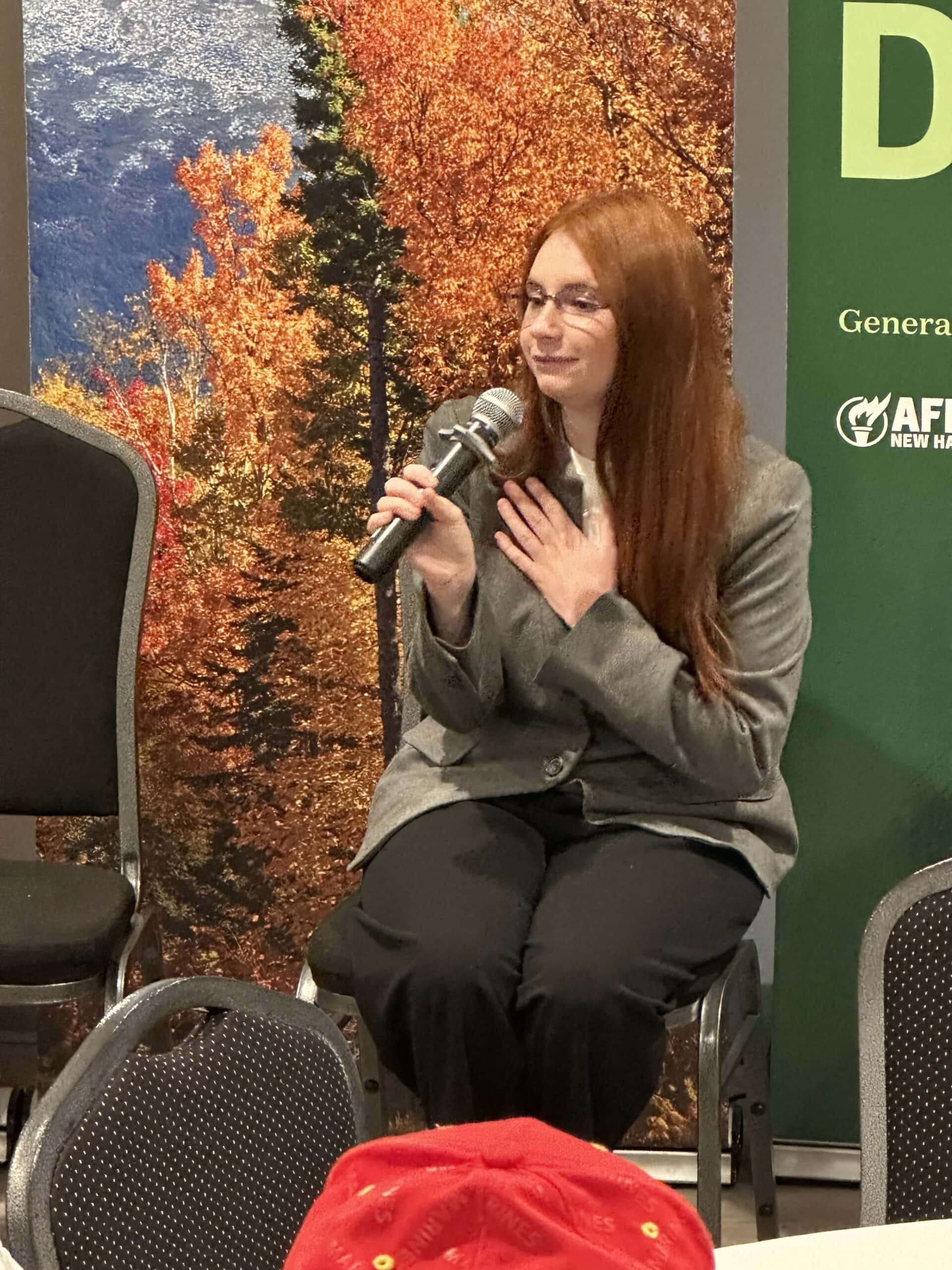
The remarks were personal for EFA student Alyssa Sosa-Molina, who grew up with a single immigrant mother who attempted to homeschool. When that stopped working for her at age 15, a choice scholarship helped her attend a small private school. She later used an EFA while dealing with Lyme disease.
Sosa-Molina said the smaller school helped her overcome difficulties with math, work from home when illness kept her out of class, and graduate with all A’s.
“I honestly can’t imagine what I would be without it,” Sosa-Molina said. “When you give that child the ability to go to the school that best suits their needs, education can change that child’s future.”
Bilodeau, the scholarship fund’s public engagement manager, said about 13,000 students are participating in the EFA program. He said 76.4% would have qualified under the former income limit of 350% of the federal poverty level, rebutting Warmington’s charge that the program primarily benefits the rich. He also said about 1,000 students were waiting for openings.
New Hampshire created EFAs in 2021, allowing families to use the state-funded portion of a child’s public education allocation for approved expenses, including private school tuition, tutoring, textbooks, curriculum and other educational services.
Gov. Kelly Ayotte, Warmington’s Republican opponent, listed expanding EFA access among the GOP’s list of accomplishments during Monday’s Republican Unity Breakfast.
“We expanded education freedom, we strengthened parental rights, we banned sanctuary cities — we are the only state in New England that actually banned sanctuary cities — and we got cellphones out of the classrooms, and we can go on and on.”
Despite choosing a private school for her own children, Warmington’s opposition to school choice extends even to public charter schools. In January 2021, on her first day as an executive councilor, she cast the sole vote against New Hampshire accepting the first $10.1 million of a federal grant designed to open and expand charter schools.
Warmington claims that ending the EFA program can help lower local property taxes, arguing the costs are “downshifted” onto local school budgets. But because the EFAs only take the state’s portion of the student’s funding, typically around one-third of the total, local property tax dollars — the other two-thirds — remain with the district, increasing the schools’ per-pupil cash on hand.
For Vilenky Rios, who participated in the roundtable with three of her four children, the real issue isn’t the money. It’s the math tutoring she was able to get for one of her homeschooled kids.
“With our income, it was really hard to afford books and things. Thank God that I was able to get the scholarship,” she told the roundtable.
Asked about Warmington’s comment, Rios was reluctant to be negative, in deference to her Christian faith.
“If somebody’s thinking like that, your thoughts and your lifestyle are going to catch up with you,” Rios said. “Whatever you’re putting out, you really are going to reap what you sow into people.”
This story was originally published by the NH Journal, an online news publication dedicated to providing fair, unbiased reporting on, and analysis of, political news of interest to New Hampshire. For more stories from the NH Journal, visit NHJournal.com.