Politics & Government
More Oversight On NH Coalition Against Domestic, Sexual Violence Backed By Committee
An amendment ensures the Coalition is subject to the state's right-to-know law and requires an annual report to the Legislature.

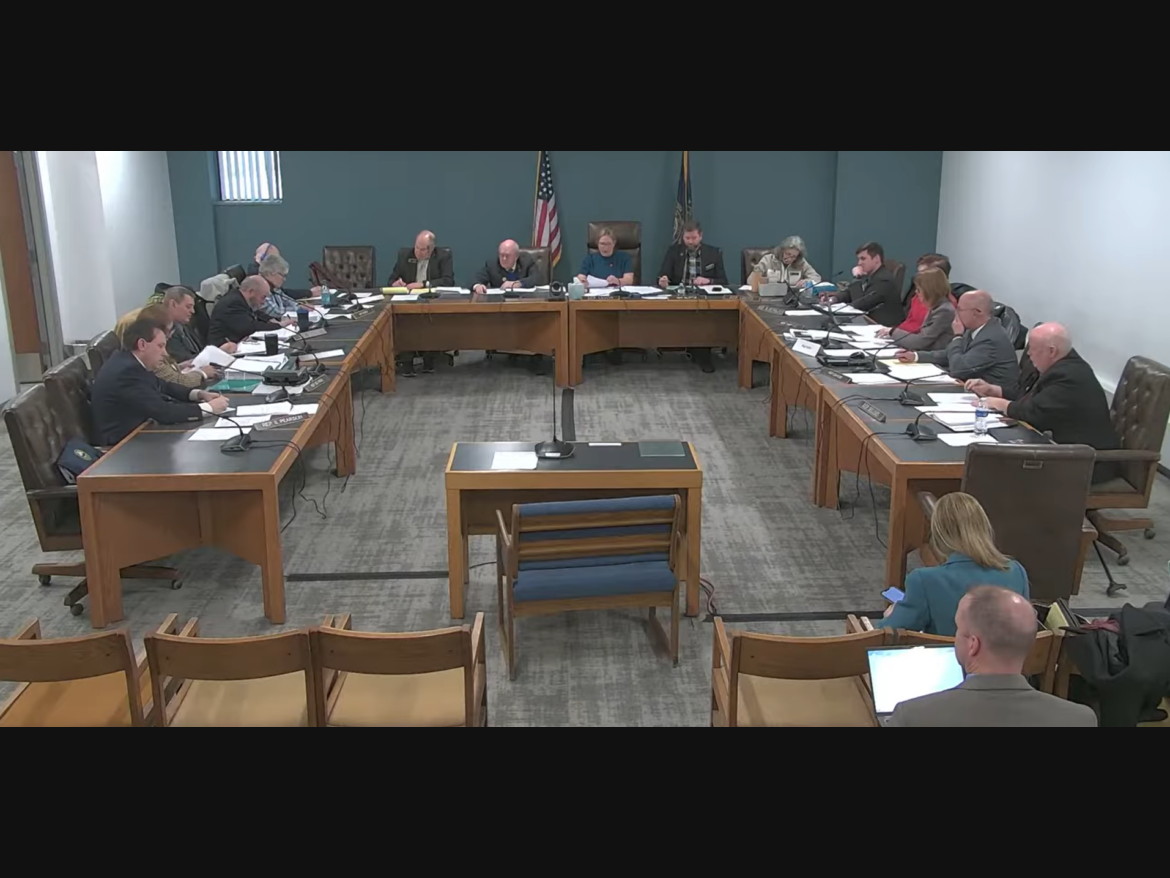
CONCORD, NH — The House Executive Departments and Administration Committee voted to recommend passing House Bill 1675 with an amendment expanding oversight of the New Hampshire Coalition Against Domestic and Sexual Violence.
During an executive session on the bill during Tuesday’s committee meeting, Rep. Erica Layon, R-Derry, explained there is a replace-all amendment in section 1 of the bill.
Find out what's happening in Across New Hampshirefor free with the latest updates from Patch.
The amendment makes sure the Coalition is subject to 91a, the state's right-to-know law and that it produces an annual report to the legislature and the executive branch.
“As this, they are performing a government function. Therefore, my reading of 91a suggests they are already subject to 91a, but I do know there is discussion and debate as to whether that is true. By having the grant program coordinator, their direct service grantees, and their sub-grant contractors clarified as subject to 91a, that clarifies the transparency that I believe already exists in law… and I believe that that is a good governance move to make sure that the information that is appropriate is available,” Layon said.
Find out what's happening in Across New Hampshirefor free with the latest updates from Patch.
She noted that the Hampstead Hospital and the New Hampshire Hospital are both state agencies that are subject to 91a, but that the individual privacy of patients is protected through the 91a process.
“It would be no different than applying this to whoever the grant program coordinator is versus our other sensitive uses of information,” Layon said.
Layon said that there are two funds critical to victims in the state getting the services they need: the Domestic Violence Grant program, and the Victims Assistance Grant program. She noted the former is administered through DHHS, and that the legislation would require an annual report of all the programs pursuant to the fund that “would have the terms and conditions of the state grants and federal awards (and) how those were met or unmet.”
It would also include the identification, recovery, and reporting of ineligible, improper, or misused expenditures of state and federal funds, along with public reporting of grant activities and use of funds.
“Sunlight is the best answer, and this (bill) brings sunlight and clarity as to what the state is doing and what the state’s partners are doing. So, I believe this is a way to get the information we need, which should be able to restore trust. By doing that and working together, we can understand what the process is (and) make sure the people we need to be assisting — and victims we need to be supporting — are appropriately supported,” Layon said.
In a follow-up conversation, prime sponsor of the bill Rep. Ellen Read, D-Newmarket, said that “essentially, the structure of the coalition is that millions and millions of dollars from federal and state funds are outsourced to government contractors that have zero transparency or accountability.”
Read said the coalition — which is funded 98 percent by both state and federal funds — doesn’t publish any of its books in the way the government does for budgeting. She said similar things are happening with coalitions like Florida, California, and Tennessee.
“The Supreme Court of the state has ruled yes over the last five or so cases that were asking if a private nonprofit that’s funded by the government falls under 91a. It’s ruled yes in every single case… So, we think that a 98 percent government-funded entity should fall under 91a, we should be able to see where that money is going,” Read said.
She continued that as a survivor of sexual assault herself, she takes these services very seriously and wants the funding to go where it’s supposed to.
This article first appeared on InDepthNH.org and is republished here under a Creative Commons license.