Politics & Government
New Hampshire Adds 8 Properties To State Register Of Historic Places
A former coffin shop, a summer camp, and several churches are among the newly recognized sites across New Hampshire.



CONCORD, NH — The New Hampshire Division of Historical Resources has announced the addition of eight properties to the N.H. State Register of Historic Places.
These properties were approved by the State Historical Resources Council.
The United Methodist Church in Alexandria, built in 1819, was one of the properties added. Its church bell served as the town’s fire alarm during the 1930s and 1940s. The church continues to host community suppers and rummage sales.
Find out what's happening in Across New Hampshirefor free with the latest updates from Patch.
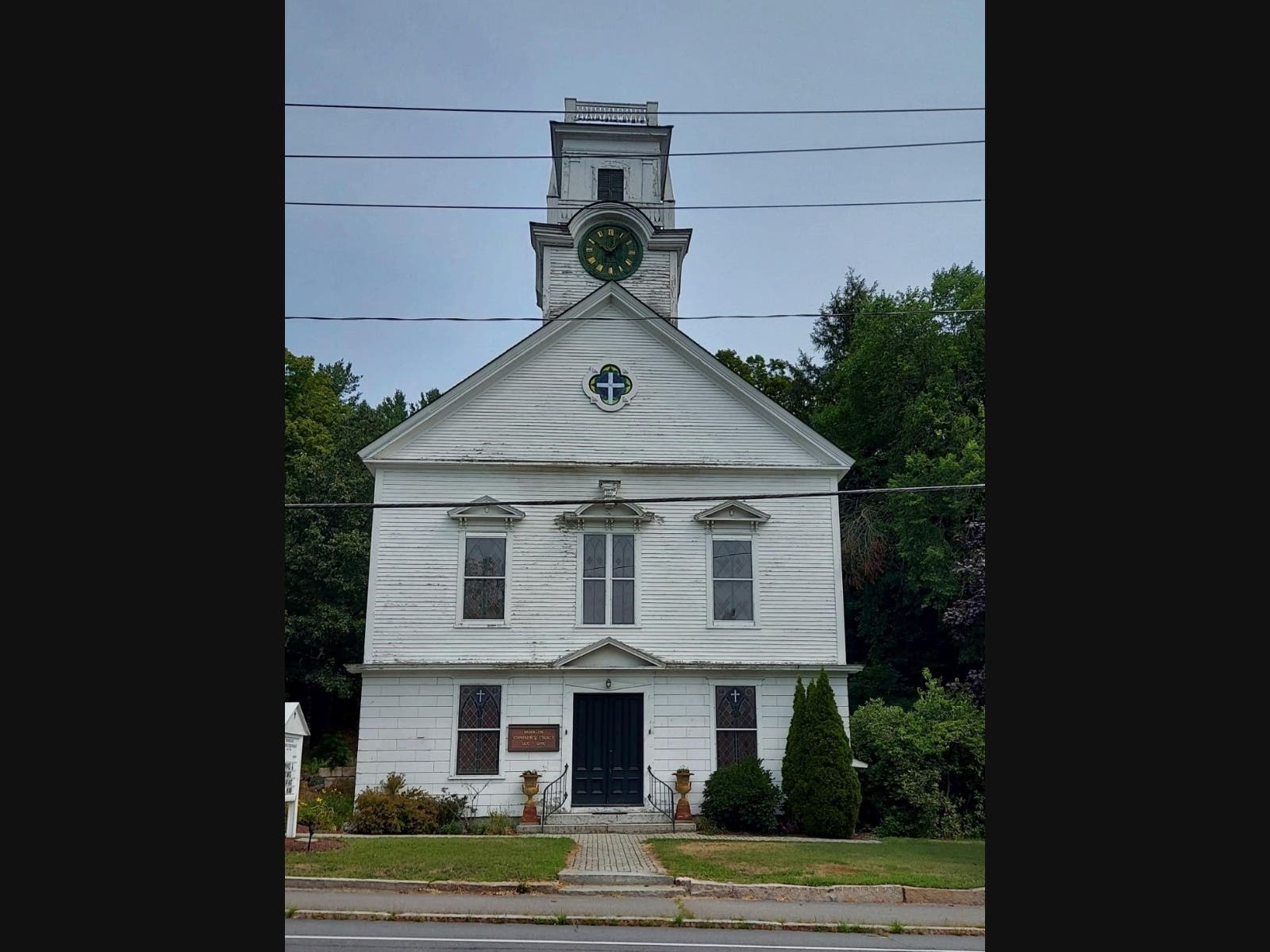
Brookline Community Church, constructed in Greek Revival style in 1838, is the oldest public building in Brookline serving its original purpose. It provides meeting space for community groups and holds traditional events like pasta dinners.
The Deerfield Historical Society Museum, built circa 1850, was initially a carpentry shop producing coffins. Its second floor housed the International Order of Odd Fellows. The building later became a shoe shop, supplying women’s shoes to Sears and Roebuck.
Find out what's happening in Across New Hampshirefor free with the latest updates from Patch.
Littleton Regional Hospital, established in 1906, was recognized for its role in regional medical treatment and its architecture. Prominent regional architect Chase Roy Witcher designed its main neoclassical-style building. Witcher also designed buildings for the state, including the N.H. State Hospital.
Riddle House in Manchester, built circa 1844, features Federal and Greek Revival architectural details. Its first owner, Isaac Riddle, was instrumental in Manchester's development. His step-daughter Fanny supported local institutions through her will.
Camp Kuwiyan, a former girls' summer camp on Lake Winnipesaukee, operated from 1927 to 1956. Several historic buildings from 1905 to 1930 remain on site, including the lodge and dining platform.
Salisbury’s Baptist Meeting House, built by parishioners in 1794, is a well-preserved example of an eighteenth-century meetinghouse. It has been used for Old Home Day speeches, weddings, funerals, and special community occasions since the mid-1920s.
The South Weare Union Church, completed in 1876, reflects changing tastes in mid-1870s church architecture. Its American Gothic Style features a flashed glass rose window and a steeply pitched gable roof. Weare’s Congregationalists and Universalists negotiated to share the space.
Property owners can nominate a property to the N.H. State Register of Historic Places by researching its history and documenting it on an individual inventory form from the N.H. Division of Historical Resources. Listing a property does not impose restrictions on owners, according to the N.H. Division of Historical Resources.
Get more local news delivered straight to your inbox. Sign up for free Patch newsletters and alerts.