Politics & Government
New Hampshire House Bucks GOP Leadership And Approves Battery Recycling Program
HB 1602 would allow the state to join other states in a battery manufacturers' program to provide recycling for lithium and rechargeables.

CONCORD, NH — The House ignored its Republican leadership and voted by a large margin to establish a battery recycling stewardship program targeting lithium batteries.
House Bill 1602 would allow the state to join other states in a battery manufacturers' program to provide recycling for lithium, rechargeable and alkaline batteries with the cost recovered nationwide by the manufacturers through pricing.
Find out what's happening in Across New Hampshirefor free with the latest updates from Patch.
Supporters of the program include business and municipal organizations, the state’s solid waste operators, fire fighting professionals and numerous environmental and conservation organizations.
Supporters said the program will allow people to easily recycle their batteries, will help prevent fires and toxic chemical releases, and will allow the reuse of critical rare earth materials needed for electronics and battery production.
Find out what's happening in Across New Hampshirefor free with the latest updates from Patch.
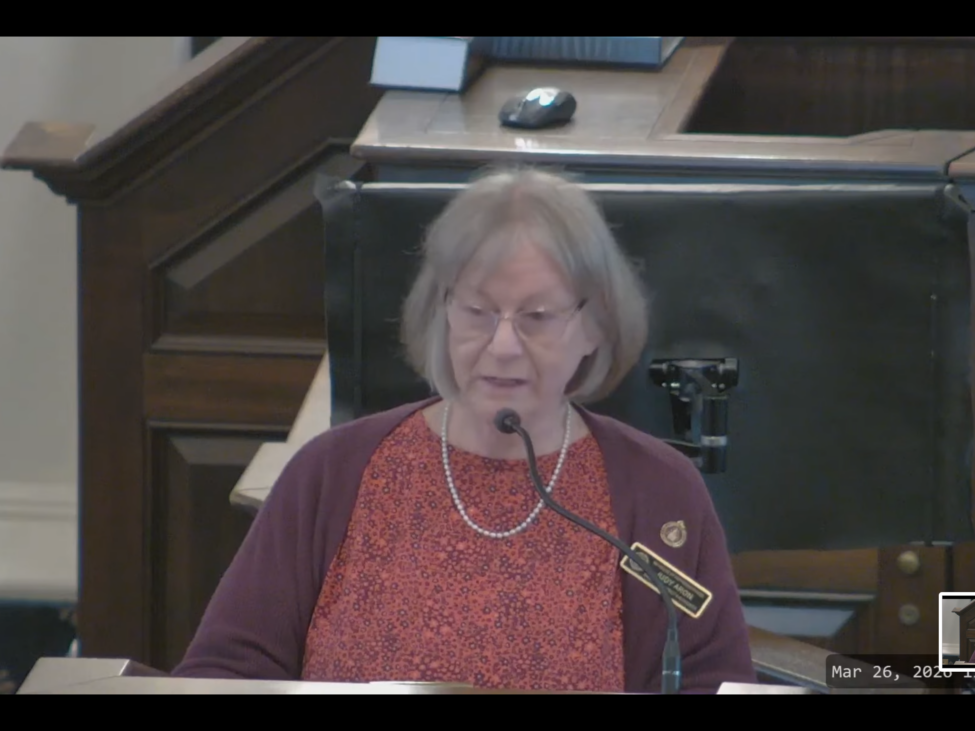
Rep. Judy Aron, R-Acworth, said there is nothing more to study about the bill and the House should send it along to the Senate.
“This is not a tax, the costs are built into the product every day,” she said. “Calling this a tax is inaccurate and ridiculous.”
It addresses the fire threat from lithium batteries, provides safe disposal options, will save municipalities money that now goes on to property taxes, and shifts the costs to manufacturers where it belongs, she said.
“It is not just safety, it is national security by reducing the dependency on foreign supply chains,” Aron said. “This is not radical politics or European socialism. That is mumbo jumbo.”
In his report on the bill for the calendar, Rep. Dan McGuire, R-Epsom, referred to the stewardship organization collecting the batteries as a cartel.
But opponents said the bill is not what it appears to be and establishes a process that would create a monopoly that would put current recyclers out of business and “smells like a tax that is theft.”
During House debate, McGuire said the bill would give the stewardship organization the power to control the state’s battery market with no governmental limits or controls.
“This does not compel anyone in New Hampshire to recycle batteries,” he said. “We have already banned toxic batteries (from landfills and incinerators.) This is a voluntary program that is not going to change what goes into trash at all.”
McGuire said some say the recycled material is valuable and will stay in the United States, but most of the processing of batteries and reclaiming material is done in China.
And he said the program excludes batteries that are serious health and safety problems.
But Rep. Kelley Potenza, R-Rochester, which is home to the state’s largest landfill, which recently lost its recycling building to a fire caused by a lithium battery, said if the batteries are not recycled the harmful materials will find their way into the environment and pollute the ground and water down to the bedrock.
Potenza said over the last 30 years more than 40 tons of trash has gone into the Turnkey Landfill and the leachate from that trash will live long after the landfill is closed.
“We need to keep batteries out of the waste stream and into a system designed to handle them safely to protect the community and help with national security,” Potenza said. “This should not be reduced to sound bytes and political games.”
“What we leave behind, once it is damaged, we will not get it back,” she said.
The prime sponsor of the bill Rep. Karen Ebel, D-New London, who is the chair of the Solid Waste Working Group, which is the genesis of the bill, said in her report to House members “HB 1602 is a top priority, business-operated program enhancing employee and first responder safety and keeping hazardous waste out of landfills. There’s no state-imposed or industry-imposed state specific fee. All recycling costs are borne by the battery manufacturers, which support the nationwide effort to recoup valuable critical minerals from enhanced battery collection.”
The bill was unanimously supported by the House Environment and Agriculture Committee and passed the House initially on a 264-72 vote, but ran into opposition in the House Finance Committee from the House Majority Office which claimed it was a tax on batteries which was echoed by Americans for Prosperity, a Koch Foundation group as well as the similarly aligned Josiah Bartlett Center for Public Policy.
However, the House passed the bill on a 244-112 vote after voting down an attempt to send the bill to interim study, a polite death in the second year of a term because the next legislature does not have to take up the interim study report.
The bill now goes to the Senate for action.
Garry Rayno may be reached at garry.rayno@yahoo.com.
This article first appeared on InDepthNH.org and is republished here under a Creative Commons license.