Politics & Government
New Hampshire House Votes To Overturn Court's ConVal Decision
HB 1815 would have the state and districts share the obligation. The bill does not set a minimum for the state's contribution to schools.

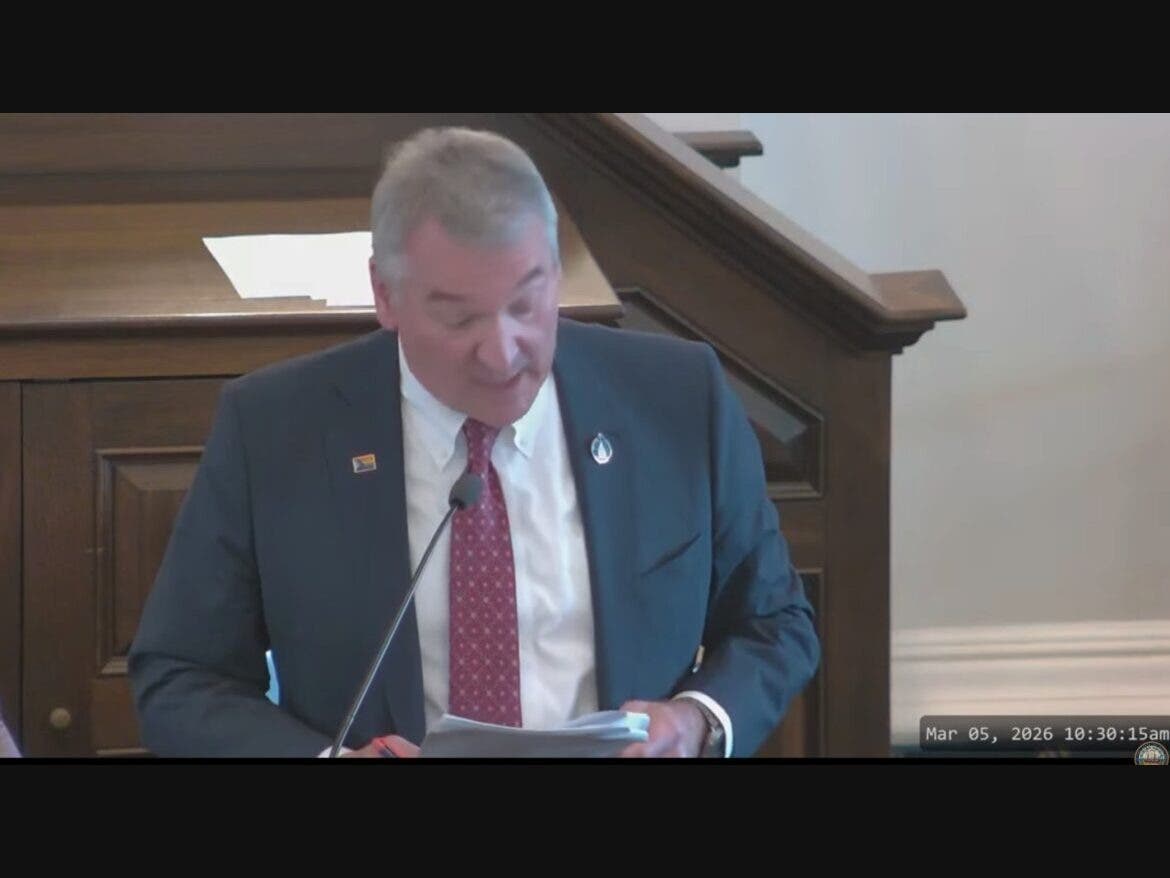
CONCORD, NH — The state would no longer have to pay for an adequate education for the state’s students under a bill approved by the House Thursday.
Supporters of House Bill 1815 said it is a response to the growing judicial overreach into education financing and policy, while opponents said it would allow the state to step away from its obligations to the state’s children and taxpayers that have not been met for over 30 years.
Find out what's happening in Across New Hampshirefor free with the latest updates from Patch.
The bill is intended to be the Republican’s legislative response to the Supreme Court’s ConVal decision backing a superior court ruling that the state has failed to meet its constitutional obligation to pay for an adequate education of students and has relied on local property taxes to make up the difference.
The bill would have the state and local school districts share the obligation and does not put a foundation or set a minimum for the state’s financial participation.
Find out what's happening in Across New Hampshirefor free with the latest updates from Patch.
The bill also states that school districts are subdivisions of the state and subject to the policies the legislation sets, and decisions how public schools are financed are a matter of public policies which is the purview of the legislature and executive branch and not the courts.
Former Supreme Court Chief Justice Bob Lynn, R-Windham, called the ConVal decision deeply flawed and said it would have the state write a check for millions of dollars requiring an income or sales tax.
Since the original Claremont decision, Lynn said, they have seen “the increasingly intrusive invasion by the court into the Legislative’s prerogative.”
Lynn said the bill does not change the core 11 academic areas that constitute an adequate education, but makes clear both the state adequacy aid and the differentiated aid for poverty, special education and non-English speaking students are the state’s contribution to the cost of an adequate education not just the adequacy aid, as the court found.
“This is a sensible and reasonable response to the ConVal case,” Lynn said, “that allows a first-rate education for students without fundamentally changing the tax structure and without changing the flexibility our citizens desire.”
But Rep. David Luneau, D-Hopkinton, said the state has failed to live up to its obligations since the 1993 Claremont decision to provide its children a fair adequate education.
Still the state has high-quality public education that is in the top five nationally, while New Hampshire is last in state support.
Local property taxpayers have been opening their wallets to fund the best schools and best budgets they can provide, but that doesn’t happen everywhere, he said.
People hope that some day the state will do the right thing so every kid has a positive outcome, Luneau said, noting 90 percent of the state’s children go to public schools and aren’t leaving their friends to use a voucher.
“This bill backs the state out of its responsibility to fund public schools,” Luneau said, “and leaves the property taxpayers holding the bag.”
Rep. Dick Ames, D-Jaffrey, said the state has a financial, moral and constitutional responsibility to guarantee to all New Hampshire children a free, high-quality public education.
The state’s extreme dependence on local property taxes to pay for public schools funding results in educational disparities and disproportional property taxes community to community, he said.
And Ames said the bill’s transfer of constitutional obligations from the state to school districts will likely be litigated and could be found unconstitutional.
But Rep. Rick Ladd, R-Haverhill, said the bill deals with concerns arising from the court’s ConVal decision.
“New Hampshire spends more than a billion dollars every year on public education, we are included among the top 10 in the country for per-pupil funding,” Ladd said. “This has all been taking place as we see severe decline in both enrollment and proficiency scores statewide.”
He said the bill tries to undo wrongful judicial overreach from the past.
“HB 1815 clearly defines schools as divisions of the state and that lawmakers, not judges, are the ones who say how we get to fund, allocate, and expend resources,” Ladd said. “Education should be a shared responsibility between the schools and the state, and districts do not get to go AWOL when it comes to spending your taxpayer dollars.”
The bill now goes to the Senate which has a nearly identical bill that is making its way through that chamber.
The House also tabled three bills dealing with the Education Freedom Account Program.
The bills would have added other areas of oversight for the Education Freedom Account Oversight Committee, would have the Department of Education take over administration of the program, and would have retained the same enrollment cap from this year to the next school year, rather than adding 2,500 more students.
Colleges and Conservatives
The House also passed House Resolution 19 that would encourage state colleges and universities to invite more conservative speakers to campuses.
Opponents of the resolution said it singles out just one ideology when all views should be encouraged to participate in the debate.
But supporters said the scales are tipped in favor of the other side and the resolution seeks to level the playing field.
Rep. Wayne Burton, D-Durham, said they all would condemn political violence and intimidation, which has no place in New Hampshire civic or academic life.
But he said the resolution only mentions conservative voices, adding he could support it if it included all voices, not just one.
“This bill is about freedom of speech,” Burton said. “Freedom of speech goes both ways, this bill goes one way.
Everyone should have free speech, not one political group or another.”
Rep. Riché Colcombe, R-Hillsborough, said greater diversity of ideas are needed for a well-rounded education, but claimed students are more exposed to the other side of the political spectrum.
Students should not be intimidated but should have a more balanced approach, she said, noting debate is not about who can shout the loudest at a rally.
The resolution does not mandate a curriculum nor prevent anyone from speaking on a college campus, Colcombe said.
“Colleges should teach how to think, not what to think,” she said. “Students need to be exposed to all sides of the issue to be better prepared for the world outside the campus.”
But Rep. Toni Weinstein, D-Newmarket, said colleges face many challenges such as underfunding and staff turnover that lawmakers should be focusing on and not on the business of managing or dictating viewpoints on campuses, which she called government overreach.
A resolution does not have the weight of law, but is an indication of the view of the House.
The resolution passed on a 191-155 vote.
Garry Rayno may be reached at garry.rayno@yahoo.com.
This article first appeared on InDepthNH.org and is republished here under a Creative Commons license.