Politics & Government
New Hampshire State Senate Hears Bill To Narrow Adequate Education Definition
School nurses and superintendent services would not be components of an adequate education in a bill that had a public hearing on Wednesday.

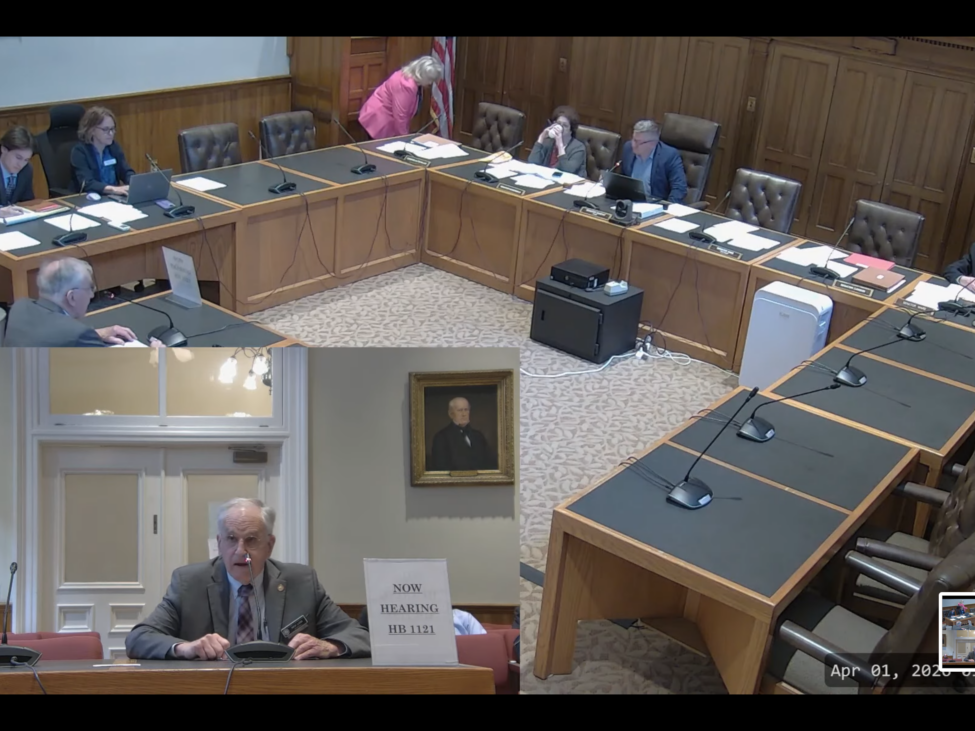
CONCORD, NH — School nurses and superintendent services would not be components of an adequate education in a bill that had a public hearing Wednesday before the Senate Education Finance Committee.
House Bill 1121 lists elements to be included in determining the cost of an adequate education, but leaves out such things as school nurses and superintendent and administrative services, which opponents say are critical to an adequate education, which the state is constitutionally obligated to provide its children.
Find out what's happening in Across New Hampshirefor free with the latest updates from Patch.
If those elements are not components of an adequate education, the state would not have to pay their costs, which would be borne instead by local property taxpayers.
In his ConVal decision, Superior Court Judge David Ruoff listed the elements needed for an adequate education and their costs in determining his figure for the cost of an adequate education, which is nearly double what the state pays per pupil, about $4,200.
Find out what's happening in Across New Hampshirefor free with the latest updates from Patch.
Rep. Rick Ladd, R-Haverhill, the prime sponsor of HB 1121, said his bill draws on the work of the 2008 education funding oversight committee which determined the cost of an adequate education should be for academics and curriculum and not on things like administrative costs.
He said his bill does not change the critical 11 content areas currently in statute when considering the definition and costs Under his bill the resource areas that are essential for a an adequate education are teachers, principals, administrative assistants, guidance counselors, library/media specialists, technology coordinators, custodians, instructional supplies, technology, professional development, facilities operations and maintenance, and transportation.
The work of the 2008 committee, Ladd said, puts superintendent and administrative costs outside what is essential for an adequate education as well as paraprofessionals and teacher aids.
He said school nurses provide health care which is not a curriculum area. He said school nurses are licensed while a teacher is certified to teach health and wellness as part of the curriculum.
Local school districts have discretion to add paras and other services, but that is outside the scope of an adequate education, Ladd said, which the legislature has the responsibility to define.
What do a marching band or athletics have to do with providing an adequate education, Ladd asked?
He said the core resources have been in place since 2008,
and they need to be put into statutes.
“It’s up to districts to go beyond that. There is no need (for the state) to pay for superintendents, administration and all that.”
Sen. Cindy Rosenwald, D-Nashua, asked if the state would have to add money for building aid under his bill, and Ladd said building aid is a separate component as opposed to the building the student is in currently.
His bill covers maintenance and operations, he noted, so if the boiler breaks or the septic system needs to be fixed, those costs are components of an adequate education, but reconstruction, or new construction or consolidation would not be.
She noted that some children have medical conditions that are so complex they cannot attend a school without a nurse, and asked why wouldn’t a nurse be a component of that child’s adequate education.
Ladd said he agrees some special education students have needs related to equipment and the building, but asked where does the adequate money start and stop, and how is it related to Medicaid.
He said it is a huge issue because some out-of-district placements for special education students can cost up to $600,000 a year.
Sen. Debra Altschiller, D-Stratham, noted Ladd’s bill removes a section of law that requires the legislature to review the components and resources needed for an adequate education every 10 years and asked him why.
Instead the bill supplants the review with a very narrow list that does not include things identified in the report like school nurses.
“Don’t we run the risk of outdating ourselves without a periodic review?” she asked. Thirty years ago schools did not have technology coordinators, she noted.
Ladd noted society changes a lot over the years, noting the concentration on mental health issues today is much different, as are single-parent families and technology has “gone off the charts.”
He said it is incumbent on the legislature to look at the resources and elements that comprise an adequate education in some cases sooner than every 10 years.
But he said, there are many things that districts provide outside of providing an adequate education.
Ladd noted the legislature says the student to teacher ratio should be no more than 25 to one in elementary grades, and no more than 30 to one in middle and high schools, but many schools have policies much lower ratios than that.
The bill is one of several that would change the state’s responsibility for providing an adequate education making it a shared responsibility with local school districts and does not set a foundation or minimum commitment on the state’s part.
House Bill 1815 makes the financial obligation to pay for an adequate education a partnership between the state and school districts.
The bill also restricts the state’s obligation largely to the 11 academic areas required in the state’s minimum standards.
That bill already passed the House on a nearly party-line 187-152 vote and was signed into law by Gov. Kelly Ayotte last week.
The Attorney General’s Office is also asking the state Supreme Court to overturn the original Claremont education decisions that require the state to provide an adequate education, define it and pay for it with constitutional taxation, not widely varying local property taxes.
The request is included in the state’s appeal of Ruoff’s Rand decision to the state Supreme Court. The decision found the state has failed to met its constitutional obligation to pay for an adequate education and for special education services as well and is shifting those costs to local property taxpayers.
The decision also says if the state shifts those costs, those taxes also must meet state constitutional requirements; they be proportional and reasonable, not widely varying as they do from district to district.
The attorney general’s contention is that the court more than 30 years ago misinterpreted the constitutional articles that were the decisions’ foundation.
The supreme court has used the original decisions as the basis for a number of other challenges to the state’s education funding system.
The committee intends to make a decision on its recommendation for the bill next week.
Ladd was the only person to testify on HB 1121.
Garry Rayno may be reached at garry.rayno@yahoo.com.
This article first appeared on InDepthNH.org and is republished here under a Creative Commons license.