Politics & Government
NH's First Turtle Tunnels Aim To Save Their Lives On The Road
Turtles and salamanders just got some help crossing the roads of New Hampshire.

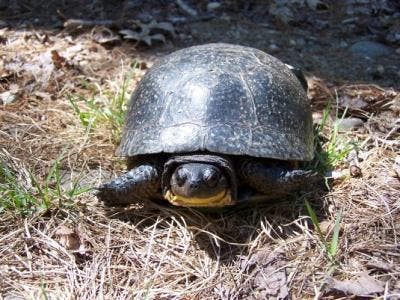
KEENE, NH — Turtles and salamanders just got some help crossing the roads of New Hampshire.
The boost did not come from a new nighttime brigade to stop traffic on the "Big Nights" or more hand-painted signs, but from a nationally competitive grant targeting studied sites in Keene, Nottingham, and Newmarket.
Find out what's happening in Across New Hampshirefor free with the latest updates from Patch.
We're talking about the state's first turtle tunnels, people.
The National Fish and Wildlife Foundation America’s Ecosystem Restoration Initiative will upgrade four road sites to help minimize turtle mortality.
Find out what's happening in Across New Hampshirefor free with the latest updates from Patch.
The total grant award is just over $2.6 million. The project locations are: Jordan Road, Keene (this one is focused on amphibians); Ash Swamp Road, Newmarket; and Reservation Road, Nottingham.
The sites selected for restoration are conservation priorities based on over a decade of monitoring and planning, according to New Hampshire Fish and Game.
Along with the towns, also involved in the project is the Harris Center for Conservation and Education.
Named “Restoring Habitat Connectivity to Benefit At-Risk Wildlife in New Hampshire," the project is aimed at reducing wildlife mortality and improving habitat connectivity, safety, flood resiliency and culvert condition.
“Wetland fragmentation and road densities pose direct threats to semi-aquatic turtles and vernal pool amphibians as they move through the landscape for reproduction, food, shelter and dispersal,” said Sandi Houghton, a Nongame and Endangered Wildlife Program biologist.
Turtles have a life history that includes low annual nesting success and hatchling survival, late age of initial reproduction (14 to 20 years), and lengthy adult survivorship (they can live for 70 years or more).
Houghton said migrating vernal pool amphibians can suffer high mortality rates from vehicles as they attempt to cross roads that are between their upland forest habitat and breeding vernal pools.
In addition, Houghton said, habitat fragmentation can isolate populations.
Restoration techniques with demonstrated efficacy, including new culvert underpasses and guide walls or fencing, will be used, according to Fish and Game.
“We are incredibly excited to work with communities and conservation partners to implement these critical projects,” Houghton said. “The City of Keene, Town of Newmarket and Town of Nottingham will be sub-recipients of this grant award.”
“Replacing aging and poorly functioning public infrastructure to improve safe passage for all users, people and wildlife alike is the optimal outcome,” Newmarket Town Engineer Lyndsay Butler said. “Projects like this provide multifaceted benefits to our communities.”
Drew Stevens, a member of the Nottingham Conservation Commission and the Planning Board, said the town contains some of the last remaining robust habitat for threatened and endangered reptiles in the Northeast.
“We are thrilled to be partnering with New Hampshire Fish and Game on such an important and impactful project that will help to reconnect fragmented habitat, reduce flooding impacts and increase safety in this ecologically critical area,” Stevens said.
The Harris Center for Conservation Education in Hancock has been working on the issue for years.
“The Harris Center is thrilled to be part of the first community-based amphibian tunnel project in New Hampshire,” said Brett Amy Thelen, science director of the center. “In addition to restoring habitat connectivity and protecting vulnerable amphibian species, we hope this project will serve as a demonstration site and provide momentum for similar restoration efforts throughout New England.”
“The City of Keene is a strong supporter of amphibian conservation as demonstrated by the implementation of road closures on nights when amphibians are likely to migrate, as we have since 2018,” said Duncan Watson, former Keene Department of Public Works assistant director. “We see the project as a natural progression in our efforts to conserve amphibians.”
“Turtle road mortality is widespread in New Hampshire, and a leading cause of population declines,” said Joshua Megyesy, a turtle biologist with the Nongame and Endangered Wildlife Program. “Roads that bisect wetlands or upland nesting habitats lead to more females in the population getting hit by cars. With their late age of sexual maturity and low hatchling survival rates, population recovery is a real challenge, however new wildlife passages and upgrades show great promise in reducing this threat.”
To learn more about the work of the NH Fish and Game Nongame and Endangered Wildlife Program, visit wildnh.com/wildlife-and-habitat/nongame-and-endangered-species.
This article first appeared on InDepthNH.org and is republished here under a Creative Commons license.