Politics & Government
Public Gives Feedback On New Hampshire Bill To Limit School CRT, LGBTQ+ Ideology Curriculum
HB 1792 would prohibit districts and personnel from teaching critical race theory and LGBTQ+ and create a right of action for parents.

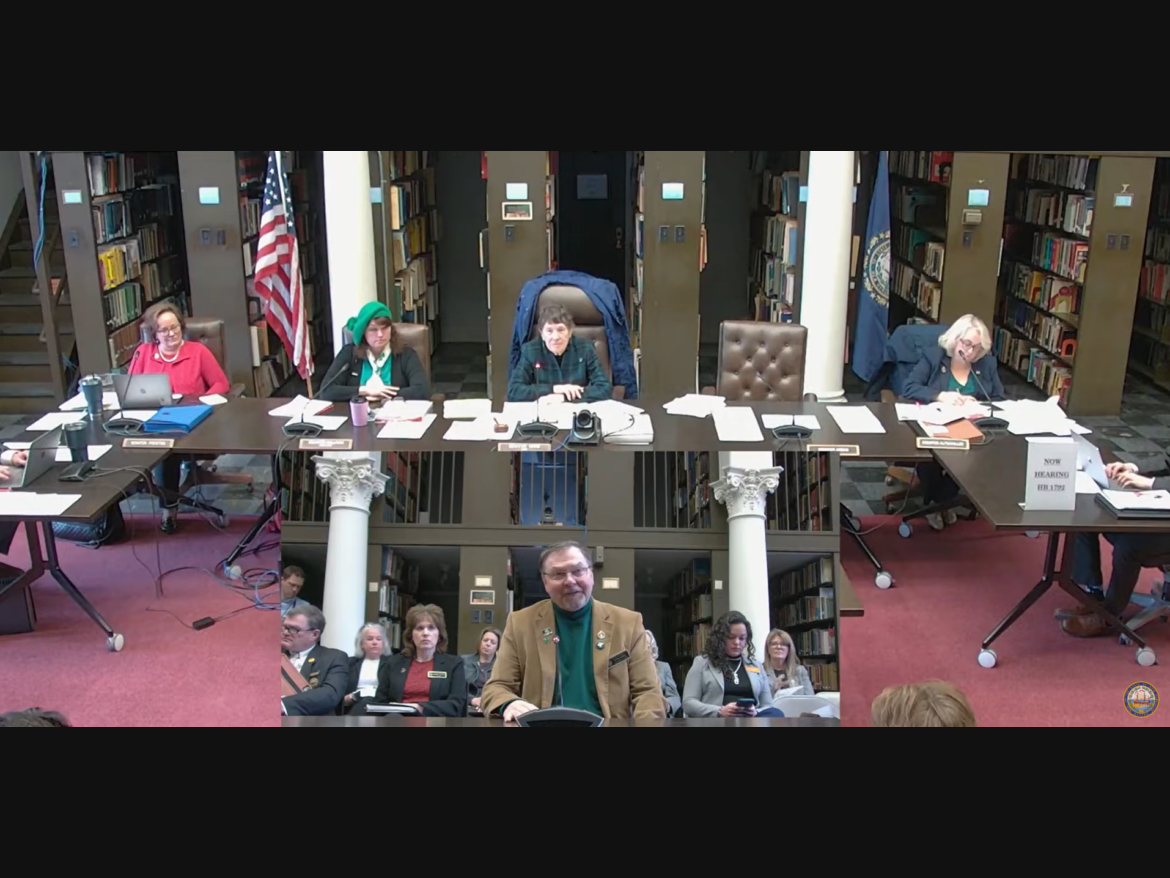
CONCORD, NH — A continued public hearing was held on House Bill 1792 on Tuesday, which looks to prohibit school districts and personnel from teaching critical race theory and LGBTQ+ ideologies in schools, and establishes a right of action for violations.
Katie Adams, of Exeter, was the first to speak in opposition to the bill. She explained that she has two children enrolled in local public schools and described the bill as a “clear and drastic overreach of the state into the classroom.”
Find out what's happening in Across New Hampshirefor free with the latest updates from Patch.
“Teachers are then left with one small and frankly bizarre set of things they may not say, a broad and vague category of other things that may be in violation, and a rigorous system of reporting and punishment… Let’s let teachers teach and local government guide and support them,” Adams said.
Adams continued that aside from the bill replacing one set of ideologies with another, it is also impossible to interpret in terms of practical applications and names specific topics with teachers instructed to either criticize or ignore.
Find out what's happening in Across New Hampshirefor free with the latest updates from Patch.
She added that the bill allows any student, parent, or employee to report a teacher who is believed to be teaching critical race theory to the Board of Education. Schools and districts also face the potential consequence of being sued.
Ann Marie Banfield, who said she supported the idea of the bill, started by saying that New Hampshire law already recognizes that limits are put on teachers and that “teachers do not have free speech in the classroom as the courts have ruled, they are under contract.”
She referenced a book purchased by Exeter and other local schools titled “This Book is Anti-Racist,” a piece of literature for middle-schoolers that she said puts people into two separate categories: one being the oppressor and the other being the oppressed. She argued books like that are what the bill aims to remove from schools.
Rep. Cyril Aures, R-Chichester, advocated in support of the bill and said the testimonies he heard earlier “is in a different universe, I think it’s the Twilight Zone.”
“Having had parents barking at me about what is being taught in Chichester and Pittsfield that is LGBT and the rest of the alphabet… It’s disgusting, and the pornography books; this has to stop,” Aures said.
Scott Phyles, of Somersworth, also opposed the bill and noted that it most powerfully affects the teachers currently employed in the state. He said it’s hard enough to be a teacher and that adding a level of fear of civil action “just for expressing opinions or trying to teach your subject” may push teachers out of New Hampshire.
“I was lucky to have experienced wonderful public education, and I hope that New Hampshire students are able to get that same access. On the flip side, New Hampshire has passed censorship laws like this before that have been overturned, and it doesn’t seem like a good use of our taxpayer dollars to pass another bill like this,” Phyles said.
David Trumble of Wear spoke next to oppose the bill, and began his testimony by noting that it would infringe upon students’ rights to receive information under the First Amendment.
He said the U.S. Supreme Court declared in a previous case that the First Amendment applies to students “because it’s important to help them prepare for active and effective participation in the pluralistic and often contentious society, in which they will soon be adult members.”
“Our teachers are trained in these content matters and we should trust them to do their job. As for the rights of parents, if a parent objects, they can opt out of a lesson, they can talk to the teacher, they can talk to a principal, and eventually the School Board. But we should not allow one parent’s objection to deny the First Amendment rights to an entire class of students,” Trumble said.
Deb Howes, president of the American Federation of Teachers New Hampshire, opposed the bill and said it’s harmful to public school students and their educators. She explained that if the bill passed, what’s considered neutral and patriotic would be “at the whim of whoever has the majority in the House, whoever holds the corner office, whoever has the Attorney General’s office.”
“That is not good for our state or society, it’s not good for our students to be changing what the definition of neutral and patriotic is depending upon who has the majority. That’s really not a good road for us to be going down as a society,” Howes said.
This article first appeared on InDepthNH.org and is republished here under a Creative Commons license.