Politics & Government
RNC Backs New Hampshire In Fight Over Student Voter ID Rules
Republican National Committee filed an amicus brief on behalf of the state, urging a federal judge to leave the new state law in place.

For J. Christian Adams, president of the Public Interest Legal Foundation, it’s as inevitable as the turning of the autumn leaves: Democrats filing lawsuits against New Hampshire over ballot security.
“It’s that time again, time to attack anything New Hampshire does to secure elections. Is it all those out-of-state students on Mass driver’s licenses?”
Find out what's happening in Across New Hampshirefor free with the latest updates from Patch.
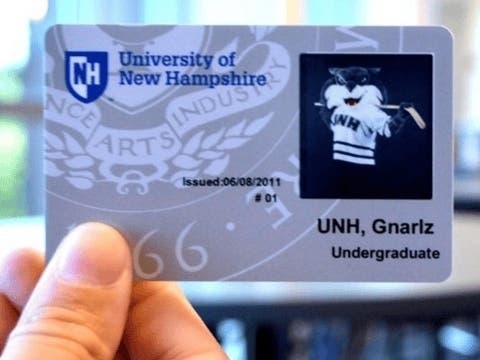
Actually, it’s college-issued campus IDs. This week, the Republican National Committee filed an amicus brief on behalf of the State of New Hampshire urging a federal judge to leave the new state law restricting the use of these IDs in the voting process in place.
At issue is the fact that a campus ID is not issued with the same rigorous identity checks as IDs required for voting, such as driver’s licenses or passports.
Find out what's happening in Across New Hampshirefor free with the latest updates from Patch.
“College students must first prove their identity before entering college,” Rep. Ross Berry, R-Weare, said when advocating for HB 323. “They are required to show their government-issued identification when purchasing alcohol or a firearm, just like everyone else. And like everyone else, the same should be required of college students when they vote.”
In April, Gov. Kelly Ayotte signed the GOP-backed bill removing student IDs from the statutory list of identification automatically accepted when obtaining a ballot.
Later that month, Secretary of State David Scanlan issued a directive telling election officials that student IDs could no longer be used to prove identity when registering to vote, requesting an absentee ballot or checking in at the polls.
In August, less than a month before the primary elections, a Democrat-aligned group, the Coalition for Open Democracy, filed a federal lawsuit asking U.S. District Judge Joseph N. Laplante to block the new law and Scanlan’s directive. The group argued that the approach “unconstitutionally burdens the right to vote, discriminates against young voters on account of their age, and unlawfully rewrites New Hampshire’s election statutes.”
The date is significant because, as New Hampshire noted, opponents of the law had months to go to court, but they didn’t file their lawsuit until August. The state invoked the Purcell principle, named for the 2006 U.S. Supreme Court case Purcell v. Gonzalez. It cautions federal courts against changing election rules close to an election.
Laplante applied that principle in his Sept. 1 order declining to block enforcement before the Sept. 8 primary. On Oct. 2, however, he granted a partial preliminary injunction, allowing the law to remain in effect but blocking Scanlan’s broader directive. Officials could consider student IDs, alongside other evidence, under existing identity-verification procedures.
Scanlan and Attorney General John Formella objected, filing an appeal on Oct. 5 and requesting an emergency stay Oct. 6. They argue Laplante misinterpreted state law and changed the rules too close to the general election.
“Right before an election is the worst time to change the rules,” Adams told NHJournal. “It worked fine in the primary.”
The RNC agrees and, like Adams, sees a broader Democratic attempt to weaken ballot protections.
“We’re standing in the way of this blatant power grab and keeping elections in the Granite State secure,” RNC Chairman Joe Gruters said. “Democrats and their allies waited until the eleventh hour to launch an all-out attack on voter ID.”
In the New Hampshire legislature, Democrats overwhelmingly opposed the legislation. They’ve also opposed voter ID mandates, as do the Democrats in the federal delegation. On Monday, Stefany Shaheen, running to replace outgoing Democratic U.S. Rep. Chris Pappas, reiterated her support for federal legislation that would expand Washington’s control over local elections and end voter ID mandates.
Former New Hampshire House Speaker Bill O’Brien said the lawsuit is the latest evidence that Democrats oppose meaningful ballot-security efforts.
“From the standpoint of protecting honest elections, the Democrats’ last-minute judicial attack on New Hampshire’s voter ID protections is absurd,” O’Brien said. “From the standpoint of enabling undetected fraud, it makes perfect sense.”
This story was originally published by the NH Journal, an online news publication dedicated to providing fair, unbiased reporting on, and analysis of, political news of interest to New Hampshire. For more stories from the NH Journal, visit NHJournal.com.