Politics & Government
Scanlan To New Hampshire Democrats: Keep The Nonpartisan Pro Who Protects FITN
Secretary of State David Scanlan: It will take the "backbone" to defy the DNC —and help from prominent 2028 candidates, too.

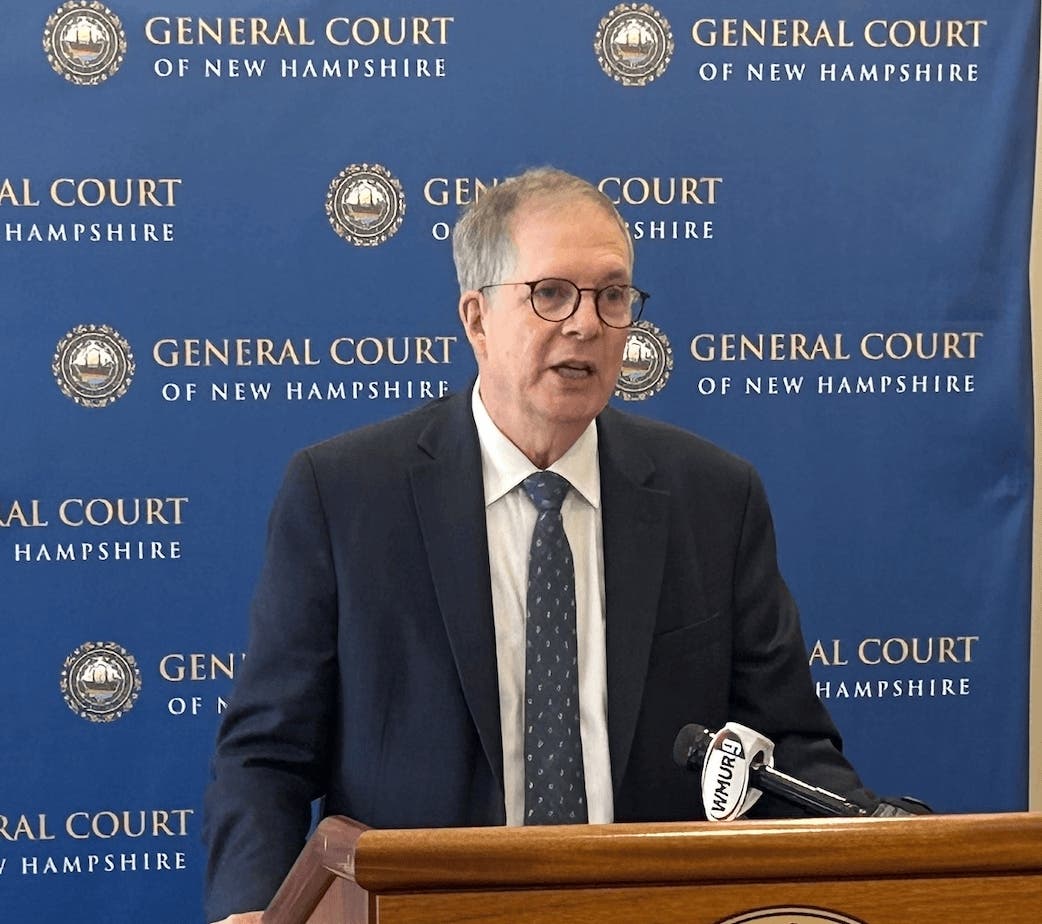
Keeping New Hampshire’s presidential primary first will take more than a promise to follow state law, Secretary of State David Scanlan told NHJournal. It will take the “backbone” to defy the Democratic National Committee—and help from prominent Democrats willing to bring candidates here.
As he fights to keep his job, the Republican incumbent says he plans to consult constitutional attorneys about possible legal issues if national Democrats try to prevent presidential candidates from participating in New Hampshire’s first-in-the-nation primary.
Find out what's happening in Across New Hampshirefor free with the latest updates from Patch.
“I don’t think we know enough about the candidates that are challenging me to know whether they can withstand that pressure or not,” Scanlan told the NHJournal podcast. “People know that I can because I’ve done it.”
Scanlan made his case for keeping his job, despite the massive Democratic supermajority in the legislature that seems determined to put a Democrat in the Secretary of State’s Office.
Find out what's happening in Across New Hampshirefor free with the latest updates from Patch.
The 424 members of the House and Senate will elect the secretary of state for another two-year term on Dec. 2. Democrats emerged from recounts with 293 House seats and won a 15-9 Senate majority, giving them ample votes to replace Scanlan if they unite behind a challenger.
Three Democrats are running: Hampton Select Board Chair and former congressional candidate Carleigh Beriont, former progressive voter data organizer James Butler, and Manchester state Rep. Patrick Long.
Scanlan says lawmakers should preserve the tradition of an election administrator who serves both parties, particularly with another fight over the presidential primary approaching.
Asked what he would do if the DNC tried to keep candidates from campaigning in New Hampshire, Scanlan said he would seek legal advice.
“I will be seeking out input from some constitutional attorneys,” he said, explaining that they would examine possible free speech issues.
He did not announce a lawsuit or identify a specific legal challenge. Instead, he described legal consultation as one part of a broader effort to defend the primary.
Scanlan said that effort would require cooperation among state leaders, primary supporters, and prominent Democrats with influence over presidential candidates.
The state and its supporters must “show the backbone that they need to defy the Democratic National Committee,” he said.
He advocated holding the primary, awarding delegates based on its results, and having those delegates demand admission to the national convention even if the DNC refused to seat them. He also called on national Democratic figures to encourage candidates to participate.
Scanlan argued the primary gives ordinary voters access to candidates while offering lesser-known contenders a chance to compete.
“The presidential primary is about the little guy,” he said.
His argument about independence extends to his own party. Scanlan pointed to his refusal to release confidential voter information to President Donald Trump’s Justice Department, saying he has explained how federal officials can obtain the public portion of the database.
The confidential information, he said, is protected by state law, and he does not believe the federal government has established authority to override those protections.
“I follow the law,” Scanlan said. “I mean, it’s as simple as that.”
That is also his response to Democrats who criticize his implementation of Republican-backed voting restrictions, including limits on student IDs.
“It doesn’t matter whether it’s a Republican law. It doesn’t matter whether it’s a Democratic law,” he said. “The law is the law, and my job is to implement it to the best of my ability.”
His challengers argue there is room for improvement. Butler has criticized preparations for September’s primary, while Long has challenged Scanlan’s interpretation of the student-ID law. Beriont has advocated greater youth participation and modernization of election administration.
However, while all three have pledged to defend the first-in-the-nation primary, Scanlan warns that the DNC and the New Hampshire Democratic Party will have more influence over a Democratic Secretary of State.
“In less than a year we’re going to be right in the middle of preparing for the presidential primary election, and we’re going to have tremendous pressure from the Democratic National Committee to diminish our role in that process,” Scanlan said. “I’m not going to let that happen if I’m secretary of state.”
Beyond elections, Scanlan emphasized the management responsibilities of an office with more than 100 employees, overseeing business registrations, securities regulation, vital records, archives and other functions.
Scanlan joined Bill Gardner’s office in 2002 and served as his deputy until succeeding him in 2022. He said he has hired staff based on ability rather than political affiliation, with more than half of division leaders and other key positions now held by people in their 30s and 40s.
His bid has drawn support from former Democratic U.S. ambassadors Dick Swett, George Bruno, and Terry Shumaker, along with former Democratic state Rep. Jim Splaine.
“It would be tragic for New Hampshire if Democrats turned this office into a political football,” the three ambassadors wrote in their endorsement.
Despite the threat to his own job, Scanlan defended the system of having lawmakers choose the secretary rather than putting the office on the statewide ballot.
“I think the process that we currently have works well,” he said.
But that system, he argued, depends on lawmakers evaluating performance. If Democrats replace him simply because they have the votes, he warned, Republicans could do the same the next time they take control.
“The voters are going to end up with whiplash if we’re not careful.”
This story was originally published by the NH Journal, an online news publication dedicated to providing fair, unbiased reporting on, and analysis of, political news of interest to New Hampshire. For more stories from the NH Journal, visit NHJournal.com.