Politics & Government
Senate Committee Recommends Killing Battery Recycling Bill
After nearly 2 hours of testimony in support of a national battery recycling program for NH, the Ways and Means Committee voted against it.

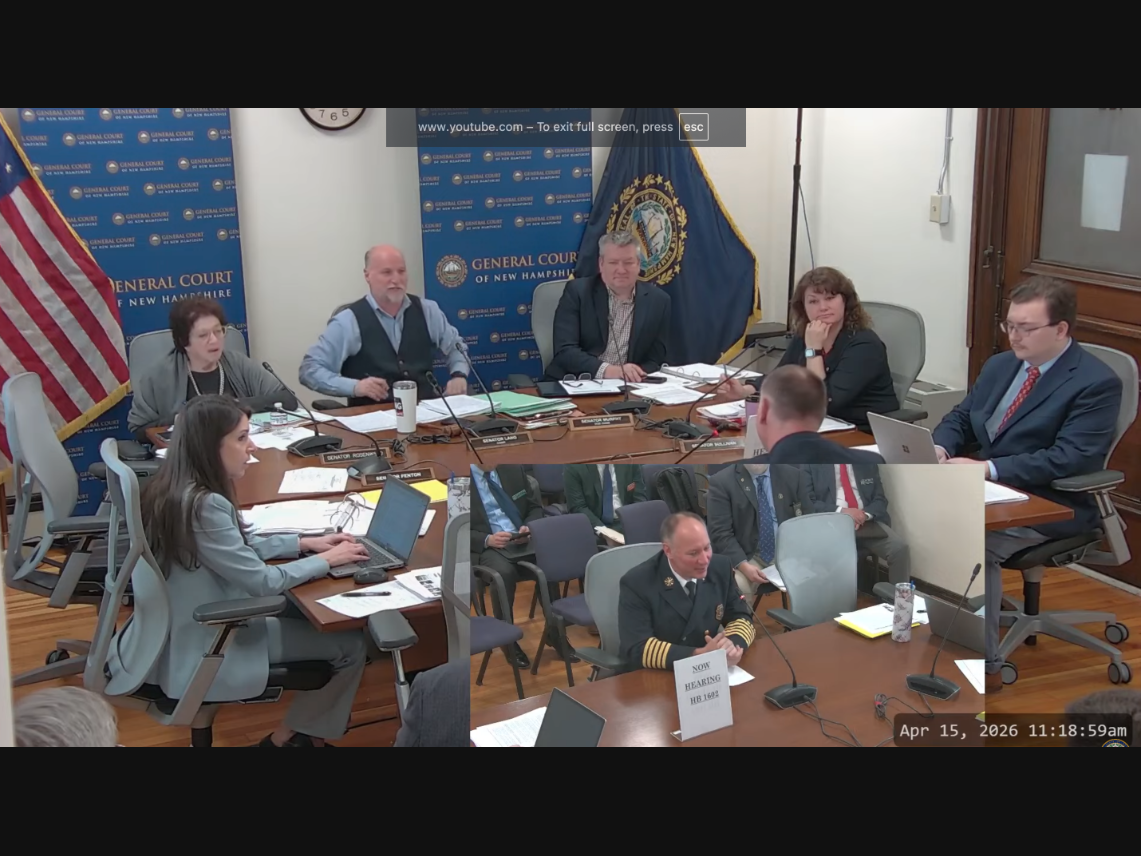
CONCORD, NH — After nearly two hours of testimony in support of a national battery recycling program for New Hampshire, the Senate Ways and Means Committee decided the bill ought to be killed.
Bill supporters noted House Bill 1602 would reduce the fire risk from rechargeable and lithium batteries, save municipalities and taxpayers money, and reduce the risk for firefighters and solid waste workers, but Republican members of the committee said there are ample battery disposal options at big box stores and transfer stations, and the program would impact several local recycling businesses although none testified in opposition to it.
Find out what's happening in Across New Hampshirefor free with the latest updates from Patch.
All but one person testifying on the bill to establish a stewardship program run by a nonprofit established by battery manufacturers testified in favor of the bill saying it would help to prevent fires that have plagued transfer stations around the state, would remove toxic chemicals from landfills and incinerators and would provide a convenient process for people to recycle their batteries instead of throwing them in the trash.
The bill passed the House by more than a two-to-one margin, but much like an earlier paint stewardship bill that would have manufacturers run a recycling program, HB 1602 has been caught up in controversy driven by the Americans for Prosperity, a Koch Foundation organization, that has sought to label the program a hidden tax, although the funding mechanism does not fit the definition of a tax.
Find out what's happening in Across New Hampshirefor free with the latest updates from Patch.
The bill’s prime sponsor, Rep. Karen Ebel, D-New London, noted the bill's bipartisan approval and the support of groups ranging from firefighters to business associations and conservation organizations to the state’s solid waste disposal companies.
“This bill does not create a tax, despite assertions that it does,” she said, noting, there is no mandatory payment for individuals or businesses to the government, and no money being spent by the state on the program.
“No consumer is being taxed,” she said, “it’s the producers who pay and individuals who benefit.”
The bill will save property taxpayers money because municipalities will no longer have to pay to dispose of the batteries residents leave at transfer stations, Ebel said.
She said she and several others met with the governor’s staff over a month ago about the bill, and the consensus was it was not a tax or a fee. Gov. Kelly Ayotte vetoed the paint recycling bill calling it a sales tax and the House upheld her veto last week
Ebel told the committee she provided the governor’s office with research she did on pricing, but has not heard anything since from her office.
Ebel said her research into the prices of different types of batteries in several states that have joined the program and several that had not indicated they were the same.
In the last 15 days three states have voted to join the program and a dozen more are considering it, she said, so New Hampshire will be paying the same cost for batteries if they join the program or don’t, and if they don’t the state will not receive the benefits of battery recycling.
Under the program, collection sites would take lithium, rechargeable and alkaline batteries, but not e-waste like cellphones and computers with embedded batteries.
The program would also not take car batteries and batteries for electric vehicles, both of which have their own collection systems.
But committee member Sen. Victoria Sullivan, R-Manchester, said she does not understand why the state needs this program, when you can drop off batteries at Home Depot, or Staples or other big box stores.
She said she is also concerned about the companies that are recycling batteries now for free, saying they would be hurt or go out of business if the program is approved.
Ebel said she applauds those companies that collect batteries, but many also end up in municipal trash systems.
“What we have now is a fractured system,” she said. “You have to know where you can take your batteries and fires are still happening.
“It is not a broad enough system to accommodate all the batteries that are out there.”
Former New London Fire Chief Jay Lyon said people where he lives have to drive 45 minutes to Concord, or 30 minutes to Lebanon or 45 minutes to an hour to Laconia to find a big box store to dispose of their batteries.
He said the town has had lithium batteries catch fire in the trash compactor, but fortunately it was caught early. He noted many communities depend on volunteer firefighters and battery fires can expand quickly.
“It is a huge concern,” Lyon told the committee, noting while it may be illegal to put batteries into trash, many still do.
Reagan Bissonnette, the Executive Director of NH Recycles, supported the bill, telling the committee her nonprofit organization works with about 90 of the state’s municipalities for recycling.
She said they are seeing more improper disposal of batteries and that increases safety concerns.
She said Lee had a fire at their transfer station as did Pelham, and Waste Management in Rochester lost its recycling building to a fire started by a lithium battery.
Bissonnette said Keene has had several fires — one that caused $400,000 in damages — they believe began because of lithium batteries but they cannot prove it.
She said batteries are also showing up in scrap metal and causing fires.
The only person speaking in opposition to the bill was Rep. Dan McGuire, R-Epping, who also opposed the bill when it was on the House floor several weeks ago.
He argued the program will not take all batteries and it is already illegal to throw batteries in the trash.
McGuire said while cities and towns may have to pay to dispose of batteries, that cost is known, while the cost of joining the program is not and there is no regulation or oversight to keep that under control.
“The only source of money is consumers,” McGuire said. “You are trading off known costs for unknown costs and opening the door to a (monopolistic) organization.”
But Rep. Kelley Potenza, R-Rochester, said she wants to dispel the myths about the bill.
The only ones opposing the bill are Redwood Materials, which just received a $2 billion grant and wants to take over 100 percent of the battery recycling in the state, and the Koch Foundation, which has invested $1.9 billion in battery production, she said.
“The only people to come out against this are the ones looking to make money on this,” Potenza said.
She noted the program is not just for blue states and has bipartisan backing.
“All this is a benefit,” Potenza said. “It is sad that outside talking points are controlling this.”
In the executive session to determine the committee recommendation, Sen. Tim Lang, R-Sanbornton, and Sen. Keith Murphy, R-Manchester, reiterated their earlier concerns saying the program is not needed and would harm existing businesses.
The three Republicans voted to kill the bill. The two Democrats had left the meeting before the vote was taken.
Garry Rayno may be reached at garry.rayno@yahoo.com.
This article first appeared on InDepthNH.org and is republished here under a Creative Commons license.