Politics & Government
As Snowstorms Pound New Hampshire, So Do High Energy Costs
As the 2026 U.S. Senate race heats up, the debate is likely to center on who has a plan to reduce New Hampshire's high energy bills.

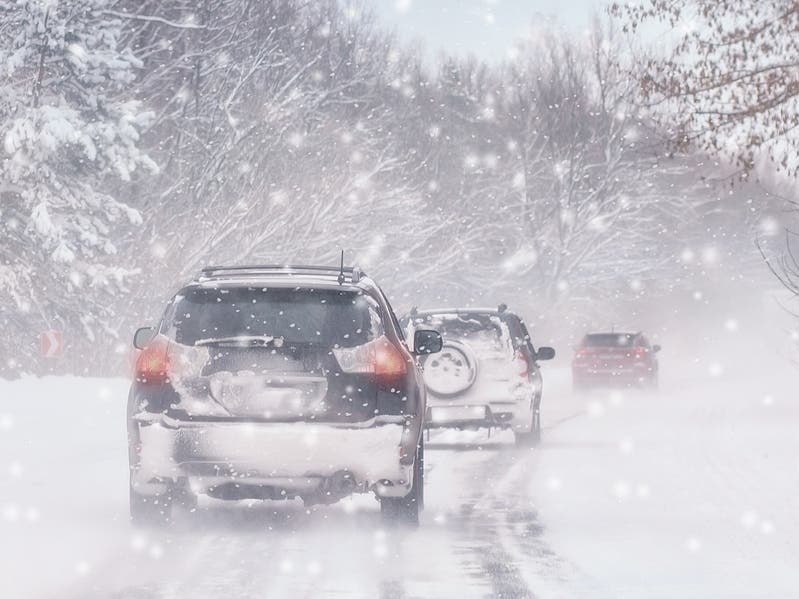
As a blizzard blew into the Northeast on Monday, sending 35 mph winds across the Seacoast, New Hampshire residents were, as usual, burning natural gas to keep the lights on and, in many cases, to heat their homes.
And, as usual, they were paying some of the highest prices in the country for that natural gas.
Find out what's happening in Across New Hampshirefor free with the latest updates from Patch.
A new Independent Women’s poll found that 89 percent of Granite Staters are concerned about rising energy costs, and 78 percent say they are paying more in energy bills than they were five years ago.
Political leaders like U.S. Rep. Chris Pappas have taken notice. The Manchester Democrat — and U.S. Senate candidate — is touting legislation he says will help families cover high energy costs. But critics say it’s not a solution at all; just a subsidy to help offset energy costs driven higher by the green policies Pappas supported.
Find out what's happening in Across New Hampshirefor free with the latest updates from Patch.
The issue is access to natural gas, particularly the low-cost natural gas produced in western Pennsylvania. After shutting down nearly all of its coal- and oil-fired power generation, New England is heavily reliant on natural gas. According to ISO New England, natural gas generated 45 percent of the region’s electricity on Monday, typical for New Hampshire in the winter.
And it’s not just electricity. According to data from the U.S. Energy Information Administration and the Northeast Gas Association, roughly 41 percent of New Hampshire households use natural gas or propane as their primary heating fuel.
Pappas’ legislation, the Energy Burden Tax Credit Act, is an income-based benefits program that would provide a refundable federal tax credit to households that spend more than 3 percent of their annual income on energy costs.
“No family should ever wonder if they can afford to keep their home warm during the winter months,” Pappas said.
According to Pappas, a family earning $50,000 per year and paying the New Hampshire average of $223 per month in energy costs would receive a refundable tax credit of $882, cutting their annual energy costs by roughly one-third. The benefits would expire in 2027.
Because it does not address access to natural gas or increase the supply of electricity to the New England grid, critics say Pappas’ plan would not reduce energy costs.
In the past, Pappas has voted against expanding American oil production and backed the Biden administration’s energy policies in the so-called Inflation Reduction Act.
During a recent White House press briefing, NHJournal asked press secretary Karoline Leavitt what the Trump administration was doing to bring the impact of increased American energy production to the Northeast.
“There’s only so much that can be done at the federal level,” Leavitt acknowledged, noting that opposition from Democrat-dominated states such as New York and Massachusetts has blocked the development of natural gas infrastructure in the region. “That’s why the president has called on blue-state governors to participate in his energy dominance agenda, including governors in New England and the Northeast.”
Leavitt added, “Red states with Republican legislatures currently enjoy lower average retail electricity prices than blue states with Democrat legislatures. And that’s exactly why the president is calling on all blue-state governors across the Northeast to get on board. Let’s bring prices down for all Americans, whether they live in a red or blue state.”
Pappas is also a strong supporter of the Low Income Home Energy Assistance Program, which provides heating assistance to households earning up to 150 percent of the federal poverty level. About five percent of New Hampshire residents currently receive LIHEAP assistance, even as energy prices continue to rise.
For middle-income families who do not qualify for traditional assistance programs, the Energy Burden Tax Credit could provide short-term relief. But unless market prices fall, the underlying cost of energy would remain unchanged, with taxpayers effectively covering a portion of the bill.
As the Senate race heats up, the debate is likely to center not just on who helps pay New Hampshire’s high energy bills, but who has a plan to bring them down.
This story was originally published by the NH Journal, an online news publication dedicated to providing fair, unbiased reporting on, and analysis of, political news of interest to New Hampshire. For more stories from the NH Journal, visit NHJournal.com.