Politics & Government
Support Grows For Tougher Impaired Driving Penalties In New Hampshire
SB 620 doubles the administrative license suspension penalty for breath test refusal from 6 months to 1 year.

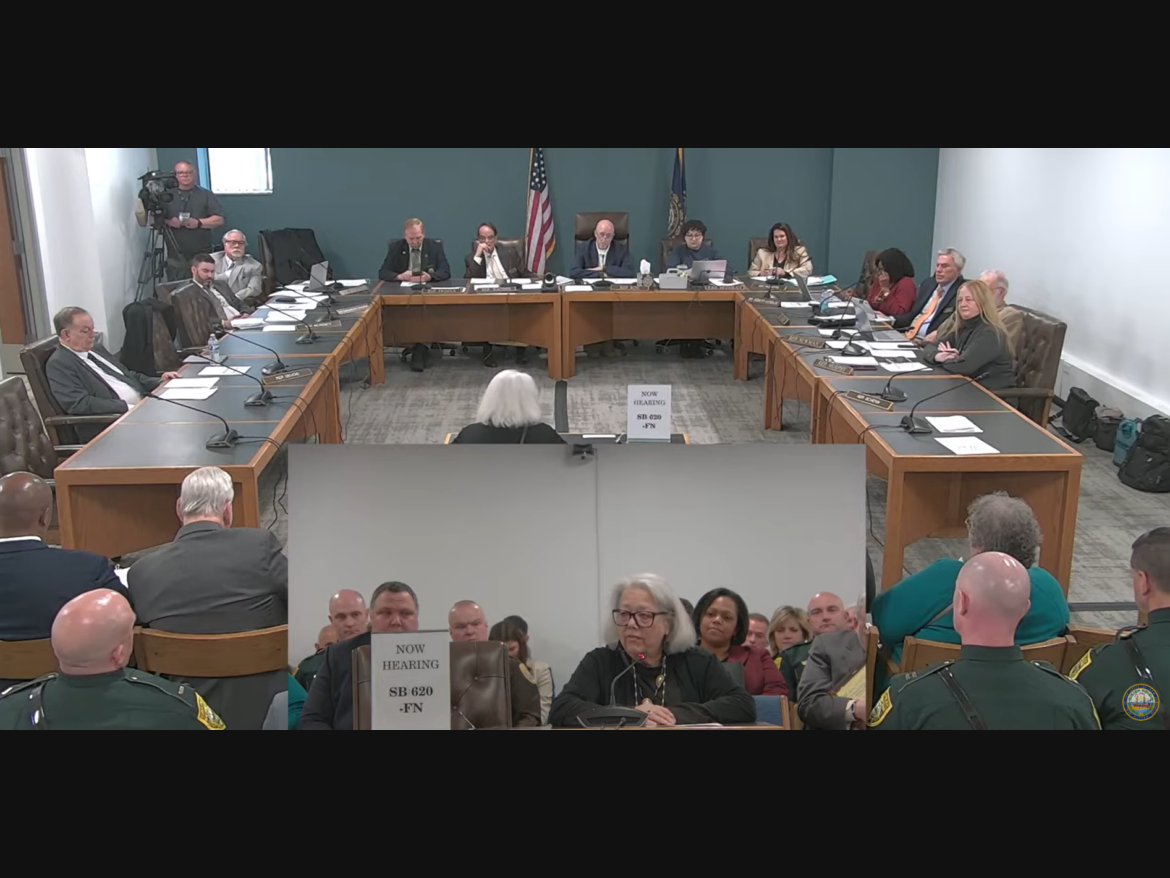
CONCORD, NH — The House Criminal Justice and Public Safety Committee held a public hearing for Senate Bill 620 Wednesday, which was passed unanimously by the Senate.
The bill doubles the administrative license suspension penalty for test refusal from six months to one year, eliminating the current incentive to refuse a breath alcohol test.
Find out what's happening in Across New Hampshirefor free with the latest updates from Patch.
According to data from the New Hampshire Department of Safety there is a 75 percent test refusal rate among motorists stopped for impaired driving from Jan. 1 through March 11 of this year. A press release from Gov. Kelly Ayotte’s office noted that since 2018, more than 260 lives were lost to alcohol-related crashes in New Hampshire — and that the state’s test refusal rate is nearly 70 percent each year — making it the second highest in the nation.
“Our refusal rate is outrageous. We must close the loophole that makes our roads less safe and hold impaired drivers accountable for putting people at risk. Together, we can save more lives on our roads,” Ayotte said.
Find out what's happening in Across New Hampshirefor free with the latest updates from Patch.
Sen. Bill Gannon, R-Sandown, said one of the key differences in this version of the bill versus the one he introduced last year is that out of state convictions will be recorded. He said the goal behind the bill was to protect families on the road and generate an incentive for drivers to cooperate.
Beth Shaw of Bow, lost her son to a repeat offender who was driving drunk in 2018. She testified in support of the bill and said the purpose of it is to act as a strong deterrent to ensure public safety and save lives.
“Weeks before his death, Tyler made a list of 29 life goals. Number one, he wanted to make a million dollars. Among others, he wanted to become a top general contractor of the state, own a house by 25, maintain a successful marriage, learn to be a great father, and make his family proud… None of those dreams or goals will ever be realized, all because one person decided to drink and drive,” Shaw said.
She said words fail to express the impact his death had on the family, and that his death was completely avoidable. She said an impaired driver losing their license for one year is not a hardship.
“It is a self-imposed consequence. Losing your life — there should be no question — that is the hardship,” Shaw said.
Alicia Miles, from Vermont, also supported the bill and told committee members about how she lost her six-year-old daughter to a crash caused by a drunk driver in May 2023.
“It’s a pain I couldn’t ever describe to you. The weight of that goodbye doesn’t just stay in the past, it’s with me every second of every day, and has changed every aspect of who I am right now… As I’m sitting here today, I’m carrying a pain no parent should ever have to hold: the loss of my beautiful daughter, Olivia. Her life was stolen in an instant by a choice, a selfish, preventable choice someone else made,” Miles said.
Also advocating for the bill was Rep. Debra L. DeSimone, R-Atkinson, who told a story of her experience with a drunk driver in her neighborhood. She continued that after returning from an evening out with her husband and that nearby children had just gone inside for the night. They returned to their house to find a police officer in their driveway.
“We drove in, we said to the police officer, ‘What can I do for you?’ And he said, ‘I need to tell you that part of your fence is now missing because there was a drunk driver who was pretty much like a pinball machine.’ It seems as though she came around the corner doing a very, very, very fast speed and was like a pinball machine going back and forth, back and forth.
“She took out a mailbox, she took out part of my tree, she took out a fence piece, she took out my fence piece and landed in somebody’s yard on a car. The point of this is — had those children still been out, or had my husband and I come home ten minutes earlier, somebody would be dead, because she was a repeat offender,” DeSimone said.
New Hampshire State Police Captain Matthew Amatucci spoke in support of the bill and said that while the state’s average of refusal rates for a breath alcohol test was 70 percent in 2025, the national average hovers around 24 percent.
Assistant Commissioner of the Department of Safety Eddie Edwards supported the bill and explained that the legislation came about through a special task force to look at highway safety in the state. He said what the issue comes down to is a behavioral choice made by drunk drivers.
Edwards continued, saying it’s not about an attack on freedom or liberty and that it’s difficult to have either without accountability and responsibility. He also said death by drunk driving accidents is one of the most preventable deaths in society.
“Every single person who has made a personal choice to drink and drive did so freely. All we’re asking for is a consequence that matches the public messaging: that drinking and driving will not be tolerated in our state,” Edwards said.
No immediate action was taken on the bill during the meeting.
This article first appeared on InDepthNH.org and is republished here under a Creative Commons license.