Politics & Government
Toll Hike Hits Home: NH Drivers Without E-ZPass Will Pay Double
Lawmakers voted to override Gov. Kelly Ayotte's veto of the state's 10-year transportation plan, clearing the way for higher turnpike rates.

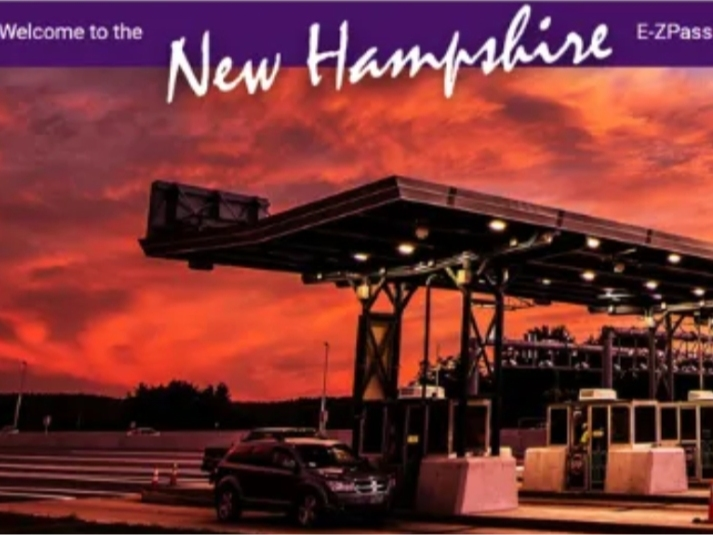
Ask not for whom the toll hikes, Granite Staters. It hikes for thee.
That is, if your vehicle is not listed on a funded New Hampshire E-ZPass account.
Find out what's happening in Across New Hampshirefor free with the latest updates from Patch.
New Hampshire lawmakers voted Wednesday to override Gov. Kelly Ayotte’s veto of the state’s 10-year transportation plan, clearing the way for sharply higher turnpike rates beginning Jan. 1.
The House voted 292-25 to override Ayotte, easily surpassing the required two-thirds majority. The Senate followed with a unanimous 24-0 vote, enacting House Bill 2026 despite Republican majorities in both chambers.
Find out what's happening in Across New Hampshirefor free with the latest updates from Patch.
Although supporters have promoted the change as a way to make out-of-state motorists pay more, the higher rates also apply to New Hampshire residents who pay cash or use an E-ZPass issued by another state.
The dividing line is not residency. It is whether the vehicle is listed on a funded New Hampshire E-ZPass account.
“Vehicles listed on a funded New Hampshire E-ZPass account will receive the NH E-ZPass toll rate, which is the same as today’s discounted rate,” the New Hampshire Department of Transportation said. “Vehicles not listed on a funded New Hampshire E-ZPass account or the tens of thousands of drivers who pay cash will be charged the new higher toll rate.”
At the Hooksett and Bedford mainline plazas, for example, the passenger-vehicle rate will rise from $1 to $2. At the Hampton mainline plaza, the higher rate will be $4, while the New Hampshire E-ZPass rate will remain $1.40.
Ayotte opposed the toll hikes throughout the legislative process, making it clear to the GOP-controlled House and Senate she was not on board.
“Make no mistake: This is a tax increase on Granite Staters,” Ayotte said after the override. “If you pay cash, you will pay double. If you didn’t get a new transponder when you moved here, you will pay double. I’ll always use my veto pen when it means stopping tax hikes.”
Rep. Joe Alexander (R-Goffstown), one of the lawmakers who voted with Ayotte and against the override, made a similar argument.
“I made a pledge not to raise taxes of any kind, so when we are raising fees, even on non-E-ZPass holders, that has an effect on everybody, including hardworking Granite Staters who drive through the tolls every day without an E-ZPass,” Alexander told NHJournal.
Exactly how many New Hampshire drivers will be affected is unclear.
In the fiscal year that ended June 30, 2022, E-ZPass accounted for 86.9 percent of toll transactions, while cash accounted for the remaining 13.1 percent, according to NHDOT. The cash share has likely declined as the state has expanded all-electronic tolling, but the department does not publish a count of New Hampshire-registered vehicles equipped with transponders.
Transaction figures also do not reveal how many individual motorists lack an E-ZPass because frequent commuters can generate hundreds of transactions annually while an occasional driver might pass through a toll plaza only once or twice.
Whatever the actual numbers, it’s obvious this toll hike will affect far more than tourists and out-of-state commuters.
Supporters say the higher rates are necessary to keep major highway projects moving and close a funding gap in the state’s 2027-2036 transportation plan. They estimate the new rates will generate approximately $53 million annually for the Turnpike System Fund.
The added revenue will help advance projects that had stalled for lack of funding, including a roughly $222 million reconstruction and widening of Exits 6 and 7 on Interstate 293 in Manchester and a $286 million widening of Interstate 93 from Bow through Concord.
In an upcoming episode of the NHJournal podcast, House Speaker Sherm Packard says lawmakers recognized the importance of keeping those projects on schedule.
“Everybody realized the importance of getting those highway and infrastructure projects done, and continuing to repair our roads and bridges, do repaving and fix the intersections that needed fixing,” Packard said. “There was no question we were going to override the veto on that.”
Asked about New Hampshire residents who will pay more, Packard pointed to toll costs in neighboring states.
“You go to Massachusetts, you pay more. You go to Maine, you pay more. Connecticut, Rhode Island, you pay more,” Packard said.
“So, let’s be a little realistic here. I think the numbers are that it’ll bring in about $50 million a year, and that’ll go a long way in helping us repair the roads and bridges that need repairing.”
Rep. David Love (R-Derry) said the state needs a transportation plan and cited the long-running Exit 4A project in Derry and Londonderry.
“We’ve got to have a plan,” Love told NHJournal. “We need plans for our roads. We’ve got that mess down in Derry, that Exit 4A. That’s got to be finished. And somebody from Derry who voted against finishing that — it wouldn’t be good.”
Asked about the impact on New Hampshire drivers, Love acknowledged his reservations.
“I didn’t like it either,” Love said. “But there’s more good than bad.”
Sen. Mark McConkey (R-Freedom) called the plan essential to maintaining the state’s infrastructure.
“Today’s vote keeps our promise to be responsible stewards of taxpayer money,” McConkey said. “I look forward to working with Gov. Ayotte on a solution that funds these critical projects without raising taxes elsewhere, keeping New Hampshire affordable for New Hampshire families and welcoming for out-of-state visitors who also utilize our roads.”
The law includes a temporary incentive intended to reduce the impact on frequent travelers. Beginning Dec. 1, the state will provide one transponder at no cost to anyone who opens or maintains a funded New Hampshire E-ZPass account during a 210-day enrollment period. Transponders ordinarily cost about $7.
That allows both residents and nonresidents to avoid the higher rates by signing up for a New Hampshire account before the new toll schedule takes effect.
Supporters also note that the state’s basic cash toll schedule has not increased in nearly two decades.
But when the higher rates take effect, the policy will not distinguish between a Massachusetts tourist and a Granite Stater who has never signed up for E-ZPass.
For New Hampshire drivers, the message is simple: Get a funded state E-ZPass account or get ready to pay more.
This story was originally published by the NH Journal, an online news publication dedicated to providing fair, unbiased reporting on, and analysis of, political news of interest to New Hampshire. For more stories from the NH Journal, visit NHJournal.com.