Politics & Government
Trump Slumps, Gas Soars — But GOP Still Finds Hope In NH
GOP professionals still believe it's likely they'll lose the U.S. House. But the U.S. Senate might be another story, strategists say.

With President Donald Trump’s approval numbers falling below 40 percent and gas prices approaching $5 a gallon, Republicans have been bracing for political disaster in this November’s midterms. Their mood has been morose, their prospects dim.
But something happened on the way to the political guillotine. Yes, GOP professionals still believe it’s likely they’ll lose the U.S. House, but predictions of a blue wave that would give Democrats control of the U.S. Senate are giving way to something resembling hope.
Find out what's happening in Across New Hampshirefor free with the latest updates from Patch.
Now it’s Democrats like strategist James Carville who are losing sleep.
“What I’m seeing in New Hampshire right now is keeping me up at night—and it should concern y’all too,” Carville wrote in a recent campaign memo.
Find out what's happening in Across New Hampshirefor free with the latest updates from Patch.
“If Chris Pappas loses, Democrats need to flip five seats instead of four. That math does not exist.”
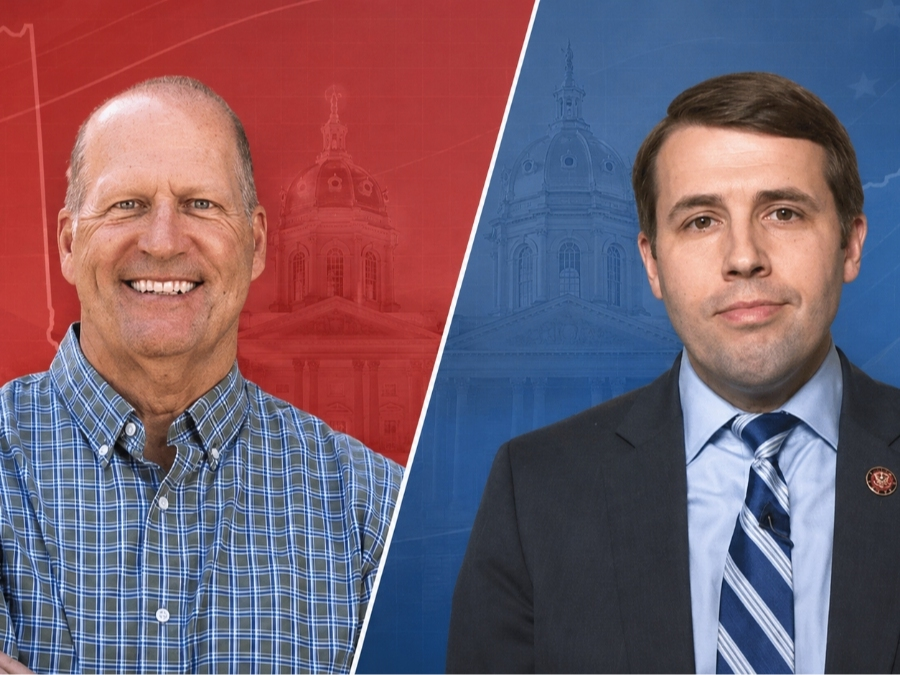
Pappas, running to replace retiring Democratic U.S. Sen. Jeanne Shaheen, is in a competitive race with former New Hampshire U.S. Sen. John E. Sununu, polling shows. For months, Trump’s support in the Granite State has fallen, while Sununu’s numbers have remained steady — a trend that makes Carville “uncomfortable.”
“It is a warning sign. I have seen what happens when we assume a race is in hand and the resources don’t follow.”
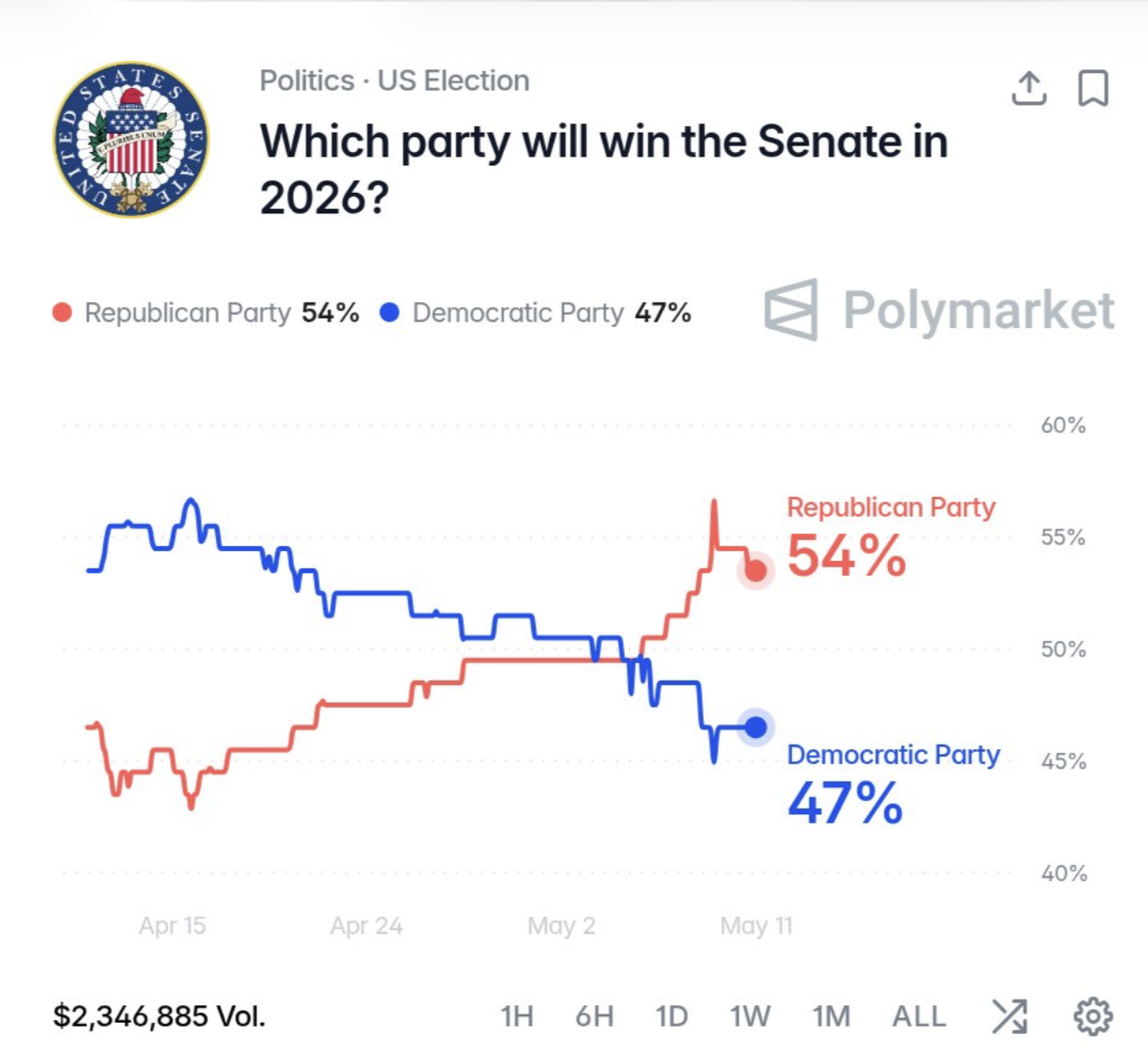
And it’s not just New Hampshire. A month ago, the Polymarket predictive website gave Democrats a double-digit margin on winning the Senate this year. On Monday, those numbers had reversed, with bettors giving the GOP a 54 percent to 47 percent edge to hold the upper chamber. Betting markets aren’t predictive, but they reflect the views in the political marketplace. And they’re much better than they were just a few weeks ago.
Political strategists like Matthew Bartlett, who splits his time between New Hampshire and Washington, D.C., say the GOP gloom first began to break when incumbent Maine Gov. Janet Mills was forced to drop out of the U.S. Senate race and hand her party’s nomination to controversial progressive Graham Platner.
Suddenly, a race that appeared to be a likely GOP loss turned into a toss-up — or even a tilt toward incumbent Sen. Susan Collins. Without Maine, the Senate map gets tough for Democrats.
Then came the U.S. Supreme Court ruling that race-based district maps are unconstitutional, opening the door for Republicans to redraw the maps and add seats in red states like Tennessee and Alabama.
Soon after, the Virginia Supreme Court gave Republicans another big boost, ruling that Democrats violated state law with their rushed gerrymander, leaving the new maps in limbo. Instead of a 9-1 Democratic advantage, the court’s actions leave the state with its 6-5 Democratic split.
When the redistricting dust clears, according to the Cook Political Report, the potential outcomes range from a GOP best-case scenario of netting 13 seats to Democrats’ best outcome, which is a push: no change.
That’s a very different result than Republicans were looking at just a few weeks ago, when the gerrymandering play looked like a mistake.
“It’s not just the mood that’s changed — it’s the maps,” Bartlett said. “The result is a renewed sense of optimism for Republicans, even while they acknowledge it will be hard to blunt the impact of the potentially overwhelming momentum Democrats have.”
Across the political horizon, Democrats have the edge. But Republicans have hope because they aren’t trailing as badly as they might expect. According to the RealClearPolitics average, Democrats’ generic-ballot advantage is 6 points. Not bad, but nothing like the 13-point advantage they rode into the 2006 blue tsunami.
Democrats like D.C.-based strategist Joel Payne say they aren’t worried, that even messing with the maps won’t be enough to save the GOP House majority.
“Trump and Republicans shamelessly think they can redraw their way out of accountability this November,” Payne said. “In reality, their nationwide effort to pick their own voters will likely only affect the margin by which they will be in the minority in the next Congress. Even with the extreme advantages they have rigged for themselves with these maps, they cannot outrun the historic unpopularity of Trump and his agenda.”
So why are Democrats struggling in a state like New Hampshire, where Trump’s numbers are terrible, and voters rarely pick Republicans in federal elections?
On the NHJournal podcast, political operative Greg Moore points out that despite Trump’s numbers and the soaring gas prices, the best Democrats have gotten out of it is a “dead cat bounce.”
“Voters really are not gravitating to any of the messaging the Democrats are putting forward,” Moore said.
Karl Rove noted the same thing on Fox News this weekend. As unpopular as Trump is in the RCP average — 41 percent approve, 55 percent disapprove — he’s still more popular than the Republican Party at 38 percent-56 percent and the Democrats at 35 percent-56 percent.
And then there’s the Republican Party’s cash advantage. The party’s top U.S. Senate PAC has about twice as much cash on hand, $166 million, as its Democratic counterpart, $74.8 million. The GOP’s House PAC is outpacing Democrats, and Trump is sitting on the sidelines with more than $300 million — and no reelection campaign to run.
Moore predicted that $250 million would be spent on the New Hampshire Senate race.
Republican strategist Dave Carney doesn’t agree. He’s predicting even more spending.
“If Republicans think New Hampshire has a real opportunity with Sununu vs. Pappas race, remember: The Maggie Hassan vs. Kelly Ayotte race was $230 million spent on both sides. I think we’ll be close to $400 million before it’s over,” Carney said.
None of this changes the fundamentals: a midterm election, an unpopular president, and a nation at war with soaring gas prices.
But at least, as one Republican operative told NHJournal on background, “I can walk across a bridge without wanting to jump.”
This story was originally published by the NH Journal, an online news publication dedicated to providing fair, unbiased reporting on, and analysis of, political news of interest to New Hampshire. For more stories from the NH Journal, visit NHJournal.com.