Politics & Government
U.S. Attorney Creegan Taps Terrorism, Drug Crime Veterans For Leadership Posts
NH may be one of America's safest places, but Erin Creegan says proximity to drug trafficking routes means vigilance is still required.

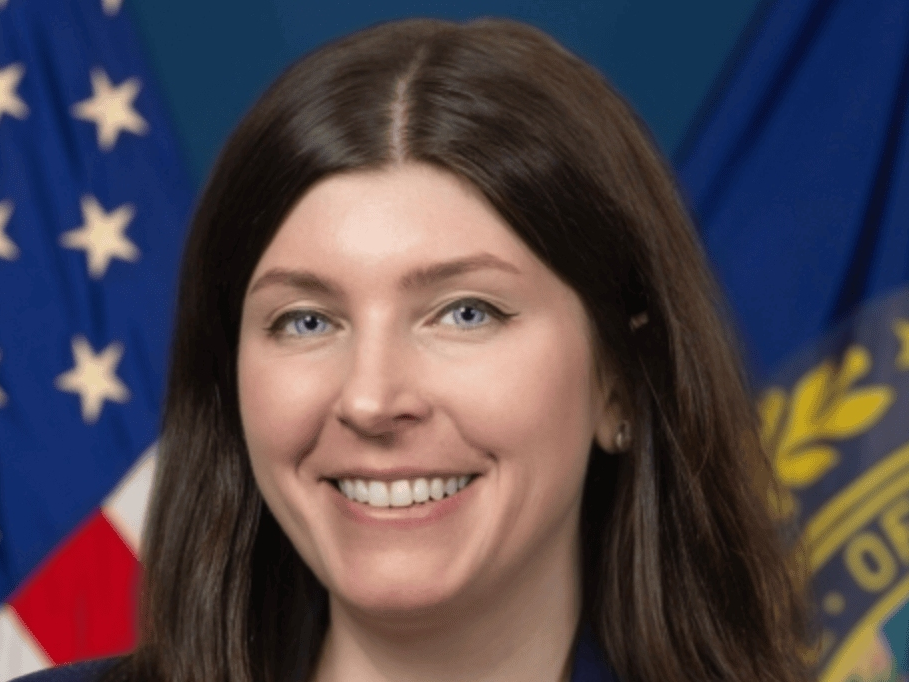
When New Hampshire U.S. Attorney Erin Creegan recently picked the top lieutenants to help run her office, she chose veteran prosecutors with years of experience fighting international terrorism and drug trafficking.
And that, Creegan told NHJournal, “is not a coincidence.”
Find out what's happening in Across New Hampshirefor free with the latest updates from Patch.
The Granite State may be one of America’s safest places, but Creegan says proximity to major drug trafficking routes and evolving national security threats means vigilance is still required.
“A major strategic focus of the attorney general and this administration is combating violent crime and organized criminal actors,” Creegan said.
Find out what's happening in Across New Hampshirefor free with the latest updates from Patch.
And she’s hoping some of New Hampshire’s best and brightest will step up to help with the job.
Creegan appointed Kiersten Korczynski as the first assistant U.S. attorney and longtime prosecutor Jennifer Cole Davis as chief of the Criminal Division for the District of New Hampshire. Between them, the two prosecutors bring decades of experience handling international terrorism cases, cartel-linked narcotics investigations, and complex federal prosecutions.
“Our office is expanding to meet the current threat. We’re looking for New Hampshire’s best and brightest to lead investigative teams that will take on the toughest national security, drug trafficking, organized crime, violent crime, and human trafficking cases.”
Davis and Korczynski discussed their experiences in a recent interview with NHJournal.
Korczynski arrives with a national security résumé that includes prosecuting terrorism cases tied to the Sept. 11 attacks. It’s a set of skills law enforcement needs as Iran continues to threaten to use terror to retaliate against the U.S. and as some homegrown terrorists inspired by groups like ISIS look for soft targets.
“Iran’s conduct toward the United States has been ongoing for nearly 50 years, and it doesn’t care what state the American citizen resides in,” Korczynski said.
Before coming to New Hampshire, Korczynski served as a trial attorney in the Department of Justice’s National Security Division, working in the Counterterrorism Section, handling international terrorism prosecutions and coordinating investigations involving federal and state law enforcement.
Prior to that, she spent a decade in the U.S. Navy Judge Advocate General’s Corps, serving as both defense counsel and a prosecutor in the Guantanamo Bay military commission case against Khalid Sheikh Mohammed and other alleged conspirators accused of planning the Sept. 11 attacks.
“I spent the largest part of my time in the Navy as a prosecutor for the Guantanamo Bay prosecution,” Korczynski said.
Korczynski said the threat of terrorism remains persistent across the country.
“No one’s immune to the threat from Iran or any terrorist group,” she said. “This is a threat that’s pervasive across the United States.”
The same is true for organized narcotics trafficking. That’s where Davis’ experience comes in.
“For approximately 15 years, I ran what was then called the OCD program, or the Organized Crime Drug Enforcement Task Force, which brought together federal, state, and local law enforcement to interdict and disrupt large drug trafficking organizations, mostly cross-border,” Davis said.
New Hampshire’s struggles with opioids, both addiction and deaths, are well-documented. In one week in March, Creegan’s office announced the resolution of multiple cases involving methamphetamine and fentanyl distribution. One suspect, a 35-year-old man from the Dominican Republic, pleaded guilty to both selling meth around Rochester and being an illegal immigrant who reentered the country after being deported.
Asked if she was surprised by the volume of drug crimes in a small state like New Hampshire, Davis said no.
“We may be a tiny little state, but we sit right outside the hub of the major Northeast distribution point, which is Lawrence, Mass. We’re straight up in the 93/95 corridor.”
The cartels are “not necessarily here with boots on the ground,” Davis said, but “they are working through local distributors, moving an incredible amount of narcotics from New York to Lawrence and into New Hampshire and Maine.”
“We’re working every day to disrupt that supply chain,” Davis said.
Law enforcement agencies, including the DEA and Department of Justice, have long identified Lawrence, Mass., as the primary narcotics trafficking hub for the Northeastern United States.
Its location along major highways such as Interstate 93 and Interstate 495 makes the city a strategic distribution center supplying drugs to markets throughout New England, including New Hampshire, Maine, and Vermont.
According to the New England High Intensity Drug Trafficking Area, many drug users and low-level dealers from neighboring states travel directly to Lawrence to purchase narcotics for resale in their home communities.
Investigations have also linked trafficking organizations operating in Lawrence to major international cartels. A 2025 DEA investigation identified a Lawrence-based network supplied with fentanyl and methamphetamine by Mexico’s Sinaloa cartel.
The city has also been central to the region’s fentanyl crisis. A 2021 Brandeis University study found nearly 90 percent of drug samples tested in Lawrence contained fentanyl.
Creegan said that makes the role of federal prosecutors particularly important.
“These are complicated investigations,” she said. “It takes a lot of investigative resources and a coordinated effort between federal, state, and local law enforcement.”
And she said her office is looking for help here in New Hampshire.
“Our office is expanding to meet the current threat. We’re looking for New Hampshire’s best and brightest to lead investigative teams that will take on the toughest national security, drug trafficking, organized crime, violent crime, and human trafficking cases.”
This story was originally published by the NH Journal, an online news publication dedicated to providing fair, unbiased reporting on, and analysis of, political news of interest to New Hampshire. For more stories from the NH Journal, visit NHJournal.com.