Community Corner
Weeks State Park Estate Renovated, Improved Honoring A 'Native Hero'
The house at the top of the one-mile winding paved road was built in the craftsman style and has thick, clay roof tiles, and stucco facade.

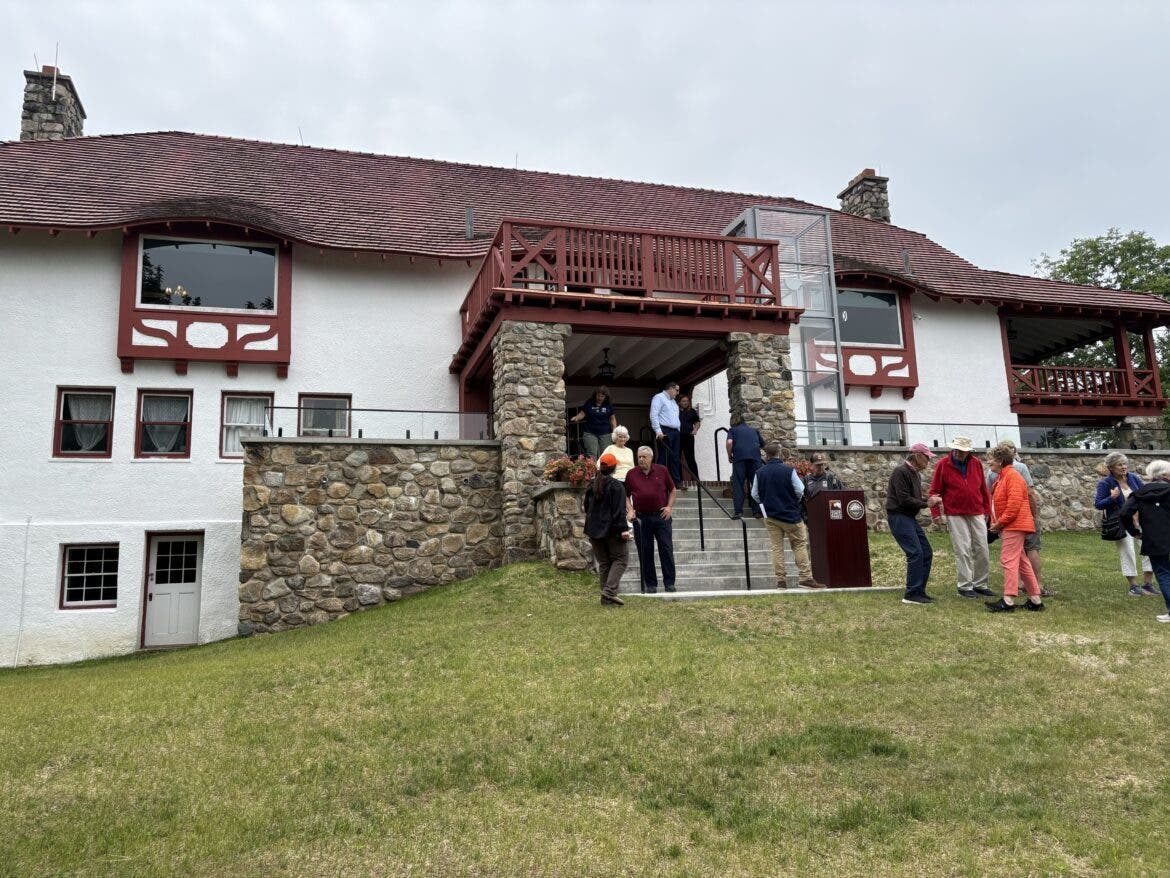
LANCASTER, NH — A jewel of the North Country has been improved and restored for public education and enjoyment, thanks to about $3 million in federal funds administered through the state.
On Saturday, about 50 people gathered at Weeks State Park atop Mount Prospect to celebrate the restoration of the John W. Weeks Lodge.
It was built in 1911, the same year that its owner led the nation to create the Weeks Act, which allowed the federal government to establish the National Forest system, including the almost 800,000-acre White Mountain National Forest.

PAULA TRACY photo
Find out what's happening in Across New Hampshirefor free with the latest updates from Patch.
The improvements at the stately home, with a view of the White Mountains toward the Kilkenny Range, will allow for better public access through the Americans with Disabilities Act, including an outdoor lift/elevator on the north side to get people to the grand ballroom on the second floor where the Weeks State Park Association hosts its many informational seminars.
Including work on the deck, an ADA accessible bathroom and separate improvements several years ago on the fieldstone lookout which is also accessible to the public, the property has never looked better, said members of the Weeks State Park Association.
Attending the celebration were a number from the Weeks family, including Weeks’ great grandson, retired architect Rob Bast of Vermont.
He said his great-grandfather, who died 100 years ago, would be thrilled with the improvements made by the state using some of the funds from the post COVID-19 American Rescue Plan Act.
The house at the top of the one mile winding paved road was built in the craftsmen style and has thick, clay roof tiles, and a stucco facade because Weeks was afraid of it being destroyed by fire, Bast said.
A Congressman and Senator from Massachusetts, Weeks was originally from Lancaster and returned to the property in summers and for his retirement. After his death in 1926, the family donated the entire 438-acre estate to New Hampshire in 1941 to allow it to be accessible to the public.
“He was a visionary guy,” Bast said of his great-grandfather.
“Getting things done takes time. He had the patience to follow through on the Weeks Act,” he said. And it has taken time and patience to work with the state to see the improvements. But as he descended the steep corner staircase that elderly have struggled to get up to attend events, he said the improvements are a source of great joy.
“He would be very happy about this,” he said.
Bast said he started working on the building as a legacy project more than 20 years ago and helped convince the state to replace the clay roof tiles. He said he went to the basement and found a few left over and was able to track down the company that manufactured them who were willing to reproduce the same product. Fortunately for the house, they were still in business and the state agreed to the restoration rather than going with a metal roof or something inferior.
With the help of the association several years ago, the tower, which served first to hold water and became a lookout and fire tower, was also restored and can be accessed by about 50 steps to a magnificent view mostly to the north.
Matthew Flanders, director of the New Hampshire Bureau of Historic Sites said about 70 percent of all ARPA dollars coming into the agency went to this project.
In all, the state received about $1 billion in ARPA funds distributed throughout the state and various state departments for one-time capital projects.
“Our responsibility isn’t simply to preserve these buildings. It is to preserve the stories connected to them and make sure this site remains welcoming, accessible and relevant…” he said.
Executive Councilor Joe Kenney, R-Wakefield, who voted for the funding and advocated for the repairs following a council meeting in the grand ballroom in 2018, attended the event and spoke briefly. He said sometimes big projects like this take time and identification of resources also takes time.
Kenney called Weeks a native “American hero” and he thanked the association for its partnership which made the improvements possible.
Some Conservation/Heritage, “Moose Plate” funds have also been used to help with improvements at the park.
“The north country does not have a statue of a hero on the state Capitol (lawn.) John Wingate Weeks would be a good statue,” he said, noting we would not have the 20 million acres that were conserved without the Weeks Act, enacted by him and his colleagues in 1911.
The park allows dogs on leashes and has a number of trails available with lookouts. To get more information about the event, photographs and learn about the upcoming educational offerings of the Weeks State Park Association, visit https://www.weeksstateparkassociation.org
For the State Park website visit https://www.nhstateparks.org/find-parks-trails/weeks-state-park/
Find out what's happening in Across New Hampshirefor free with the latest updates from Patch.
This story was originally published by InDepth NH.