Politics & Government
YDC Victims Ask Supreme Court To Reverse Legislative Changes To Settlement Process
The legislature made the changes as part of the current budget trailer bill, which changed the settlement fund administrator.

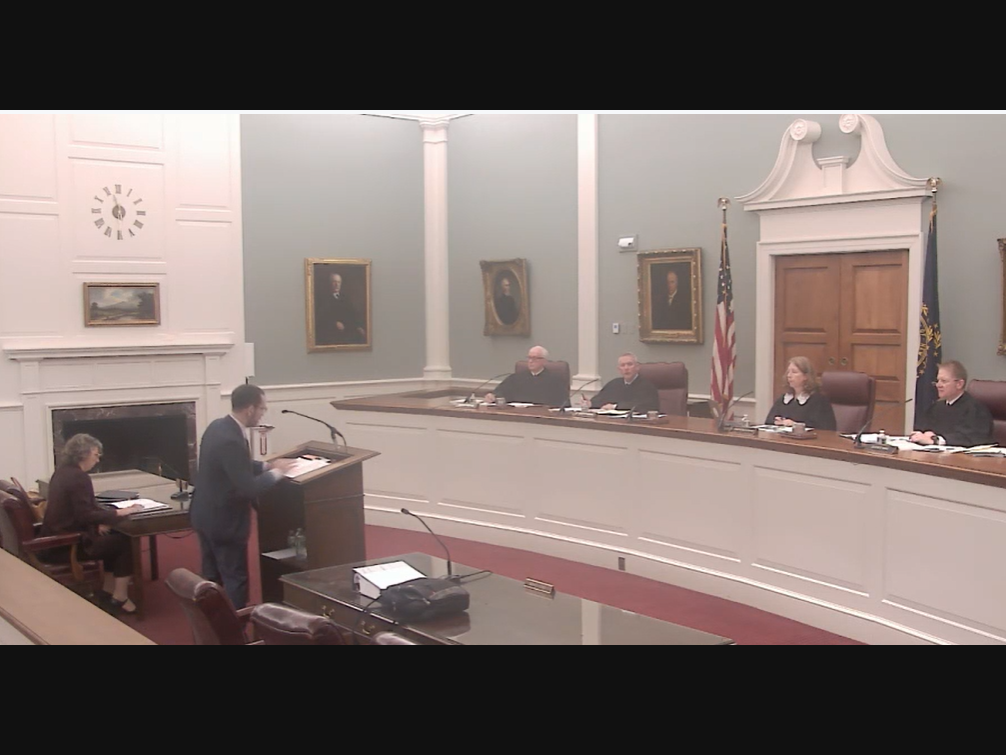
CONCORD, NH — A lawyer for more than 1,900 individuals who consider themselves victims of sexual and physical abuse at the state-run former Youth Development Center argued before the state Supreme Court Wednesday as part of an effort to block settlement changes made by the legislature in 2025.
A lawyer for the state said the changes do not impact a claimant’s right to exit the settlement process and go to Superior Court instead.
Find out what's happening in Across New Hampshirefor free with the latest updates from Patch.
The four justices who heard the half hour of arguments will likely rule on the matter in 2027. They are Senior Associate Justice Patrick Donovan, Justice Melissa Countway, Justice Bryan K. Gould and Justice Daniel E. Will.
The fifth justice, Gordon MacDonald, the former chief justice, resigned last month after the Judicial Conduct Committee found he violated three canons of the Code of Judicial Conduct.The case is Andrew Foley et al. v. State of NH 2026-0083. A link to the 28 minutes of oral argument is here https://vimeo.com/1235896032.
Find out what's happening in Across New Hampshirefor free with the latest updates from Patch.
The 2025 changes made by the legislature as part of the current budget trailer bill changed the settlement fund administrator to a political appointee by the governor. The administrator formerly was appointed by the judiciary, a separate but co-equal part of government.A second change allows the attorney general to veto settlements.Retired Supreme Court Justice John Broderick, appointed as the first administrator, opposed those changes and stepped down from his role after they took effect.
The Executive Council confirmed retired circuit court judge Gerard Boyle to oversee the fund and he has resumed hearings to determine settlements.
Estimates are that the state’s taxpayers will need to spend close to $1 billion over time to YDC victims due to the treatment they suffered as incarcerated children by then-state employees but that could be less or more depending on whether the claimants settle in the fund or instead go to court.
Daniel Deane, an attorney representing the group appealing the Superior Court decision, said the state made an offer and more than 1,900 accepted it and stayed their lawsuits and their place in line going to court. One day after the filing deadline, he said the state changed a core term of the bargain, “stripping the finality of the administrators awards,” he said.
The legislature’s intent to create binding contracts is unmistakable in the statute, Deane said, and it constitutes the state’s offer to resolve completely and finally all the YDC resident claims.
The state concedes that the statute uses contractual terms like “offer” and “acceptance,” Deane said and it may create a contract for the resolution of a claim.
“So the question is not whether there is a contract, the question is what is in the contract. And the binding effect of the administrator’s decisions is a foundational term of the bargain. The challenged amendments took that away by providing the attorney general designee with the power to reject final awards after the claimant had performed by filing a claim, by staying their lawsuits and by submitting themselves to give testimony before the administrator,” Deane said. He made four points: One, that the contract was formed not as an acceptance of an award but a claim filing. Two, the finality of an accepted awarded was unmistakably a foundational term of the bargain. Three, the 2025 amendments breached that foundational term, the breach is material and the impairment substantial, at least under the pleadings; and four, “the breach is actionable because all claimants accepted the offer before the amendments took effect…”
Upon questioning by Justice Countway, Deane confirmed that the claimants can withdraw from the settlement route and go to Superior Court for a civil trial.
Mary Triick, assistant attorney general representing the state, said this is not a binding contract because it still allows the claimant to walk away and go instead to court for relief. She opposed a remand to the Superior Court and said the lower court got it right.
“Claimants can get out whenever they want,” she said with the current program, including the legislative changes made in 2025.
This story was originally published by InDepth NH.