Health & Fitness
Real Food in Amherst: Egg FAQ's
This week's blog covers our most frequently asked egg questions such as "What's the difference between white and brown eggs?" and "How can I make hard-boiled eggs that peel easily?"
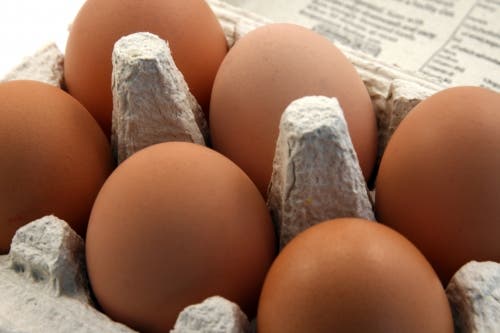
As promised, this week’s blog answers our most Frequently Asked Questions about eggs.
WHY BUY FREE-RANGE EGGS? All eggs contain Vitamins A, D and E and have good amounts of omega-3 fatty acid, beta carotene and good-for-you cholesterol. Not to mention they are an excellent and economical way to put protein in your diet. However, free-range eggs have 2 to 3 times the levels of all those vitamins and omega-3’s. So, even at double the price of cheap supermarket eggs, you’re getting a bargain!
WHAT IS THE DIFFERENCE BETWEEN BROWN AND WHITE EGGS? From a nutrition standpoint, nothing. The color of the egg is based on the breed of the chicken, that’s all. Only one breed of chicken, the White Leghorn, lays those bright white eggs you can find in the grocery store. Nearly every other breed of chicken lays some shade of brown egg. The White Leghorn chicken though is a small bodied bird, made for laying eggs and cannot tolerate our northeastern winters. They are found only in the south and in large, temperature controlled egg houses. So, you can assume any white eggs found locally have come a great distance.
Find out what's happening in Amherstfor free with the latest updates from Patch.
WHAT IS THE DIFFERENCE BETWEEN A FERTILE AND NON FERTILE EGG? Again, no difference. You can’t tell by looking at them, nor is there a difference in nutrition. Any price difference for “fertile eggs” is simply a marketing gimmick. If you buy eggs local from a farmer and there is a rooster around, you may be getting fertile eggs. Otherwise, you are not. Either is fine.
WHY IS THERE SOMETIMES A BIT OF BLOOD IN THE EGG? Free-range chickens are happy, busy girls. They run around the chicken yard, fighting with their sisters for bugs that fly past. Occasionally they are a bit too routy in their play and will rupture a little capillary somewhere in their egg tract. This makes blood in the egg. You will rarely find this in commercial eggs as the chickens can’t move at all in their tiny cages, and the eggs are examined under strong light to make sure they are clear. A little blood in an egg doesn’t hurt anything - so just smile and know it came from a happy, busy hen.
Find out what's happening in Amherstfor free with the latest updates from Patch.
HOW CAN I MAKE HARD-BOILED EGGS THAT PEEL EASILY? We’ve all been frustrated by a batch of hard-boiled eggs that are nearly impossible to peel without half the egg coming off with the shell. This happens if your eggs are too fresh or too old. My experience is 5 - 8 days is about right for perfect-to-peel eggs. If you know when the eggs were laid, set them aside for a week, then hard boil them.
DO EGGS NEED TO BE REFRIGERATED? When an egg comes out of the hen, it is covered in a dull protective coat. If this coat remains on, eggs last a couple weeks at room temperature. Once eggs have been washed, they need to be refrigerated.
If you have any other questions, feel free to post them below or reach us through our Amherst Family Farm website: www.NHHoney.com