Politics & Government
Questions Fly Over Revamped Open Enrollment Plan In New Hampshire
SB 101, which passed the Senate on a 14-10 vote, would allow students to attend other public schools that have "capacity" for new students.

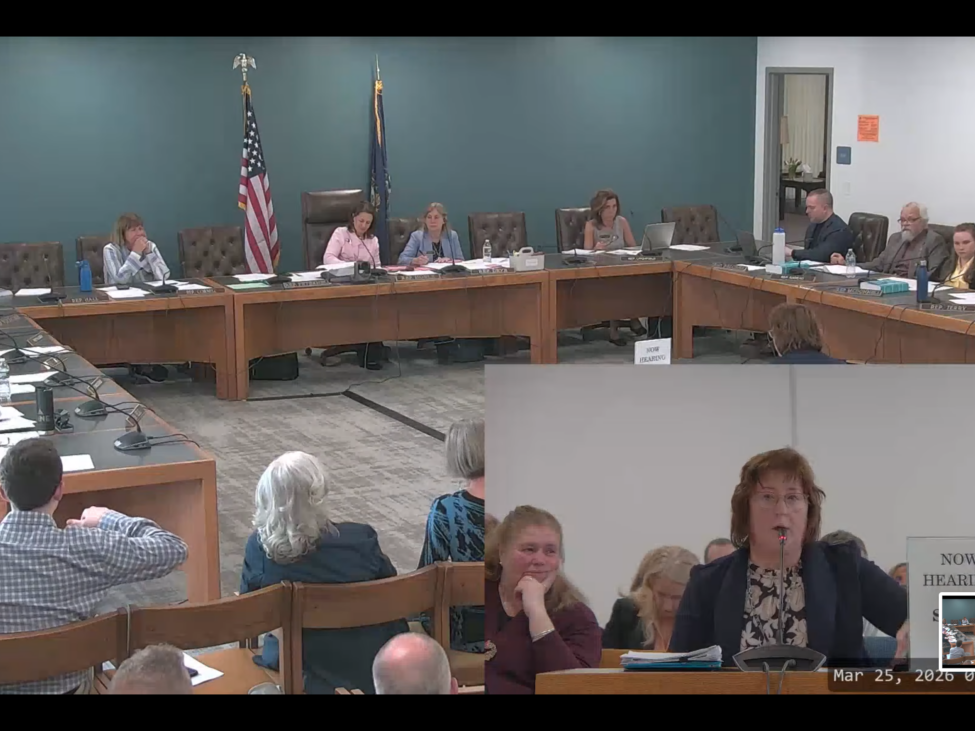
CONCORD, NH — A revamped school open enrollment bill presented Wednesday would have the state pay for the program and not the students' resident school district.
Senate Bill 101, which passed the Senate on a 14-10 vote earlier this year, would allow students to attend any other public school in the state if that facility has the “capacity” and meets several statewide guidelines for acceptance.
Find out what's happening in Amherstfor free with the latest updates from Patch.
The new program would not go into effect until the 2026-2027 school year and would prohibit schools from accepting or rejecting students based on pupil needs, special education needs, disabilities, aptitude or athletic achievement.
Many questions raised at the public hearing before the House Education Policy and Administration Committee Wednesday concerned special education students, what services would be available, transportation needs and which school district would be responsible for additional services and the costs of those services under open enrollment.
Find out what's happening in Amherstfor free with the latest updates from Patch.
The state has had a law for the past three years allowing open enrollment, but on a voluntary basis with only Prospect Mountain High School in Alton the only receiving school.
School districts throughout the state acted this spring on open enrollment, most preventing their students from participating while agreeing to accept outside students, with a small number setting both numbers at zero.
The prime sponsor of Senate Bill 101, Sen. Timothy Lang, R-Sanbornton, said he met with superintendents, principals and other school officials to hear their concerns and revamped the bill to address them.
“I heard four big things: funding, capacity, transportation and effective date,” Lang said, noting he tried to address those concerns.
“For too long, a child’s educational destiny has been decided by one factor, their zip code,” he said. “They are forced to attend based on an arbitrary geographic boundary instead of where a child could truly thrive.”
Lang said his bill is not about destroying public education, but making it more accessible to all students.
However, opponents of the bill, which far outnumbered supporters in the House electronic system, said the bill would exacerbate the great disparity between school districts based on socioeconomic levels, would be a management nightmare for administers and would discriminate against those on the low end of the economic scale and special education or special needs students.
“This will divide the haves and the have-nots,” said Rep. Stephanie Grund, D-Amherst. “Those who can afford to get their child to another school will benefit, while those (left in struggling districts) will see decreasing resources.”
Others were concerned that once again the legislature was proposing spending additional money from the state’s Education Trust Fund, when they refused to meet the costs of an adequate education under their constitutional duties.
Lang said he used the Charter School model where the state pays about $9,000 per student which is about $2,000 more than the average per pupil cost for public education which he said is about $6,800 per pupil, although the basic adequacy grant is about $4,200.
He estimated the first year of open enrollment would cost about $6 million if three percent of students change schools.
“Instead of funding education you increase the disparity between school districts,” said Heather Robitaille, the chair of Merrimack School District Budget Committee. “If you can find millions (of dollars) for open enrollment, why not find funding for every public school?”
She noted her district is cutting 21 staff members in next year’s budget and several programs, including the gifted and talented program, because of residents’ concerns about property taxes.
Her district only received 68 percent of what the state owed it in special education costs for last school year, she said, yet they find the money for open enrollment.
She said the proposed open enrollment program would not be available to every student or family or community due to transportation costs which are the responsibility of the parents under the bill.
And Robitaille said open enrollment will make it difficult for the school board to establish a budget without knowing how many new students may be attending in the fall.
“This continues to exacerbate the decades-long school funding crisis,” she said.
Others were concerned the bill does not clearly define what a school’s capacity would be under the program.
Under the bill school boards and administrators are required to determine each school’s capacity by grade level, career and technical education program, and other academic programs, and publish the seats available on their website twice a year, July 1 and Dec. 15.
The districts are also to file reports annually with the Department of Education with the number of applications they received, acceptance and denials, and reasons for each denial, which the agency is expected to publish annually.
A student can only be denied if he or she has been expelled from this resident district, has a history of disciplinary problems, is chronically absent, does not satisfy prerequisites, or the grade level, or program is at capacity.
If schools receive too many applications they are to use a lottery to determine who would be accepted, but can prioritize students whose parents work at or have siblings at the school, or are within a defined geographic boundary.
Christine Downing, the superintendent of Grantham schools, who worked two years ago to try to revise the state education minimum standards or 306 rules after the state School Board’s proposal came under fire, said the definition of capacity needs more clarity.
“Is capacity a physical space in a classroom or class size, which is not the same as a ratio,” she asked.
The teacher to student ratio changes with grade levels, she noted, for kindergarten to second grade is one to 25, but what happens when it reaches 26 students? Under the new rules, it says certified educator which is a teacher or a paraprofessional, Downing said.
So instead of splitting the class in half, a para-educator could be added to satisfy the ratio while the 26 students in the room will still be the responsibility of the teachers, she said.
That definition in the 306 rules is used throughout the proposal, she noted.
Rep. Heather Raymond, D-Nashua, who is on the Nashua School Board, noted her district has the only program for deaf and hard-of-hearing students in the state.
It is financially feasible because the district has tuition agreements with other districts in the region for their students with tuition of $50,000 a year.
Is the district supposed to list capacity in the program and have a student outside the districts with tuition agreements apply and accept what the state would pay for that student $9,000, she asked.
“Without that ($50,000) payment we cannot afford to pay the specialists and the program is in question,” Raymond said. “The question is how do we afford it. It is not up to Nashua taxpayers to absorb the costs.”
She noted some states have successful open enrollment programs, but this bill does not adopt the policies that work.
Kelly Gibson of Lyndeborough, who is the single mother of five children with special needs, supported the bill. She told of her troubles finding schools and services for her children.
“In every school district — I’ve been doing this for 28 years — if they find a loophole they will not provide services for special education, they will do that,” she said.
She said she supports the bill because it will allow parents to find education somewhere for their child, but noted the bill makes it prohibitively expensive between tuition and travel expenses which will be about $15,000 a year for many parents.
“That’s a barrier for a child based on income not need,” Gibson said. “If a policy does not expand opportunity, then it defines who is excluded from it.”
Downing said the bill leaves too many questions about special education students.
If a district enrolls a student with needs that require a special program and the district does not have the program, how do you navigate that, she asked.
The bill says the sending district is responsible for the special education services, she noted. “Do I have to create something and then bill the sending district?” she said.
Kelly McConnell, the chair of the Hanover School Board, noted her district includes Norwich, Vermont that pays tuition to attend Hanover High School.
Under the bill, every town in Vermont would be able to tuition students to Hanover schools, she noted.
She said she anticipates taxpayers in her community will be spending legal fees deciding how to handle interstate issues with the bill.
With the state paying $9,000 per student students and the average per pupil cost statewide is about $21,000 per student she said, who makes up the difference?
She said taxpayers are not going to want to pay for students who have historically not gone to their schools.
The hearing was recessed until April 1 at 10 a.m.
Garry Rayno may be reached at garry.rayno@yahoo.com.
This article first appeared on InDepthNH.org and is republished here under a Creative Commons license.