Real Estate
Cline: Smaller, Cheaper Homes Are Coming To New Hampshire
Think tank president: Governments have regulated private land to such an extent achieving the American Dream is impossible in some states.

Last year, a bipartisan majority of legislators agreed to legalize manufactured homes in all residential zones in the state. But it never happened. Though House Bill 685 passed both chambers on voice votes, it died in a committee of conference.
The bill was an effort to open the housing market to a cheaper, smaller form of residential dwelling that could provide entry-level options for Granite Staters priced out of the current market.
Find out what's happening in Bedfordfor free with the latest updates from Patch.
Where New Hampshire failed, Congress has stepped in.
A New Definition of Manufactured Homes
The federal 21st Century ROAD to Housing Act, now law, changes the federal definition of a manufactured home.
Find out what's happening in Bedfordfor free with the latest updates from Patch.
Until now, manufactured homes legally had to be mobile, meaning they had to be built on a permanent chassis. The chassis requirement is gone, giving consumers more options.
The law also requires states to update their statutes to comply with federal law. New Hampshire’s definition of a manufactured home includes the chassis requirement, so that will have to change during the next legislative session.
This does not mean manufactured homes will have to be allowed in all residential zones. But once they are no longer attached to wheels, it will be only a matter of time before the justification for segregating them into separate residential zones fades.
Tiny Homes and Yurts
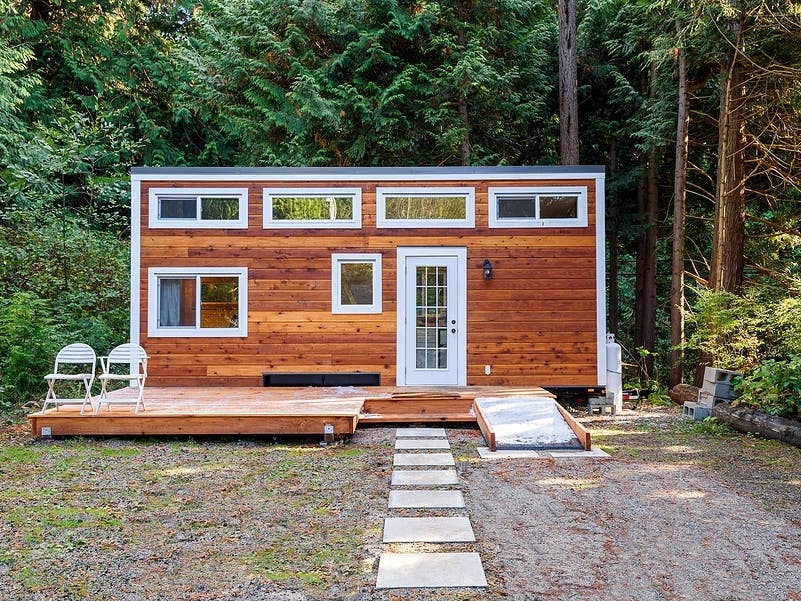
This week, Gov. Kelly Ayotte signed a bill creating a legal pathway for the construction of tiny homes and yurts as permanent residential structures in New Hampshire.
It should be legal to build a small home on land you own. But American life has become so heavily regulated that even building a little house for yourself is of questionable legality.
That changes with the enactment of House Bill 1681. The bill defines both “tiny house” and “yurt” in law and establishes a legal framework for regulating them at the state and local levels.
Those legal definitions, along with the regulatory structure built around them, provide clarity to builders and local governments. There is now no question that people can build these small dwellings on their own land.
The bill defines a “tiny house” as a detached, permanent residential dwelling of 600 square feet or less, excluding lofts, that “complies with the tiny home provisions of the state building code” and is built “on a stable ground surface or foundation.”
It also legalizes a “tiny house on wheels,” or “THOW,” defined as “a tiny house built on a trailer chassis without motive power.”
A yurt is now defined in state law as “a style of tiny house that is a round or similar shape and is a freestanding structure modeled after traditional nomadic dwellings, constructed with contemporary materials and engineering for use as a permanent or long-term residence.”
So, if you have always wanted to live in a modern version of an igloo, teepee, or traditional yurt, you are in luck.
Legalizing the American Dream
From the start, American culture has embraced the idea that, in this country, you are free to build a life for yourself from scratch. Buying land and building a home, however modest, has always been considered an emblem of the American Dream.
But over the last century, governments have regulated the use of private land to such a degree that achieving the American Dream in this traditional way is nearly impossible in many parts of the country.
That includes New Hampshire, where legislators had to pass a law — 250 years after the birth of the country — just to make clear that people are free to buy a plot of land and build a modest home for themselves.
Obstacles to achieving this dream remain. Though these smaller, less expensive homes will soon be an option, minimum lot-size requirements can keep them out of reach.
The state might allow you to build a 600-square-foot house, but if the local government requires you to buy a two-acre lot for it, you are still priced out of this entry-level home.
Lawmakers from both parties have worked together in recent years to make real progress in cutting through the thicket of regulations choking the state’s housing market. But more work remains.
This story was originally published by the NH Journal, an online news publication dedicated to providing fair, unbiased reporting on, and analysis of, political news of interest to New Hampshire. For more stories from the NH Journal, visit NHJournal.com.