Politics & Government
Cyanobacteria Warning Issued for Sebbins Pond in Bedford
NH DES: Deep green colored masses can be seen floating in lake and the department advises lake users to avoid contact with the water.


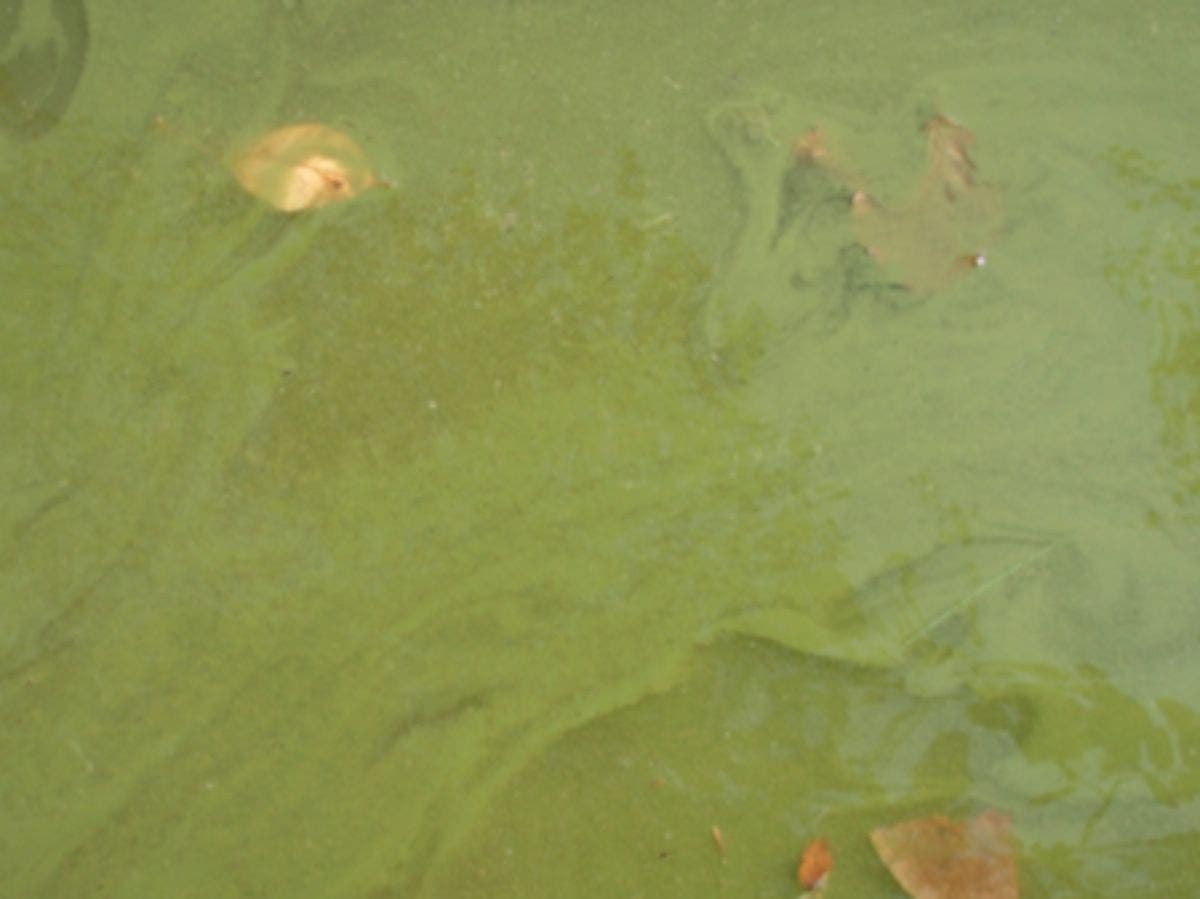
CONCORD, NH — The New Hampshire Department of Environmental Services (DES) has issued a cyanobacteria lake warning for those who recreate on Sebbins Pond in Bedford due to the prevalence of cyanobacteria in the waterbody, according to a press statement. This warning is intended as a precautionary measure to prevent short term exposure to cyanobacteria toxins. DES advises lake users to avoid contact with the water.
"Deep green colored masses can be seen floating in lake," according to James Martin, the public information officer for the NH DES. "The warning is being issued based on visual inspection of the waterbody and a past history of cyanobacteria blooms."
The department also advises pet owners to keep their pets out of water. Please continue to monitor your individual shoreline for changing conditions.
Find out what's happening in Bedfordfor free with the latest updates from Patch.
According to Martin, the NH DES routinely monitors public beaches and public waters of the state for cyanobacteria. Once a cyanobacteria warning has been issued, DES returns to affected waterbodies on a weekly basis until the cyanobacteria bloom is not evident. Cyanobacteria are natural components of water bodies worldwide, but blooms and surface scums may form when excess phosphorus is available to the water. Some cyanobacteria produce toxins that are stored within the cells but released upon cell death. Toxins can cause both acute and chronic health effects that range in severity. Acute health effects include irritation of skin and mucous membranes, nausea, vomiting, and diarrhea. Chronic effects include liver and central nervous system damage.
The Sept. 1, 2016, warning will remain in effect until additional samples reveal cyanobacteria levels have diminished.
Find out what's happening in Bedfordfor free with the latest updates from Patch.
Visit the DES Beach Program website for photos and more information about cyanobacteria at des.nh.gov/organization/divisions/water/wmb/beaches/index.htm
Updates on advisories and warnings may be obtained at des.state.nh.us/WaterShed_BeachMaps/WaterShed_BeachMaps.aspx
Follow the Beaches twitter feed at twitter.com/NHDES_Beaches
If you notice anything resembling cyanobacteria, please refrain from wading, swimming, or drinking the water. Keep all pets out of the water and contact DES immediately. Please call DES to report a cyanobacteria bloom at 603-419-9229.
Submitted by James Martin.
Get more local news delivered straight to your inbox. Sign up for free Patch newsletters and alerts.