Politics & Government
Rubens: It's Time to Re-Think the Drug War
Candidate proposes "more effective solutions"; releases video of NH prisoners talking about how the current system is failing them.


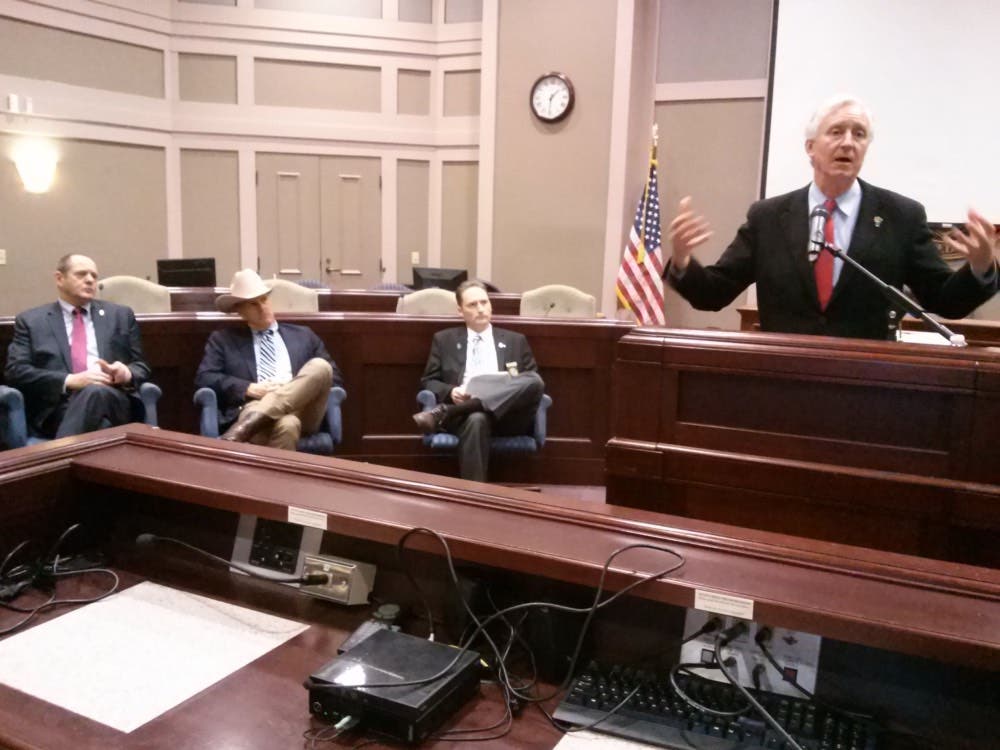
MANCHESTER, NH - At a press conference on April 26, 2016, former state Sen. Jim Rubens, R-Hanover, who is running a primary challenge against U.S. Sen. Kelly Ayotte, R-NH, was accompanied by current and retired law enforcement to discuss the failed War on Drugs and more effective approaches to the opioid crisis. The campaign also released video of an interview Rubens conducted with inmates during a recent visit to a county jail.
Rubens, who authored a book on addiction and is a former president of Headrest, a Lebanon-based substance abuse counseling and suicide prevention center, last week sat down with inmates at the Cheshire County jail to discuss their battle with heroin addiction, the failures of current drug policy, and their need for access to treatment, housing, employment and transportation support the moment they leave jail.
Watch the press conference here:
Find out what's happening in Bedfordfor free with the latest updates from Patch.
The purpose of Rubens’ conference was to expand the debate to include more effective solutions to the current opioid crisis. Rubens said the current prohibition-incarceration system must be refocused on the public health aspects of drug addiction.
Richard Van Wickler, superintendent of the Cheshire County Department of Corrections and board chair of Law Enforcement Against Prohibition, said: “We must stop accepting laws that are based on misinformation and propaganda. We must forfeit our need to control this behavior and embrace all efforts to manage it. Countries that choose to help people rather than persecute and condemn people for their consciousness altering appetite have far greater success rates at achieving the very goals that we pursue and desire. With our current policy we have created a criminal justice system that we can no longer afford especially in terms of the societal costs directly related to the drug war.”
Find out what's happening in Bedfordfor free with the latest updates from Patch.
Howard Wooldridge, a retired law enforcement officer and co-founder of Law Enforcement Against Prohibition, has spent the past 19 years traveling the country testifying to state legislative committees and has personally lobbied every member of Congress about shifting focus from drug prohibition to providing addiction treatment.
“The War on Drugs has been the most destructive, dysfunctional and immoral policy since slavery and Jim Crow,” said Wooldridge. “That reality is why I have dedicated the last 19 years of my life to end it. My profession has never been more than a mosquito on the butt of an elephant. We know but never inform the public that every drug dealer arrested, shot or killed is quickly replaced. We know drug dealers accept, as a condition of employment, death and long prison terms.”
This past January, Wooldridge attended a Senate Judiciary Committee hearing on Capitol Hill on attacking heroin and prescription drug abuse. “I was astounded that no Senator, no witness brought up arguably the most successful, effective program in the world dealing with heroin abuse; namely the Swiss approach,” said Wooldridge. “Since 1994, this approach has been so successful in reducing overdose deaths, disease, crime and heroin use – it has generated similar programs in seven countries, including Canada.”
At the press conference, Wooldridge presented the business cards of the health aide staffers of all 535 members of Congress to whom he delivered a written summary of the Swiss model along with an offer from Swiss government officials to visit Washington to testify.
“I have informed hundreds of Congressional offices of this offer since 2008,” Wooldridge said. “None have ever asked the Swiss for their expertise and experience.”
Wooldridge offered the following summary of the Swiss approach, which is similar to the path used in the United States relative to nicotine addiction:
- Immediate treatment on demand. Wait times can be months in the U.S.
- Drug substitution therapy such as methadone. Many U.S. programs fail by requiring total abstinence.
- A Swiss citizen may remain in treatment programs for life, not kicked out after weeks or months as in the U.S., where one can consume nicotine gum or use patches for life.
- The 8 percent of Swiss who are unsuccessful with methadone are able to receive heroin in clinics across Switzerland.
“America needs men and women in Congress who are capable of processing new information and then making decisions that will help the country, not just have a campaign sound bite,” Wooldridge added.
Jim Rubens said in a statement: “Since the early 1970s, the United States has spent one trillion dollars in a war on drugs. Yet, illegal drugs are cheaper and more widely available than ever. Last year in New Hampshire, 433 people died from opioid overdoses, three times our traffic fatalities.
“Unfortunately, in response to this abject and deadly policy failure, we keep hearing more of the same from most of our political leaders: double down yet again on the drug war with more unfunded spending loaded onto our nation’s already maxed-out credit card.
“Clean addicts I met in the Cheshire County jail floored me when they told me that they cannot stop their nightly dreams about getting a heroin needle back into their arms. Addiction is not a failure of willpower. Even arrest, prison, loss of career, family and dignity are not enough to stop it.
“For heroin and the other “hard” drugs, we can learn from the eight European nations and Canada that have shifted taxpayer funding from drug use prosecution and incarceration to drug assisted treatment programs.
“Opioid addiction cannot be cured, but can be effectively managed with a seamless bundle of services that remain available to the addict for years or even a lifetime. These services can include a maintenance dose of opioid receptor blocking drugs like Suboxone, administered in clinics in combination with abuse drug tests and mental health and life counseling.
“For marijuana, like alcohol, Congress should grant states their power under the 10th Amendment to legalize, regulate and tax it as each state may see fit. We need to admit that prohibition has failed. At my local high school in Hanover, marijuana can be had free for the asking every day and is far easier to obtain than alcohol.
“States wishing to legalize and tax marijuana could use the proceeds to increase funding for addiction treatment. New Hampshire is making the mistake of funding still-insufficiently expanded treatment programs using Obamacare Medicaid dollars, a source highly likely to evaporate given already perilous federal debt levels.”
Read more on Jim’s policy to end the failed drug war
Watch video of Jim’s interview with Cheshire County jail inmates
No campaign endorsements are implied by this release or at the press conference. Submitted by Brian Tilton of the Rubens campaign.
Get more local news delivered straight to your inbox. Sign up for free Patch newsletters and alerts.