Politics & Government
Stephen: 35% For The Big Guy? Dartmouth Health Is Raking In Cash Meant For Addict Treatment
District 4 Executive Councilor: Southern NH Medical Center and Littleton take nothing; others take pennies on the dollar; Dartmouth? $468K.

New Hampshire’s Doorways save lives. People walk in at the worst moment of their lives — addicted, frightened, and often at their end — and walk out with a counselor, a plan, and hope for a better future. Overdose deaths are falling in this state, and these programs are a big part of why. I want every Granite Stater to have access to a Doorway.
However, there’s a provision in these contracts that ought to stop every taxpayer cold.
Find out what's happening in Bedfordfor free with the latest updates from Patch.
When the state pays a hospital to run a Doorway, the money is supposed to buy treatment — the counselors and recovery coaches who actually do the work. But before a dime of it reaches a patient, the hospital takes a cut off the top for overhead: hospital executives, administrative staff, back-office expenses. The official term is “indirect costs.” In plain English, it’s a toll the money pays on its way to care.
So, how big should that toll be? We don’t have to guess; we can look at what every hospital in the state actually charges. Southern New Hampshire Medical Center and Littleton take nothing at all. Wentworth-Douglass takes three cents on the dollar. Weeks Hospital takes seven. Cheshire Medical, about eight. Concord and Laconia, around 12. Even the Elliot Hospital, higher than most, stops just under 15 percent. Same lifesaving program, same patients, same state, and not one of these smaller hospitals needs more than a sliver to get the job done.
Find out what's happening in Bedfordfor free with the latest updates from Patch.
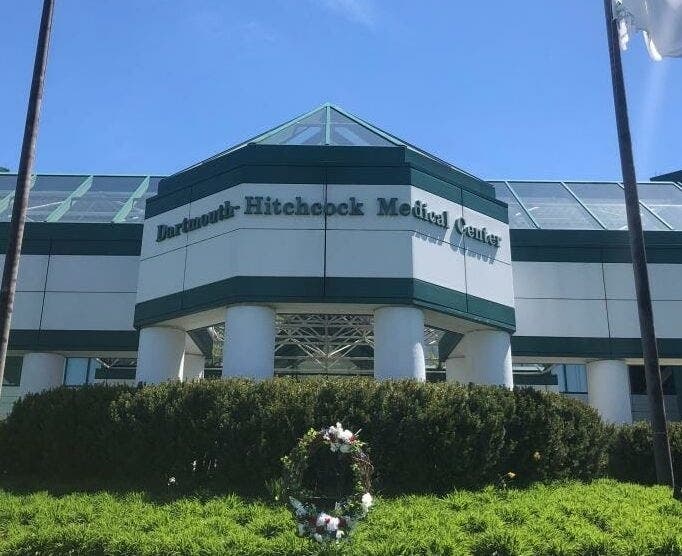
Then there’s Dartmouth Health — the biggest health system in the state, the one that should be able to run lean — asking for 35 percent. More than double the highest rate charged by any other hospital in New Hampshire. Many times what most of them charge. For the identical work. Now, Dartmouth Health provides many quality services for our state, and I have voted to approve a number of its important contracts and work. But, 35% off the top for nondescript administrative expenses? One in my position, who is called upon by voters to review and approve state contracts, must question that rate.
And here is the part that should end the conversation: Dartmouth doesn’t even charge itself that rate. Look at its other contracts with the state this very year — its child passenger safety program, its youth driver program, its injury-prevention work. On each of them, Dartmouth bills the state 15 percent. On its largest physician-services contract, it bills zero. Fifteen percent is good enough for Dartmouth everywhere else it does business with New Hampshire. But on the Doorways, suddenly it needs more than double that. Nobody at that hospital can tell you why, because there is no why.
This is not the first time I’ve raised the issue. When these contracts came before the Council at the start of June, I would not let it pass quietly. The Council tabled it, and I asked the Department of Health and Human Services to do the obvious thing: go back to Dartmouth and renegotiate that overhead down to what everyone else in the state charges. That’s it. Not cut services — renegotiate the overhead. Put more dollars into services that people need.
Instead, Dartmouth and the department seem to have doubled down. They came back and told us, in so many words, that it is perfectly acceptable for more than a third of the taxpayers’ money to be peeled off the top before it ever reaches a single patient. They have a chance to fix it. So far, they have chosen not to. That tells you everything about who this contract is really built to serve.
Let’s put it in plain dollars. On this one contract, Dartmouth’s 35 percent overhead comes to roughly $468,000 taken off the top — money skimmed for administration before it ever reaches a patient. I say, hold Dartmouth to the same 15 percent it charges itself on every other contract with the state, and about a quarter of a million dollars of that goes straight back into treatment instead: more counselors, more recovery coaches, more people getting through the door. Not one service cut. Just less off the top, and more for care.
Now, I’ve already heard the excuse: the other hospitals just tuck their overhead into other line items — phones, office space, this and that. So I went back and checked. It isn’t close. Add up every one of those small items at the other hospitals, and you don’t land anywhere near 35%. Not in the same universe. This gap isn’t an accounting quirk. It’s a choice, and they want the taxpayers to pay for it.
I am not asking to send Dartmouth one dollar less. I am asking that more of the money reach the people it was meant for. That is the whole fight — not the size of the check, but how much of it survives the trip to a patient.
I’ve asked this question before. As commissioner of Health and Human Services, when the state was hurting, and taxpayers needed relief, I set one simple standard: 10% overhead, for Dartmouth and every institution we funded, no exceptions. They complained then, too. Every last one of them. And then the counselors kept counseling, the patients kept getting care, and the sky never fell. The work got done. It always does.
Funding treatment and respecting taxpayers were never opposing goals. They are the same goal. Every dollar lost to bloated overhead is a dollar taken from someone fighting to get their life back.
Keep the Doorways open. Keep them strong. But the Council has given Dartmouth and the department a chance to make this right, and so far they have refused. So let’s stop pretending it’s compassionate to look the other way while the biggest player in the state takes a third off the top, a rate it doesn’t dare charge anywhere else. The people in recovery deserve better. So do the people paying the bill. I say to the department and Dartmouth Health, “Do the right thing.”
John Stephen (R) is the Executive Councilor for New Hampshire District Four, representing Bedford, Manchester, Londonderry, and other communities. He wrote this for NHJournal.com.
This story was originally published by the NH Journal, an online news publication dedicated to providing fair, unbiased reporting on, and analysis of, political news of interest to New Hampshire. For more stories from the NH Journal, visit NHJournal.com.