Politics & Government
32 Projects Receive LCHIP Grants
Land, building in Madbury, Lee, Stratham, Portsmouth, Hooksett, Dunbarton, and other communities received grant awards in 2015.



CONCORD, NH - Gov. Hassan praised the work of this year’s LCHIP grant award recipients for their effective efforts at conserving important land and preserving significant historic buildings at a recent event.
The governor reiterated the importance of land conservation and historic preservation to the state’s economy, environment, and quality of life, according to a press statement.
The Society for the Protection of N.H. Forests (Forest Society) will utilize a $380,000 LCHIP grant to permanently protect 227 acres in Madbury, Lee and Durham, helping protect Durham’s drinking water supply and providing opportunities for recreation and education benefiting residents of all three communities. The land, along Route 155, once belonged to Maj. John Demeritt, who became known as the “Powder Major” after storing gunpowder in his barn and delivering it to the Continental Army for use in the Battle of Bunker Hill during the Revolutionary War. The land is also culturally significant as the planting grounds of a Native American leader named Chief Moharimet, for whom the school district’s nearby elementary school is named. The Oyster River travels a mile through the property, which is located within a Source Water Protection Area and overlies an aquifer. The Oyster River is the drinking water source for the town of Durham and for UNH.
Find out what's happening in Exeterfor free with the latest updates from Patch.
“With LCHIP’s crucial support, we intend to make sure this land remains undeveloped so that it can keep providing clean water, beautiful recreational trails, forest resources and productive farmland,” said Jane Difley, the Forest Society’s President/Forester. “LCHIP’s support truly is critical where Seacoast land is so expensive. Thanks to LCHIP and grants from the N.H. Dept. of Environment Services and the state’s Moose Plate program, the momentum is building as we work to raise a total of $2.2 million.”
In Portsmouth, Historic New England will use a $90,000 LCHIP grant to help address structural issues and drainage problems at the Jackson House. Built in 1664, the Richard Jackson House is the oldest wooden framed house in New Hampshire and is one of the finest surviving seventeenth century wooden houses in New England. Acquired by Historic New England in 1924, the building was declared a National Historic Landmark in 1968. LCHIP funds, as a part of this $248,366 project, will LCHIP help fund an archeological investigation, drainage improvements, structural repairs and roof replacement.
Find out what's happening in Exeterfor free with the latest updates from Patch.
“Thanks to the support of governor and council, and both legislative branches, LCHIP is able to award significant monies to thirty-two projects in nine of the state’s 10 counties this year.” stated Doug Cole of D.S. Cole Growers in Loudon, chairman of the LCHIP Board of Directors. “Thirteen natural resource projects will conserve lands that will provide local food, clean water, and a wide variety of recreational opportunities - as well as preserving the scenic and rural character of our great state. Nineteen historic buildings will be saved or revitalized because our New Hampshire state leaders have insured LCHIP funding remains available for its intended purpose.”
The town of Stratham will receive $100,000 to help acquire a preservation easement on the Lane Homestead, located at the intersections of Routes 33 and 108. Between 1741 and 1810, Samuel Lane and his son, Jabez, kept extensive diaries and records of their life on the homestead, which are now held at the New Hampshire Historical Society as part of an extensive collection of artifacts and archives relating to the Lane Family. The preservation easement will protect the five acre parcel including the Main House (1807), Samuel Lane’s cordwainer’s shop, the Corn House, and the mid-nineteenth century barn, preserving the Lane Family’s legacy for future generations.
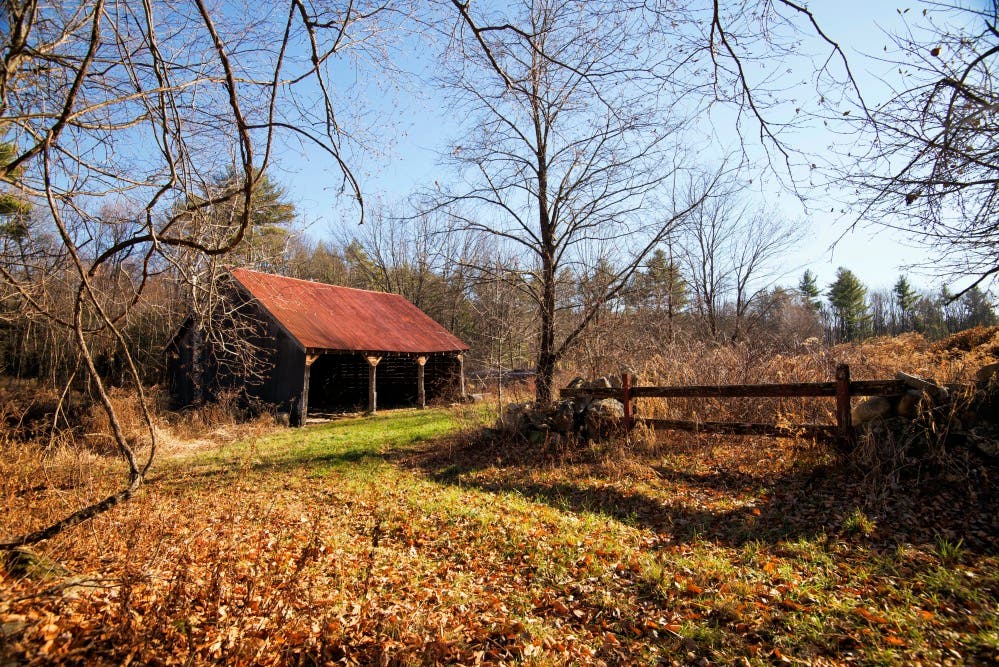
Five Rivers Conservation Trust received a $199,500 grant which will be used to help conserve the 217 acre Stone Farm in Dunbarton. This property has been farmed by the Stone family since the 1780s. Productive fields have grown hops, hay and grazed cattle for generations, and historic foundations and cellar holes tell the story of its use. The farm links other conserved land, creating a block of more than 600 conserved acres important to the Bella Brook and Kimball Pond watersheds.
Beth McGuinn, Five Rivers Conservation Trust’s Executive Director, said, “The demand for local food makes the conservation of productive farms even more important today. The LCHIP grant is the anchor grant that makes this conservation project attractive to other funders and has already leveraged significant private funds.”
A community fundraising effort is planned for 2016.
In Hooksett, The Town will receive $19,000 in LCHIP funds to install 4 replica windows in the Old Town Hall. The large, early twentieth century windows were removed and the opening bricked in when the building was converted to two floors in 1961. A single remaining window, as well as historic photographs, will provide the evidence needed to replicate the historic window’s trim and profile. With a total project value of $40,545, this is the first phase of a larger project to rehabilitate the building and return it to its original use as hall and community meeting space.
The New Hampshire Land and Community Heritage Investment Program is an independent state authority that provides matching grants to New Hampshire communities and non-profits to protect and preserve the state’s most important natural, cultural, and historic resources.
For more information about LCHIP visit lchip.org or call 603-224-4113.
Caption: Photos of the Stone Farm in Dunbarton. Credit: Drew Groves.
Get more local news delivered straight to your inbox. Sign up for free Patch newsletters and alerts.