Health & Fitness
Sagamore's Green Push Continues with Audubon Partnership
The local course's recent partnership with the program is much about where they've been as where they're going.

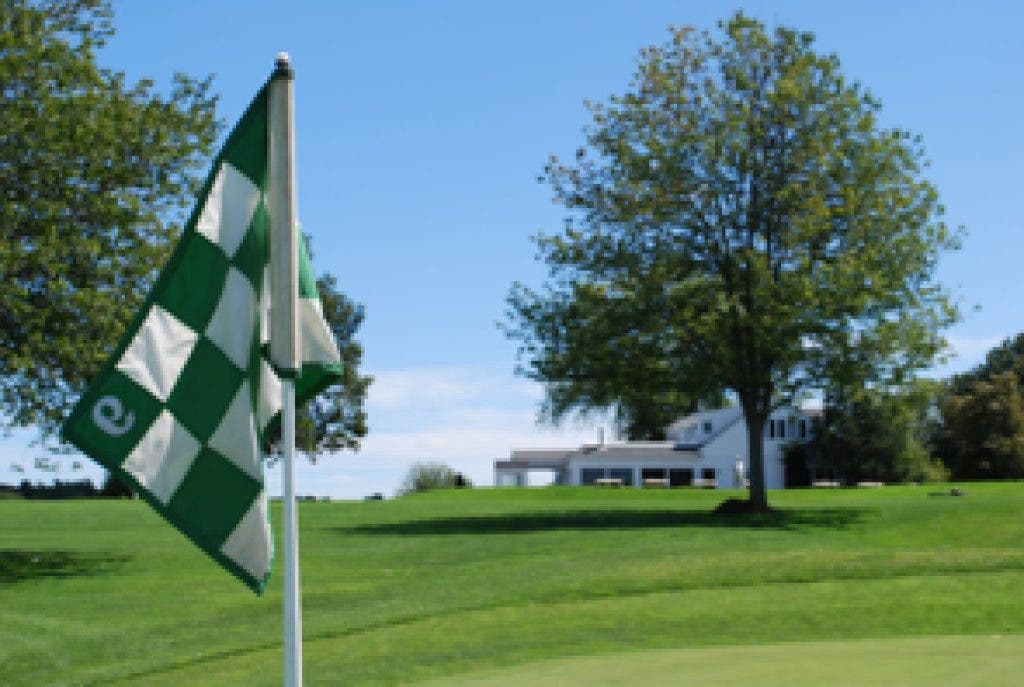
Way back in 1929, when R.E. Luff first founded in Lynnfield, Massachusetts, “green” wasn’t merely an industry fad or maintenance buzzword; it was, quite simply, the way things had always been done.
By the time the family opened its second location in North Hampton, New Hampshire in 1962, all-natural lawn care and links treatment had become an integral part of the Sagamore fold. Over the years, the Luff family charges have become a beacon of sorts for public courses – most of which don’t have the luxury of tapping into country club coffers – looking to eliminate as many chemical-heavy pesticides and fertilizers as possible.
Still, current owner Richard Luff and his crew would be the first to admit that the picturesque, 18-hole course’s green efforts are far from complete. Which is why Sagamore recently struck up a partnership with the Audubon Cooperative Sanctuary Program for Golf Courses (ACSP).
Find out what's happening in Exeterfor free with the latest updates from Patch.
A branch of the century-old Audubon Society, ACSP was established in 1992 as a resource for helping golf courses – public as well as private – incorporate environmentally responsible maintenance practices into their day-today operations.
Through a program that includes on-site evaluation, wildlife and habitat mapping, employee engagement, and regular progress tracking, the ACSP seeks to help courses like Sagamore strike a balance between environmental stewardship on the one hand, and the often delicate issue of “playability” and competitiveness.
Find out what's happening in Exeterfor free with the latest updates from Patch.
“We’re one of many courses to adopt this program, and a lot of those who have are very well known,” says Richard Luff. “We feel like we’ve had a head start on a lot of this for years, so we’re not worried about playability being affected at all."
Still, that doesn’t mean there won’t be challenges. To date, the course has erected seven, two-foot high signs indicating various habitats – usually in the tall rough – and requesting that people refrain walk instead of using carts to track down errant drives.
“Because it’s not a private course where all the members have a vested, financial interest, some of the golfers might not be as receptive to the new guidelines,” explains Morgan Crowley, a McGill University student who is spending the summer helping Sagamore up its own green ante. “We just think it will take some time, but that ultimately people will understand what we’re trying to achieve.”
Sagamore’s adoption of AGSC standards is just the latest in a series of partnerships aimed at helping improve – and promote – the course’s unique green initiatives. In 2009, the course became the first of its kind to join the Green Alliance (GA), a Portsmouth-based union of nearly 100 local, sustainability-minded businesses. Sarah Brown, who founded the GA in 2008, says that bringing Sagamore aboard presented a great opportunity to show the public that any business can green up their operations.
“When you look back, golf courses have taken a lot of flack in the past as far as environmental concerns,” said Brown. “But Sagamore is a prefect example of a business that’s doing some incredible things, things that the public can really wrap their head around.”
Things like partnering with Purely Organic, the York-based lawn care company from whom Sagamore sources a majority of their all-organic fertilizers, mulches, and other products.
In 2010, the course installed a 55-foot wind turbine, a first for Granite State golf courses. Since then, the turbine has helped significantly cut the course’s energy costs – meaning more resources for Sagamore’s ambitious course maintenance program.
Right now, however, the course’s efforts are geared squarely towards adopting as many of the ACSP’s guidelines as possible. They’ve already gone through a comprehensive site assessment and – while they await word on which steps to take next – remain committed to getting as big a head start as possible.
“Because we’ve been adopting a lot of these practices for a while, we have a pretty good idea of where we’re lacking and need to improve,” says Crowley. “That’s allowed us to start working towards longer term goals and projects for the winter.”
With golf season at its peak, it would be understandable for Luff, Crowley, and the rest of the Sagamore team to put all their efforts into making their customers happy. To be sure, customer relations will always be tantamount – but that won’t stop Sagamore of continuing to drive for the “green.”
“We look at it as taking what we’re already doing to another level, by monitoring and tracking on a regular basis,” exclaims Luff. “The Audubon program has been a great fit so far, and we’re excited about where it’s going.”