Health & Fitness
'Button-ing' Up Homes For Energy Efficiency
It might not seem like the kind of career conducive to jet-setting. But for two weeks this past spring, energy auditor Paul Button had a unique opportunity to take his expertise on the road.

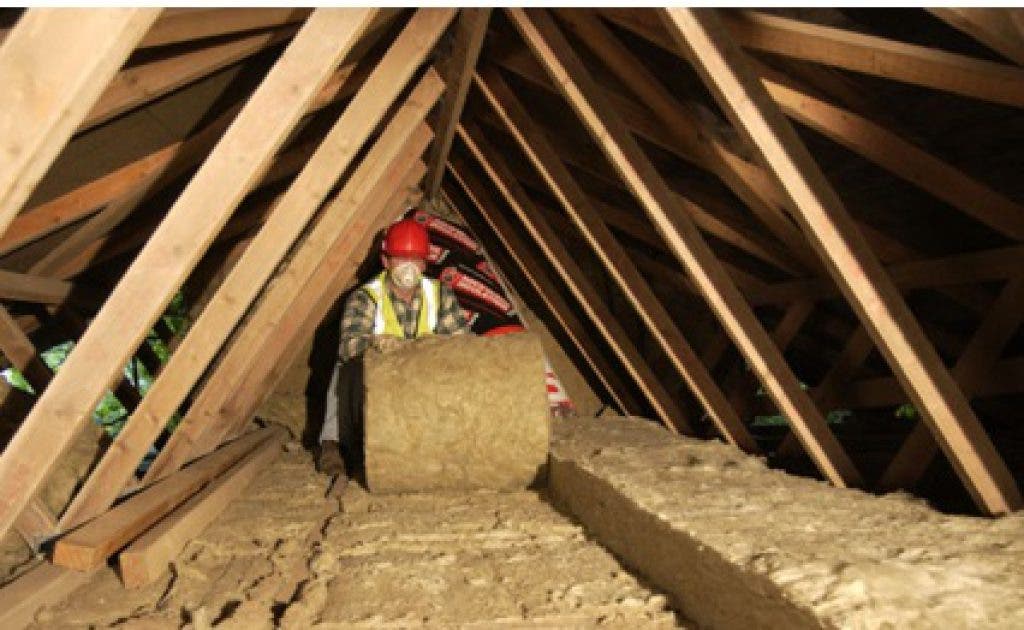
When energy auditor Paul Button isn’t at home – either working remotely or enjoying a little downtime – he can usually be found helping make the homes of others throughout New Hampshire more energy efficient.
It might not seem like the kind of career conducive to jet-setting. But for two weeks this past spring, Button had an opportunity to take his expertise on the road.
As part of the Department of Energy’s Weatherization Assistance Program, the Manchester-based owner of Energy Audits Unlimited was commissioned to spend two weeks in upstate New York and Rochester, Minnesota respectively.
Find out what's happening in Exeterfor free with the latest updates from Patch.
The purpose? To monitor the difference in home energy use both before and after government subsidized retrofits had been put in place.
The program was launched as part of President Obama’s 2009 Recovery and Reinvestment Act, the comprehensive economic stimulus package which also included numerous provisions providing incentives for homeowners and businesses who invest in alternative energy and efficiency measures.
Find out what's happening in Exeterfor free with the latest updates from Patch.
Hundreds of homes throughout the United States – the DOE divides the country into five, distinct climate “zones” – were chosen for the program, which targeted domiciles with poor or non-existent insulation, including many that were built during the 1950s.
While the change of scenery was certainly welcome, the task at hand was something Button never lost sight of.
“The idea of it sounded fun, but after a couple weeks of driving around everywhere, picking up tools, wondering if the tools were going to be ready, it got a little tiresome,” recalls Button. “But I never lost sight of the fact that I was part of a bigger effort. That kept me focused.”
Button was originally asked to help with “Phase A” of the program, which entailed the evaluation of “control homes”, some of which were subsequently retrofitted with new insulation, appliances, and the like. While he couldn’t commit to helping out with the initial round of tests, Button jumped at the chance to help out with Phase B, which involved comparing the efficiency of the home before and after the improvements.
Right before the first series of audits in Utica, New York, Button had a crash course of sorts on what Phase B would entail, learning the ropes from one of the heads of the Building Performance Institute, an organization tasked with certifying energy auditors throughout the country.
“It was almost like a job interview,” chuckles Button, who’s firm is a BPI Affiliate member.
Usually, home energy audits take around two to three hours, meaning Button could conceivably conduct up to three in a given day. However, with the Weatherization Assistance Program, the homes often required so much work, the crews could only handle one or two.
“Part of it was that the program required going above and beyond what your typical energy auditor would normally do,” noted Button, who in hindsight was glad to avoid the more labor-intensive Phase A of the project. “But these were also the kinds of houses that desperately needed upgrades.”
In most cases, analysis of a test home’s energy use involved the installation of data loggers – chewing gum pack-sized gadgets capable of computing everything from how many times a door opens and shuts to fluctuations in temperature – in refrigerators, attics, crawlspaces, or anywhere else that might provide helpful information regarding the home’s efficiency.
“The logic being that, if you start with piece of Swiss cheese, where there are lots of holes to plug, you end up with better results,” Button said. “It’s better to take care of the worst homes first, because that’s where the energy is really being wasted.”
Button points out that no two audited homes were treated exactly the same. In some cases, homes were only given new insulation or a new refrigerator. In others, it might be a combination of the two. In still others, a whole slew of upgrades were made.
By weatherizing homes to varying degrees, auditors like Button were able to glean helpful information about the products added, to the products themselves: did radon or carbon monoxide levels decrease?; what about heat loss? Doing so gives officials a better idea of how different components function together in what Button calls the “building-as-a-system.”
“They tried to mix up the input so that they’d get a bigger range of data,” Button explains. “And when you get a better sense of the reaction between these different components, you can hopefully find that ideal mix, so that the system is functioning as efficiently as possible.”
Like everyone else who participated in the program, Button is anxious to read the results, which are expected to be released in the coming months. Regardless of the results, Button says the program should be commended for what few government programs ever seem to achieve: efficient results.
“For a federal program, the DOE’s weatherization efforts were very well planned out,” he says. “Usually with federal programs you expect snafus along the way, but they knew what they were looking for, they targeted the homes well, and the end result was free energy upgrades for citizens who otherwise wouldn’t have been able to afford them.”
For more information on Energy Audits Unlimited, go to www.energy-audits-unltd.com.
To learn more about Green Alliance visit www.greenalliance.biz.