Health & Fitness
Green Cocoon Helps Homeowners Green at the Source
Despite tragedy and a tough economy, Green Cocoon has charted a course of impressive growth based on a case getting easier to make: greening the home can save you big bucks.

The rapid growth of green consumerism over the past decade hasn’t lacked in motivational factors; be it acknowledging humankind’s environmental impact, or the green sector’s increasing price competitiveness, the sustainability sell is becoming ever easier to make.
But for as crucial as life’s littler wares are to the overall green movement, people forget that the biggest source of waste – by a large margin – just so happens to be their important asset: the home.
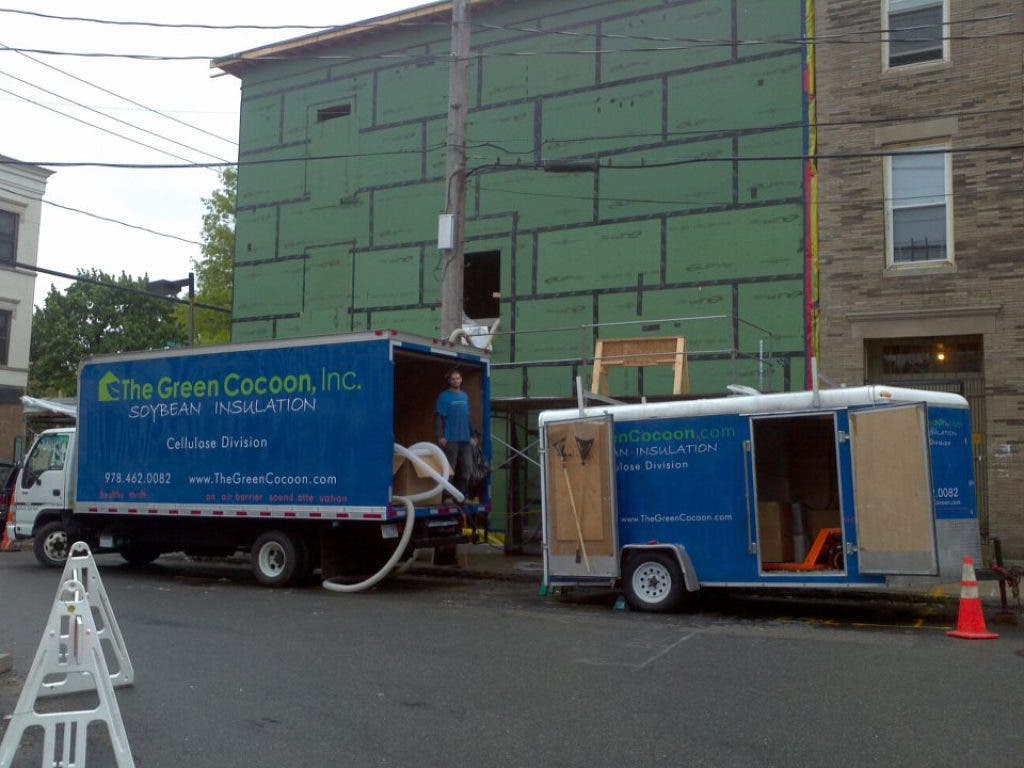
Enter Green Cocoon, a Salisbury company specializing in green insulation for both residential and commercial applications. Despite embarking at the outward limits of the housing bubble, Green Cocoon has managed to survive – and thrive – based on the idea that going deep green doesn’t have to bust the bottom line.
Find out what's happening in Exeterfor free with the latest updates from Patch.
The company was founded in 2007 by plastics engineer Jim Materkowski and business partner Peter Strattner. The two shared a common vision: to start a businesses that was both ahead of the curve, and committed to old-fashioned values of quality work and customer service.
After four years of steady growth, in August 2011, the unthinkable happened: Despite showing no signs of ill health, Strattner suffered a fatal heart attack. He was 60 years old.
Find out what's happening in Exeterfor free with the latest updates from Patch.
Candace Lord, Green Cocoon’s Sales Manger, remember the time with mixed emotions. Indeed, even a company in the full throes of growth and good prospects can’t help but waver in the wake of a fallen friend.
“Peter was so great at the meet and greet side of the business, going out and finding clients – he had a real knack for that,” Lord recalls. “Nobody saw it coming. It was definitely a big blow to Jim. To all of us, really.”
Though doubtless tragic, Lord says she remembers the Green Cocoon staff meeting adversity in true New England fashion: by putting nose to grindstone.
“We had to force ourselves to concentrate on work,” she recalls. “We had no other choice.”
Staying true to Strattner and Materkowski’s founding legacy, today Green Cocoon boasts a wide range of sustainable insulation options: spray-foam made from soy beans and recycled plastic bottles; BATT insulation fashioned from recycled denim; as well as a line of recycled newspaper cellulose.
Just a few years ago, such options seemed to exist only on a privileged periphery – a good investment, tobe sure, albeit one demanding heavy up-front investment.
Lord attributes the increasing popularity of green insulation options to a growing recognition that the up-front cost – itself becoming more and more competitive with each passing year – pales when compared to the down-the-road savings.
“As people become more educated about the options and technologies, it becomes an easier case tomake,” says Lord, who joined the Green Cocoon team in 2011. “They understand now that spray foam doesn’t include formaldehyde – that a lot of these options are becoming safer, more effective, and more affordable all the time.”
Not only does spray foam remain the top green option on the insulation market; it also boasts a host of residual benefits – offering air and vapor barriers and hurricane-grade strength that helps make it the ideal option for coastal-lying buildings. Indeed, all of Green Cocoon’s options boast their own unique qualities– qualities that meet the highest standards of durability and green quality.
A recent feature piece published in Northshore Magazine highlights nicely the changing narrative:
“Though initial installation is costly, the return is tenfold and yields numerous perks, including generous tax benefits and rebates, reduction in moisture buildup and mold, increased resale value, less expensive heating bills, sealed leaks and gaps, and acoustic insulation.”
Candace Lord couldn’t agree more.
“The product speaks for itself,” says Lord. “We’ve gotten to a point where we’re able to give prospective customers all the numbers they need, to show them, ‘hey, look how toasty your home or office can be.’”
On any given day, Green Cocoon will marshal six installation specialists – broken into three separate crews – to projects throughout the region, from coastal New Hampshire and Massachusetts’ North Shore to Rhode Island and Connecticut.
Industrial buildings, million-dollar residences, storefronts, restaurants, nursing homes – Green Cocoon will tackle them all, and with it the misconception that “going green” and “saving green” are not mutually exclusive.
All the while, theirs is a philosophy and approach with one eye squarely on the green horizon, and one ona legacy that – while tested – was and will never be truly deferred.
“Peter would be very proud of where we are today,” says Lord, her voice steadfast and assured. “We’ve been able to grow despite a tough economy, and I think that has a lot to do with the vision he and Jimstarted with.”
Green Cacoon is a Business Partner of Green Alliance, a Portsmouth organization committed to connecting green-minded consumers with the businesses striving to decrease their environmental footprint. Today the organization includes over 100 businesses, as well as over 3,000 consumer members, who receive exclusive discounts at partnering businesses.
- Learn more about Green Cocoon atwww.thegreencocoon.com
- For more info on Green Alliance, visit www.greenalliance.biz