Health & Fitness
In a Small New Hampshire Town, Green Majority Pushed Aside
We may be lucky enough to live in a democracy, but that doesn't mean the majority always wins – particularly when the issue at hand happens to be a polarizing one.

We may be lucky enough to live in a democracy, but that doesn’t mean the majority always wins – particularly when the issue at hand happens to be a polarizing one.
It's a scenario all too familiar to the team at Eolian Renewable Energy, a Portsmouth firm specializing in wind farm development. Last month, Eolian was informed by the State’s Site Evaluation Committee (SEC) that a project undertaken in Antrim, New Hampshire would be shelved because of purported visual impacts, despite having garnered impressive public support.
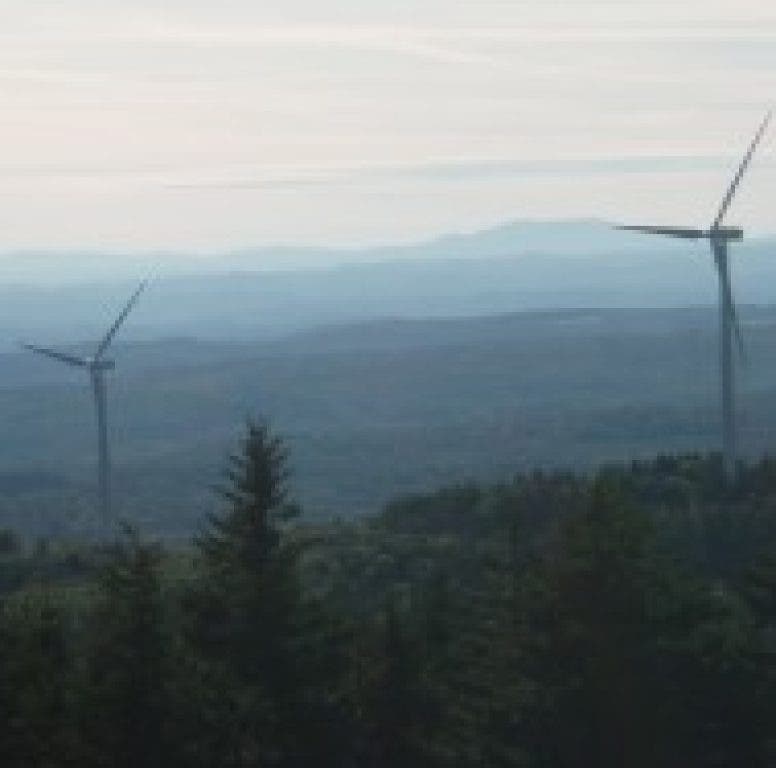
Eolian, in partnership with Westerly Wind, was tasked with the construction, operation, and eventual decommissioning of ten separate wind turbines, each just under 500 feet tall, in what is known as the Antrim Wind Energy (AWE) project.
Find out what's happening in Exeterfor free with the latest updates from Patch.
However, after four years and over $4 million in investments, the project has been denied – at least for now.
“We designed a project that met or exceeded all prior wind projects in New Hampshire in terms of the substantive criteria evaluated by the state and also in terms of additional benefits and demonstrated local support,” said Eolian CEO Jack Kenworthy. “So this decision was a surprise in terms of the departure from precedent, as well as a disappointment in both the process and outcome.”
Find out what's happening in Exeterfor free with the latest updates from Patch.
According to documents provided by AWE, the project was expected to reduce CO2 emissions by approximately 60,000 tons a year, while saving upwards of 17 million gallons of fresh water annually.
Additionally, according to Kenworthy the project would have resulted in the permanent conservation of over 800 acres of land.
“AWE worked for several years with numerous private landowners and conservation NGO’s to put into a place a series of binding agreements to permanently conserve over 13 times as much land as the project would ever impact,” Kenworthy noted.
Additional benefits cited by a University of New Hampshire study include over $55 million in local economic stimulus, including the creation of high skilled jobs and the generation of emission-free electricity for 13,500 homes each year.
According to Kenworthy, Antrim citizens were asked to weigh in on the project three separate times between 2009 and 2012. Each time, they favored going forward with AWE.
Kenworthy noted that the town Board of Selectmen, based on the evident support of their constituents, has also supported the project consistently, including written support to the SEC.
“We consider AWE a core project in our portfolio, said Kenworthy. “We believe the project embodies the core values of how we approach wind energy development not just from a siting perspective, but the public benefits as well.”
Specifically, Kenworthy cited the nearly $9 million in local revenues the project would have ultimately generated through a “PILOT” agreement with the Town, which he said would amount to more than any other wind farm in New Hampshire per megawatt of capacity.
“And that’s without adding any new direct costs to the town from the project,” Kenworthy added. “The revenue provisions of the PILOT agreement provide clear direct financial benefits to the host community.”
Additionally, Kenworthy said that the project’s close proximity to transmission lines and state highways would mean little in the way of additional infrastructure.
Kenworthy also noted that AWE voluntarily collaborated regularly with a number of conservation and non-governmental organizations (NGOs) to formulate a comprehensive land conservation strategy for after the project is built.
“The total disturbance from the project is about 60 acres on lands that have been logged heavily over many decades,” he noted. “Of those acres, 49 would be restored after construction, and the remaining 11 acres restored after decommissioning,” said Kenworthy.
The existing conservation plan calls for over 800 acres to be conserved permanently - more than 13 times the initial disturbance and over 70 times the physical footprint of the facilities.
“No New Hampshire wind project has taken this kind of early, collaborative approach,” Kenworthy noted. “That’s something we were all proud of and frankly something we thought would resonate with the Committee.”
After the SEC delivers it’s written order, AWE will have 30 days to respond. In the mean time, he hopes his company can encourage state residents and project stakeholders to help convince the SEC to view the “visual impacts” in what Kenworthy calls a “proper context.”
“A lot is at stake here – including the future of clean energy development in New Hampshire,” Kenworthy said. “What’s really being lost here is how this decision will ultimately affect New Hampshire’s energy future and long-term impacts on younger generations. So hopefully there’s still time to change some minds.”