Health & Fitness
Prescott Farm’s Impressive Energy-Efficient Efforts
Read more about Prescott Farm of Laconia, NH's incredible sustainability efforts including the Pardoe Building.
Prescott Farm has been a cornerstone of Laconia, NH and has been owned by the Prescott family for over 200 years. This farm initially consisted of 700 acres and was allotted to Colonel Dudley Prescott in 1796 due to his service in the Revolutionary War. Since then, the farm has been passed down to family member after family member, and today it comprises of 160-acres and serves as an environmental education center.
Though the farm became inactive in the 1950s, the Prescott/ Pardoe family decided to turn it into an education center to offer great environmental educational opportunities to their community. In 1997 the Pardoe family, established a private operating foundation/ non- profit organization, called Prescott Conservancy which is supported by grants, memberships, donations and program fees. After establishing the non-profit, the Pardoe family entered into a management partnership with the NH Audubon Society in 1998 to start environmental education programs on the property. However, the management partnership with Audubon was ended in 2009 and began operating the center independently as Prescott Farm Environmental Education Center.
Since then, the Pardoe Family has made a serious commitment to utilizing their incredible land to its greatest potential. They have transformed the land into a tool to educate their community on environmental issues and topics. PFEEC provides environmental education year round to all ages through programs such as WildQuest camps, field trips, public programs, and long-term partnerships with elementary schools.
Find out what's happening in Exeterfor free with the latest updates from Patch.
After being farmed for over two centuries, today the farm also serves as a wildlife viewing area with 3 miles of great hiking trails open to the public. Committed to preserving their land to the best of their ability, the PFEEC asks visitors to respect their “leave no trace” principles while enjoying the trails.
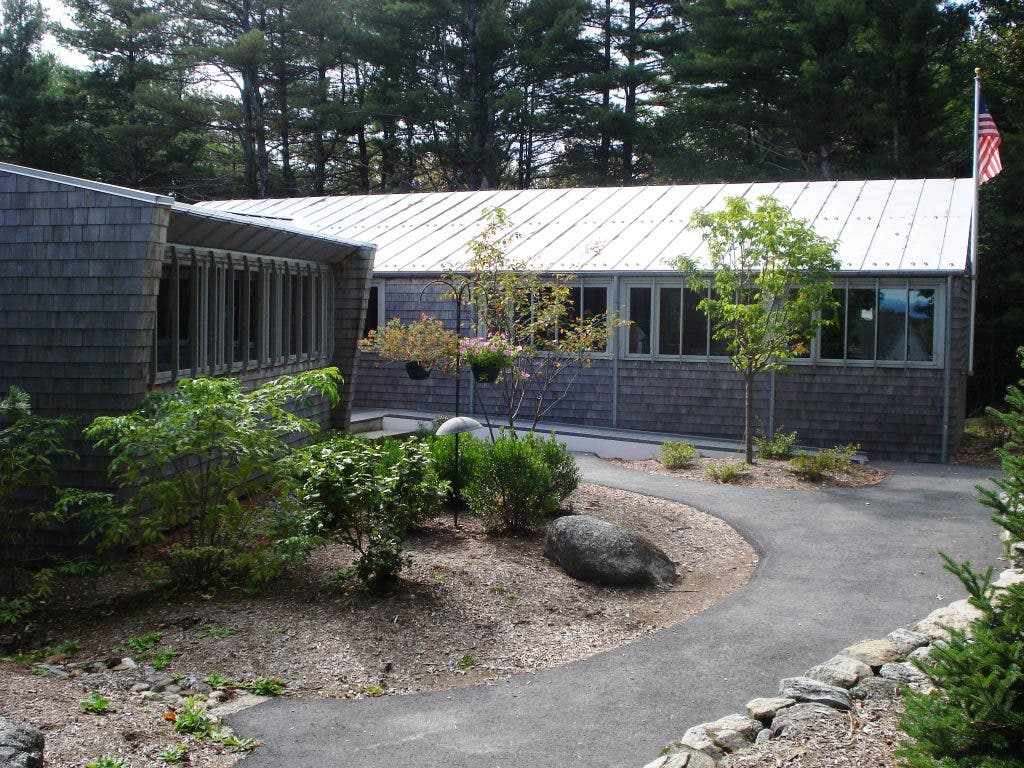
In 2005, the PCI built a remarkable, energy efficient building known as the Samuel P. Pardoe Building. Built with tremendous environmentally conscious efforts, the Pardoe building includes offices and a-725 square foot Community Program Room that serves as a venue for PFEEC’s programs and is rented out for various events.
Find out what's happening in Exeterfor free with the latest updates from Patch.
Everything from the wood, lighting, and heating to the water use, materials and landscaping embodies a sustainable approach in one way or another. The 2,500 square feet building includes slate floors that have been built in to the main entryways, and which store heat from the sun during the day and radiates throughout the building after sunset.
A geothermal heating system has been installed that pumps groundwater to heat and cool the building. Additionally, the building has been outfitted with low-water usage plumbing, allowing for an on-demand supply of hot water at every sink throughout the building. To reduce the cooling load in the summer, reflective metal lines the roofs.
The exterior walls and windows all utilize the newest innovations in insulation, air filtration, and moisture control. Meanwhile, a photovoltaic system – located between the Pardoe building and the barn – provides nearly half of the necessary energy needed by the building. Even the landscaping was carefully planned out to use only native and local NH plant species. The vast farmland is not mowed until August, which allows for birds and other ground-nesting animals to nest in spring and summer seasons without disturbing their natural habitat.
Along with their efforts to spread environmentally conscious practices to adults, families and children in elementary schools, this green building design is a perfect way of putting those educational efforts to practice. The Pardoe Building was built with the intention to use natural resources to their fullest potential, while simultaneously reducing waste and energy use.
Simply investing in just one of the previously mentioned energy efficient plans would be highly admirable; to install all of these green systems is even more commendable and astounding.
Needless to say, Prescott Farm – and the Pardoe Building in particular – is continuing to make vitally important efforts to educate and unite community members through the great environmental education resources available to them.