Health & Fitness
The Person with the Most Snow on Their Roof WINS!
Keeping your energy costs down starts with proper insulation. Learn about ways to know if your losing too much heat and help avoid ice damns on your roof before it's too late.
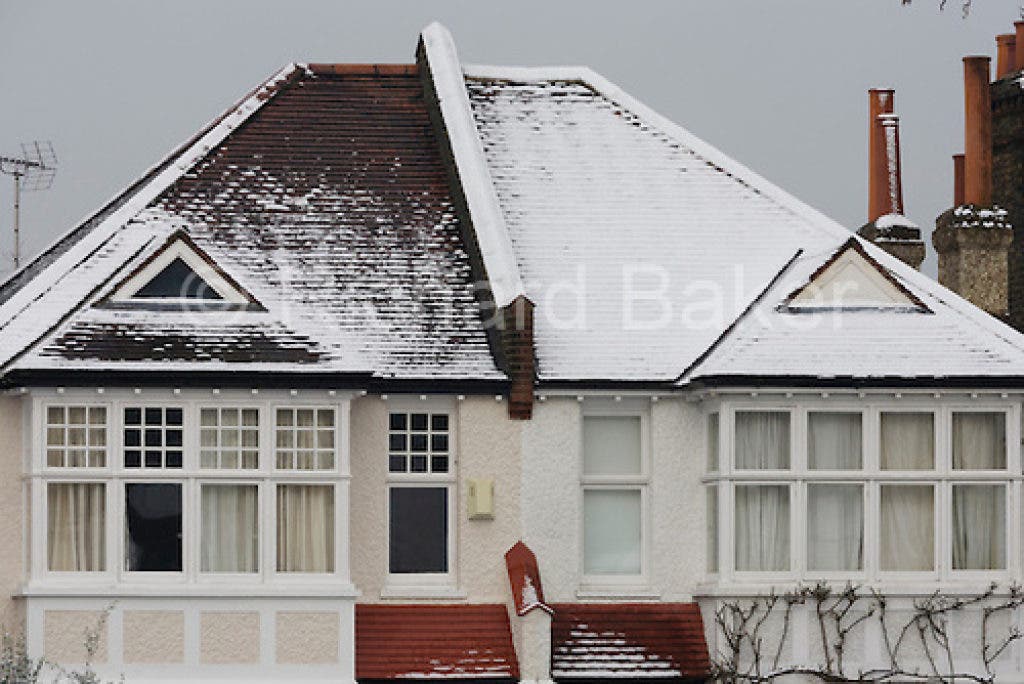
A dusting of snow on your roof can tell you a lot about the energy efficiency of your home.
Heat rises as we all know. Just like I tell my kids to wear a hat to help keep the majority of their heat loss down, I need to tell you the same thing about your home.
This time of year I can’t help but to look at roofs as I drive down the road. It’s my personal habit I can’t seem to break. What I’m looking for is a sense of just how energy efficient the home is without passing judgment on anyone except the person that insulated it.
Find out what's happening in Exeterfor free with the latest updates from Patch.
The concept is simple. The more snow you have on your roof, the better insulated your home is and the more likely it is to prevent costly repairs caused by ice dams. This time of year I see everything from roofs that have no snow on them to ones where I can actually tell that a piece of insulation has fallen down and there is a full 16” wide section running the length of the roof where the house is technically not insulated. In reality you want your attic space to be filled with cold air in the winter by trapping the heat into the condition space of the house. If you do it right, your roof is covered in snow.
How to fix it? Start with how you access your attic space. Is this area properly insulated or is it letting heat pour into your attic? If it is a door leading up to a full attic then make sure that door insulated. Technically is should be of the same insulation value as the front door of your house. If it is a pull down stairway or similar access then you can buy an insulated hood system at the local home supply store that will help cut this down.
Find out what's happening in Exeterfor free with the latest updates from Patch.
Next, in order to avoid ice dams on your roof that will result in roof leaks into your home, you have to keep heat from escaping and heating up the snow on the roof. If you have a walk up attic then the best way to do this is right up against the roof sheathing itself and installing a baffle vent or similar that will trap cold air against the soffits so that ice dams don’t occur. You will also want to make sure that the insulation against the ceiling is properly installed and is maximized between the joists. You want your attic insulated to a minimum of an R38 if possible.
If you have a standard attic space that provides little to no access I recommend that you blow in new cellulose insulation into your attic space to help keep the heat trapped against the ceiling. An expert can look in your attic and quickly tell
you how much insulation you need to increase it.
The next time it snows I want you to look around your neighborhood and on the streets leading to your home. Is there a lot of snow on those roofs, are their gaps where the day after the snow falls you can start to see shingles in some places but not in others due to snow melt? Then look at your roof- do you have more snow on your roof than the house next door? Well, you should.