Health & Fitness
This Exeter Life: Built to Last
Exeter's brand of architectural history and character doesn't exist everywhere.
For a long time, I wanted to be an architect when I grew up. I think part of me still does, which is undoubtedly why I often take careful notice of the design of the buildings around me.
When people ask me why I live in New England, and New Hampshire specifically, I sometimes get some strange looks when I tell them it’s because I love the architecture and the feel of the built environment.
Find out what's happening in Exeterfor free with the latest updates from Patch.
But after a while even I stop seeing the antique colonials, the white steepled churches, the historic barns, and the brick faced store fronts and mill buildings. I start taking for granted that this is simply what everyone’s surroundings look like.
My trip to the Oregon coast earlier this month snapped things back into focus.
Find out what's happening in Exeterfor free with the latest updates from Patch.
When I told people that my honey and I were going to spend a week driving from Seattle to San Francisco by way of the Oregon coast, the universal response was something like, “....yeah....the Oregon coast is RUGGED...” And it turned out to be just that. Steep hills and bluffs that plunged hundreds of feet directly into a grey churning ocean freckled with haystack rocks made of basalt.
As remarkable as the dramatic scenery was, the towns along the way possessed a total lack of character and design aesthetic.After we left Astoria, the oldest settlement west of the Rockies (intrepid folks set up camp here at the mouth of the Columbia River in 1811), and headed south on the Pacific Coast Highway, the buildings and homes along the way became a blur of corrugated metal, flat roofs, bland colored boxes, and questionable construction techniques.
Building design can so often be a window into the psyche of the people who constructed it—were they creative, practical, grandiose, hopeful, tentative? All along the Oregon coast, the buildings suggested a lack of long term commitment and an uncertainty about the future on the part of those who lived, worked and built there. Many of the towns we drove through felt like the community equivalent of someone clinging to the cliff by their finger nails, squinting questioningly into the lashing wind and rain.
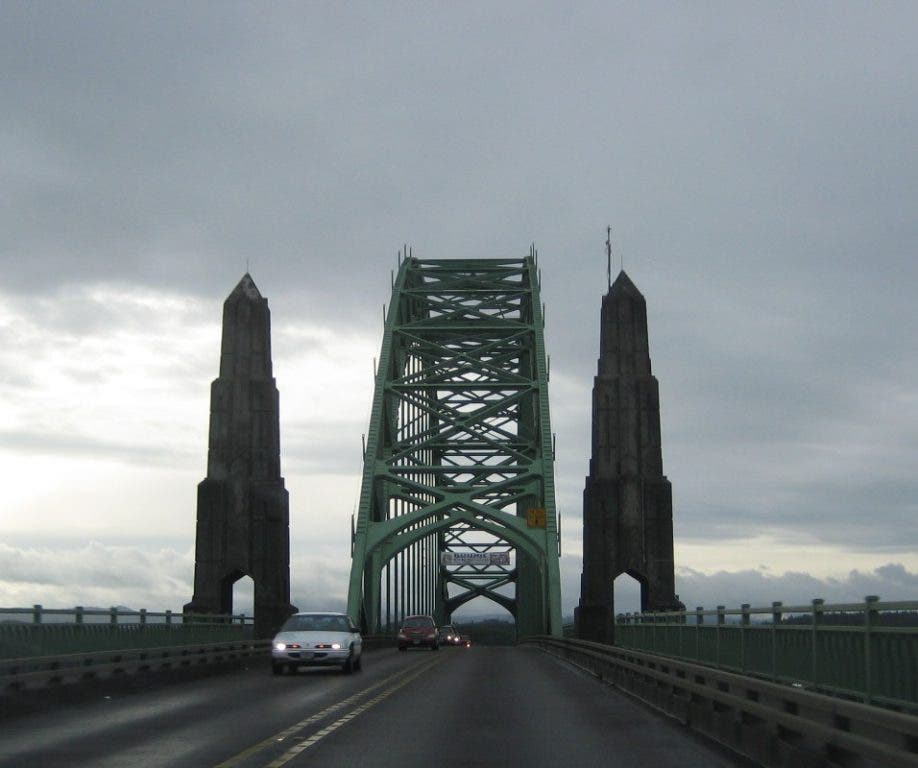
Every so often, we did catch a glimpse of Victorian era homes on a hillside or on the outskirts of town, suggesting a more prosperous, stylish and perhaps, more optimistic time in the coast’s history. But those glimpses were rare. Interestingly enough, the most distinctive examples of human design were the innumerable bridges that spanned gorges and rivers along the ocean edge and the seven lighthouses that withstand a nearly constant battering by wind and rain.
In an attempt to be compassionate, we started to chalk up the lack of investment in the architectural character of these communities as an indication of the true harshness of the environment and the intense economic focus on fishing and timber harvesting. Then we realized rugged environments and economies built around resource extraction are not unique to the west coast. When the colonists arrived on the east coast of America, all these same principals were true. And yet look at what we were left with—clapboards, saltbox roofs, attached barns, and shingled fishing cottages.
Our trip from start to finish was terrific and we did enjoy our time in Oregon. But coming home to New Hampshire was like a soothing balm on my eyes. The investments and attitudes of generations of former residents come across around every turn, down side streets and throughout downtown. Exeter’s buildings and houses say, “I’m going to make this work. I’m here for the long haul.”
My sentiments exactly.