Health & Fitness
This Exeter Life: Something Bigger
Being a member of the Seacoast community means you have gundalows in your past.
I grew up in the Tri-State Area. The name was merely a geographical reference, a way of acknowledging that we were all small meteors in New York City’s strong orbit. There was no shared culture. No shared history. No real connection between the communities other than the relatively modern and nearly always clogged highway system. I’ve also lived in the Bay Area, the Washington, D.C. Greater Metro Area and other similarly labeled broad geographic areas.
Now I live on the Seacoast. When I first moved here, I assumed that was yet another way of identifying a regional collection of completely unrelated yet neighboring communities. What I have come to learn over time is that the Seacoast really is its own place. Exeter, Dover, Durham, Hampton, Rye. We are not just smaller towns orbiting around Portsmouth. Instead, we are all neighborhoods—yes, even Portsmouth—in the larger community of the Seacoast. Spend time in other parts of the state and you will immediately come to realize—if you haven’t already—that there is in fact, a regional character. A regional mindset. A regional watershed. And a regional history based on that watershed.
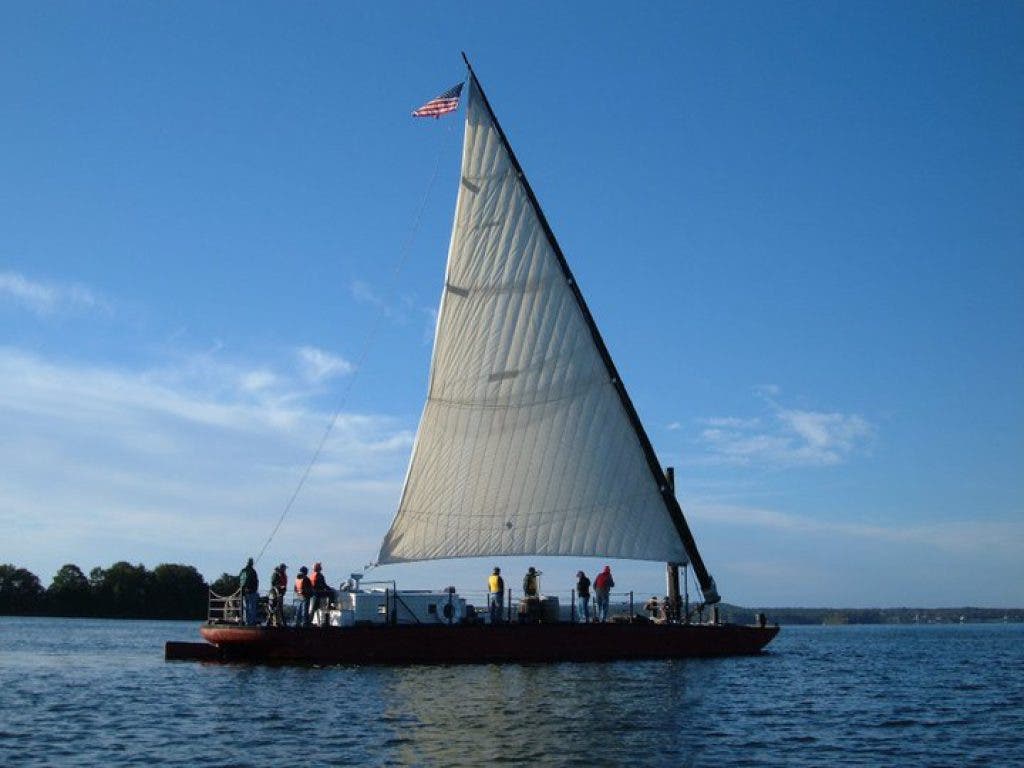
To me the symbol of the Seacoast and its interconnectedness is the gundalow. Don’t know what a gundalow is? Never seen it tied up in Swasey Parkway during the Independence Festival? Well, this is your year to see and learn. Designed specifically to travel the muddy bottomed tidal rivers like the Squamscott in Exeter, the Cocheco in Dover, the Salmon Falls in South Berwick, the Oyster in Durham, and of course the Piscataqua, gundalows debuted in the early to mid 1600’s and were in operation until 1900.
Find out what's happening in Exeterfor free with the latest updates from Patch.
Gundalows, to put is simply, are why this town and others around the region became what they are today. Without a way to transport bricks, hay, lumber and other products to Portsmouth and the waiting export ships, upriver communities like Exeter would have been little more than marshy hamlets isolated from the rest of the region. Instead, the gundalows connected us to one another and built a robust regional economy over the span nearly 300 years.
When the last gundalow came off the water in 1900, no longer able to pass beneath the increasing number of low railroad bridges that now crisscross the rivers, our interconnected waterways (and the lives that once depended on them) took a back seat to roads, cars, trucks. I don’t have the space here to recount all the reasons why gundalows are still important today, but I encourage you to read the very eloquent and poetic ode to the gundalow by J. Dennis Robinson in yesterday’s Portsmouth Herald. It will bring tears to your eyes.
Find out what's happening in Exeterfor free with the latest updates from Patch.
The one and only gundalow that remains, the Captain Adams is not able to transport passengers. While it has provided an important historical reference point, the true essence and power of the boat has been stymied by coast guard regulations. But that is all about to change. The Gundalow Company is building a new gundalow. A historic vessel for the new Millennium. Its construction is currently underway on the grounds of Strawbery Banke and the boat is scheduled for launch (via house movers) in early December.
If you haven’t been by to see the project, go. And go soon. Even if you are not a boat person or a history person, go and see it. You won’t be able to help feeling inspired by the scale of the materials being used (all sourced on the eastern seaboard), the craftsmanship being employed (led by local wooden boat idol, Paul Rollins) and the community that is being drawn into the project (so far nearly 400 businesses and individuals have contributed time, money and services to get the Gundalow Company to where they are today). Remarkable, considering they launched the $1.2 million capital campaign during the height of the recession. But boats don’t come cheap and the Gundalow Company is still $300,000 short of what they must raise in order to finish the boat before next spring’s sailing season starts.
We are all busy with our Exeter lives, but it's projects like these that come along once in a lifetime and remind us that we’re part of something bigger. This gundalow is being build for the residents of the Seacoast. It’s being built for me. It’s being built for you. And your children. And your out-of-town guests. Go see it. Attend tomorrow’s Shutter Plank Party and give what you can to support its completion. And by all means, book a trip to sail on it next spring. You won’t regret it.
All Aboard!