Politics & Government
Senate Candidate Gannon has Obstructed Progress on Marijuana Policy Reform
Race in Exeter area features stark contrast between prohibitionist and supporter of sensible decriminalization.

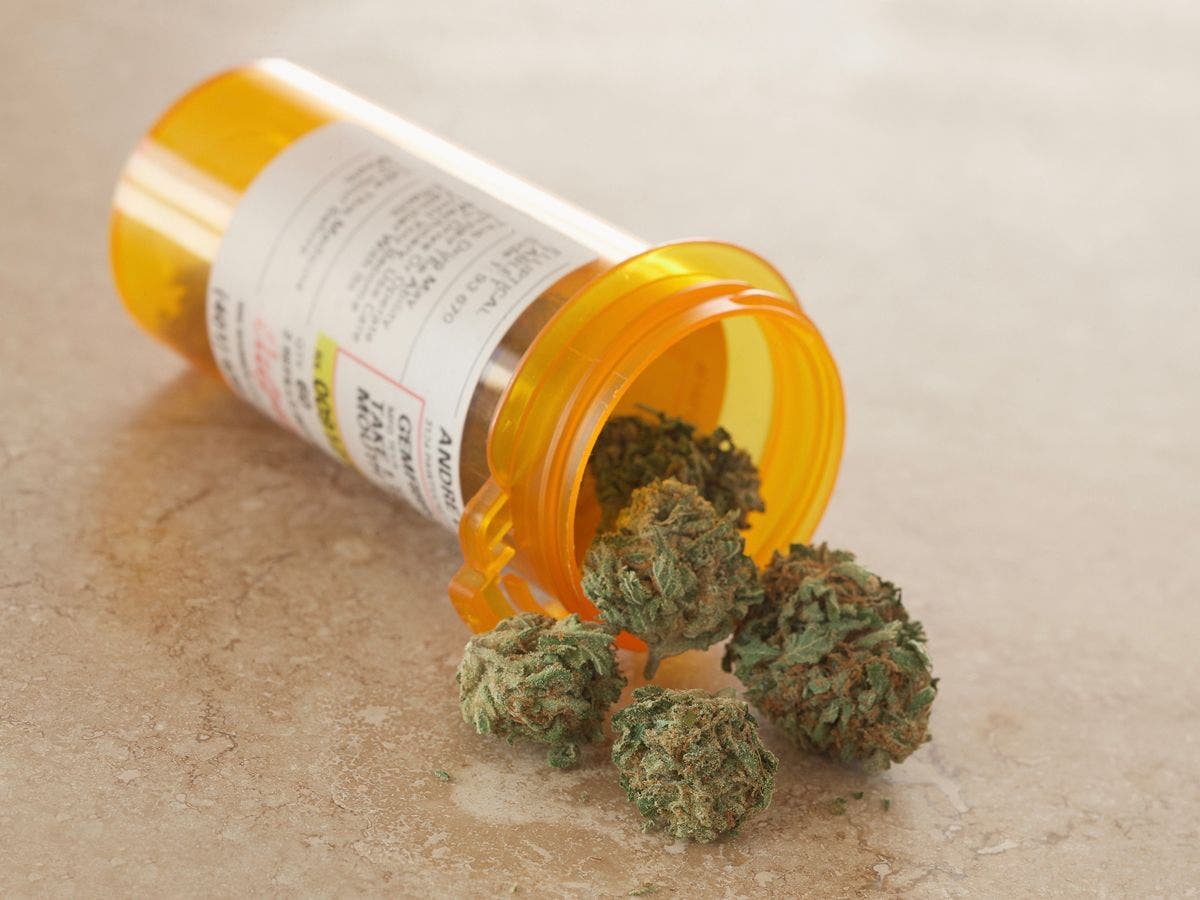
The race for the open state Senate seat in District 23 (Brentwood, Chester, Danville, East Kingston, Epping, Exeter, Fremont, Kingston, and Sandown) features two state representatives with strongly contrasting records on marijuana policy.
Voters may be surprised to learn that the Republican Senate candidate, Rep. Bill Gannon (R-Sandown), has vigorously opposed marijuana policy reforms in the Legislature. In 2015, he spoke on the House floor in opposition to HB 618, a modest bill that would have reduced the penalty for possessing one-half ounce or less of marijuana from a criminal offense punishable by possible jail time to a civil violation and a fine.
All five other New England states had already replaced criminal penalties with civil penalties for marijuana possession prior to 2015, and these reforms clearly have not led to problems in those states. Polls conducted by the University of New Hampshire Survey Center have consistently shown that decriminalization is supported by more than 70% of New Hampshire voters (and, for that matter, that more than 60% support legalization), and yet Rep. Gannon continues to stand in opposition to even modest reforms such as HB 618, which passed the House in an overwhelming vote of 297-67.
Find out what's happening in Exeterfor free with the latest updates from Patch.
Gannon’s opposition didn’t stop there. In an interview with a Manchester radio station on July 1 (second audio clip, begins at 14:12 mark), he bragged about his role in defeating the bill after it advanced to the state Senate:
“I have been really tough on marijuana,” he told the interviewer. “It was pretty close in the Senate, so I went to [U.S.] Senator Ayotte. She called every Republican senator, or she had her staff do it, and she implored them to wait a couple of years, and so that helped stop the bill last year. This year everybody jumped on board the bandwagon because of all the heroin deaths and the opiate problem, and so everyone’s jumped on it, everybody’s against marijuana this year.”
Find out what's happening in Exeterfor free with the latest updates from Patch.
Gannon is wrong, of course. Polls have shown that support for decriminalization is holding steady at above 70%. But that isn’t the only myth he propagated during the interview. In addition to taking credit for the defeat of a sensible bill — one that would have resulted in a more efficient use of limited police and court resources — Gannon made numerous claims during the interview that simply don’t hold up in the light of day. Here are a few examples:
Gannon Myth: “It’s a gateway drug. The government statistics say it is.”
Fact: Even the U.S. Drug Enforcement Administration (DEA) has admitted that the “gateway theory” is shaky at best. “Little evidence supports the hypothesis that initiation of marijuana use leads to an abuse disorder with other illicit substances," the DEA wrote in July 2016.
This is consistent with what the prestigious Institute of Medicine tried to tell us all the way back in 1999: “There is no evidence that marijuana serves as a stepping stone on the basis of its particular physiological effect” ("Marijuana as Medicine: Assessing the Science Base," page 99).
Gannon Myth: “The kids in Colorado are using almost double the rate of marijuana in high school that our kids are using…. by decriminalizing marijuana, it’s going to encourage children to use it more.”
Fact: Colorado’s regime of legalization and regulation is very different from the decriminalization bills that Gannon has opposed, and it is disingenuous to conflate the two.
Regardless, Gannon is wrong if he is suggesting that legalization has led to a significant spike in Colorado’s teen use rates in Colorado. The best, most comprehensive source of data regarding teen use is the Healthy Kids Survey conducted by the Colorado Department of Public Health and the Environment. As the department explained in a June press release, “The survey shows marijuana use has not increased since legalization, with four of five high school students continuing to say they don’t use marijuana, even occasionally.”
The department also published a detailed infographic, illustrating that “youth marijuana use remains relatively unchanged” and a little bit below the national average.
Gannon may be referring to a survey published by the U.S. Substance Abuse and Mental Health Services Administration (SAMSHA), which used a much smaller sample size than the Colorado Healthy Kids Survey. This survey found that Colorado’s teen marijuana use rate was the highest in the nation in 2013-2014, with 12.56% of respondents (ages 12-17) reporting having used in the past month. However, SAMSHA statistician Arthur Hughes noted that the increase was not significant: “Colorado’s rates are statistically the same between ’13 and ’14,” he said.
What about teens in New Hampshire? SAMSHA’s survey indicated that 9.83% of New Hampshire teens (12-17) reported past-month use. This is on par with the rate of 9.90% in Maine, which decriminalized marijuana possession all the way back in 1976, and both states are within three percentage points of the reported rate in Colorado.
Gannon Myth: “It’s a cliché that the Democrats use every day in my House, but it’s for the children… it’s my children, it’s your children, I don't want more children using drugs.”
Fact: The American Academy of Pediatrics disagrees with the premise that decriminalization will have a negative effect on youths. In fact, the leading pediatricians’ group “strongly supports the decriminalization of marijuana use for both minors and young adults and encourages pediatricians to advocate for laws that prevent harsh criminal penalties for possession or use of marijuana.” It also acknowledges that states’ decriminalization of marijuana has “not led to an increase in youth use rates of recreational marijuana.”
Finally, here is one last fact that may be of interest to voters: Gannon’s opponent in the Senate race, Rep. Alexis Simpson (D-Exeter), voted in favor of the decriminalization bills in 2015 and 2016.