Health & Fitness
Nuclear Energy as a Source in the Electric Power Industry
Hampton Energy Committee presentation talks to the use, risks, and safety of Nuclear power to generate electricity.
Dick Desrosiers
Chairman, Hampton Energy Committee
Find out what's happening in Hampton-North Hamptonfor free with the latest updates from Patch.
At their February 14 meeting, the Hampton Energy Committee hosted a presentation by Mr. Billy Cox. Mr. Cox has been employed for 34 years in radiation protection and low level radioactive waste management. He is currently employed by a non-profit R&D company performing research in all areas of electric power generation, transmission, and efficiency improvements, including environmental and renewables. The objective of the presentation was to inform Hampton citizens of the role of Nuclear Power in the electric power generation industry, including the safety and risk aspects.
The presentation began with an electricity primer. Billy discussed electricity as a commodity, common terms in the electric power industry, and capacity factors for generation plants. For example, the capacity factor of a generation plant that uses fossil fuel ( oil or gas or both) has a capacity factor of 95%. This means that this plant with a capacity of 1000 mega watt hours, over a year will produce an average of 950 mega watts per hour. The capacity factor of a generation plant employing nuclear energy is 90% and for wind and solar generators, the capacity factor is 30%. Therefore, Nuclear Energy is a reliable source to supply electric power to the grid system.
Find out what's happening in Hampton-North Hamptonfor free with the latest updates from Patch.
All oil, coal, natural gas, and nuclear generation plants produce steam in boilers to drive turbines that generate the electricity. All of these plants release some form of heat energy, or primary waste, which may, or may not, be visible in the form of smoke or vapor. The discharge from electric power plants can be hazardous to people as well as to the environment. Oil, gas, and coal plants release the Carbon Dioxide which has been blamed for global warming. A nuclear plant releases carbon dioxide as well as nuclear radiation which is measured by a factor, or dosage, known as a mrem (milli rem). The radiation discharge is typically a very small fraction of one mrem per year. Later in this paper we will put the nuclear discharge in perspective.
To quantify, the primary waste discharge of Carbon Dioxide from electric power plants , a coal plant releases about 850 grams per kilo watt hour (gms/kwh). Oil 750 gms/kwh, gas 250 gms/kwh, nuclear 5 gms/kwh and solar and wind less than 1 gm/kwh.
Electric fossil fuel powered plants also produce a secondary waste, usually in the form of carbon ash which is nonhazardous and can be recycled at considerable expense. This waste amounts to about 270,000 tons per year per 1000 megawatts generated. On the other hand, nuclear powered plants produce a low level radioactive waste in the amount of approximately 30 tons per year per 1000 megawatts generated. Such waste is usually found to be contaminated metallic particles in the reactor coolant water. All of these particles are filtered out and present no health hazard.
From this data, it is obvious that nuclear energy is the cleanest method for producing electric power. It presents the least hazard to people and the environment The following provides a comparison the risks to our health.
An estimate of life expectancy lost from:
Smoking 2 packs per day is 6 years
Being overweight by 95% is 2 years
Average alcohol consumption is 1 year
All accidents combined is is 1 year
All natural hazards is 7 days
Medical radiation is 6 days
Occupational Nuclear radiation exposure for 47 years is 51 days
Living near a nuclear plant is 0.4 days
Radiation exposure is everybody’s fear but is not understood by many of our citizens. The average person receives approximately 310 mrem per year from natural sources existing in the ground and in the air. In addition, the average person may receive another 310 mrem per year from medical testing. Remember that a Nuclear Power Plant may have a radiation discharge from operations that is less than one mrem per year. It is safe to say that an operating Nuclear Power plant is not a radiation hazard to people or the environment.
On the other hand, radiation levels in the vicinity of nuclear plants that have had disastrous accidents can be as low as Fukushima Japan, 17520 mrem per year or as high as Ramseur Iran 122640 mrem per year. Japanese regulators have deemed their plant to be an exclusion area for people. Unfortunately, the Iranians have not done so.
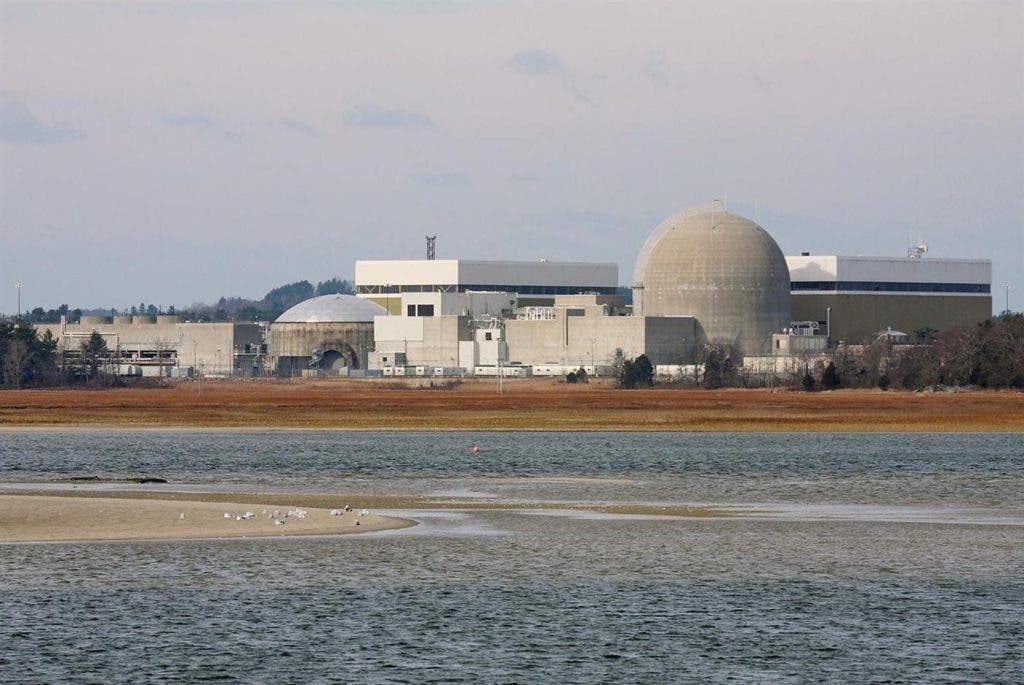
It is obvious that living near a nuclear power plant, as we do in the Seacoast, is safer than being an overweight smoker who drinks more than the average. It is just as obvious that we should not be fearful of radiation from a safely operated nuclear power plant. Years of experience in the US has shown that a safe, accident free nuclear plant, such as the Seabrook Station, is possible with well managed and well trained personnel, operating a well maintained plant We are fortunate in the US to be able to rely on the constant oversight of the Nuclear Regulatory Commission (NRC), a non-political organization appointed by the President and confirmed by the Senate. It is this organization and the Nuclear industry itself that has prevented reactor plant accidents in the United States, since the Three Mile Island incident on March 28, 1979.
According to the Energy Institute of America, 17% of the electric power generated in 2011 came from Nuclear Power plants, 18% from fossil fuels ( mostly from natural gas because of the cost of gas) , and 53% from coal fired generation plants. To stop using Nuclear sources would mean an increase in the other sources which are more hazardous to people and the environment. We need Nuclear Power in our mix of electric power sources. We also must ensure that the NRC remains a strong, non-political, regulatory agency.