Health & Fitness
Romney and Perry Distort Obama's Words
Two Republican presidential candidates have used ads to distort the president's words to make him look bad. So begins a long season of lies and deception.
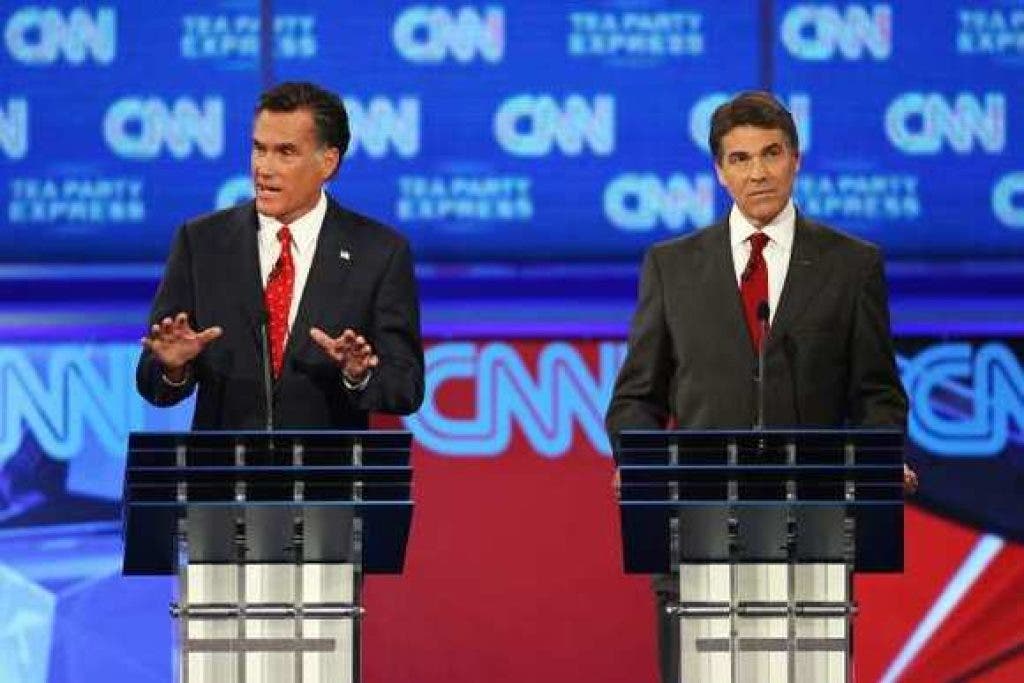
Get out your hipwaders and your rain slicker. The political mud has started to fly.
In his first ad attacking President Barack Obama, Republican Mitt Romney shows a film clip of Obama saying, "If we keep talking about the economy, we're going to
lose."
These words were taken out of context. Obama was quoting an aide to
presidential candidate John McCain who spoke those words anonymously in an interview.
Find out what's happening in Hampton-North Hamptonfor free with the latest updates from Patch.
What Obama really stated was, "Sen. McCain's campaign actually said, and I quote, 'if we keep talking about the economy we're going to lose.'"
Romney's campaign deleted "Senator McCain's campaign actually said, and I
quote," and left Obama saying "if we keep talking about the economy
we're going to lose."
Find out what's happening in Hampton-North Hamptonfor free with the latest updates from Patch.
How serious was this distortion of the truth? Politifact.com is a project operated by the St. Petersburg Times. Its reporters and editors check the factual accuracy of
statements made by Congress, the White House, lobbyists and interest groups.
These statements are then given a rating on a "Truth-O-Meter" which can range from "True," "Mostly True," "Half True," "Mostly False," "False," to "Pants on
Fire" (from the taunt "liar, liar, pants on fire").
Mitt Romney's campaign ad was given a "Pants on Fire" rating.
Nevertheless, the Romney campaign was not at all apologetic about distorting the president's words. Gail Gitcho, the Romney campaign's communication director, felt that the storm of controversy the ad produced was a good way to focus the public's attention on the economy and to get the president to discuss it.
Andrew Rosenthal of the New York Times takes exception to Gitcho's claim that Obama is avoiding discussing the economy. Rosenthal writes (New York Times, Nov. 22, 2011):
"It's hard to get Mr. Obama to talk about anything else. For months he has been on the road pushing his prescription for economic growth, a jobs act that would cut middle-class taxes and increase spending on public works projects. Mr. Romney has a plan, too. It focuses more on cutting upper-income taxes and reducing spending on programs vital to the middle class and the poor."
Romney was not alone in twisting Obama's words. Republican presidential candidate Rick Perry's campaign produced an ad showing Obama saying, "We've been a little bit lazy over the last couple of decades."
Now, accusing Americans of being lazy during an economic downturn is not a good way to win votes. Perry then adds, "Can you believe that? That's what our president thinks is wrong with America? That Americans are lazy? That's pathetic. It's time to clean house in Washington" (Boston Globe, Nov. 27, 2011).
Well, that's not what Obama meant. It's what Perry's campaign wants you to think he meant.
Obama was taking big business to task for not bringing jobs to the
United States, as witnessed by the president's subsequent statement, "we
aren't out there selling America and trying to attract new businesses into
America" (Boston Globe, Nov. 27, 2011).
These sorts of deceptive attack ads are a double-edged sword. First, voters may think that they are true and vote accordingly. Second, the public may get so tired of seeing candidates slinging mud at one another that some voters will throw up
their hands in disgust and refuse to vote.
That's called suppressing the vote, and it's yet another way to win an election. A
candidate so demoralizes his or her opponent's supporters with negative
advertising that they stay home on election day.
So what's a voter to do?
This problem becomes of greater urgency following the Supreme Court's infamous Citizens United decision that allows special interests to spend unlimited sums of money on election campaigns. We can fully expect the public to be flooded with misleading, negative advertising every day throughout the 2012 campaign.
First, don't expect that candidates are telling you the truth in televised
commercials. They aren't. The misrepresentations may range from subtle
distortions of a candidate's background and experience to the all out
"liar, liar, pants on fire" untruths seen in the Romney ad.
Second, don't let others take away your precious right to vote, either by requiring you to overcome needless obstructions, such as requiring photo IDs, in order to
cast a ballot or by so demoralizing you that you feel it is pointless to vote.
Large numbers of people in foreign countries stand in line for hours just to exercise their right to vote because they understand how important it is to their well being.
Certainly, here in the world's oldest democracy, we can make the effort
to learn about candidates from relatively unbiased forums, such as debates and
direct questioning of candidates by the public, and then, no matter what the
weather or our schedules, go to the polls and vote.