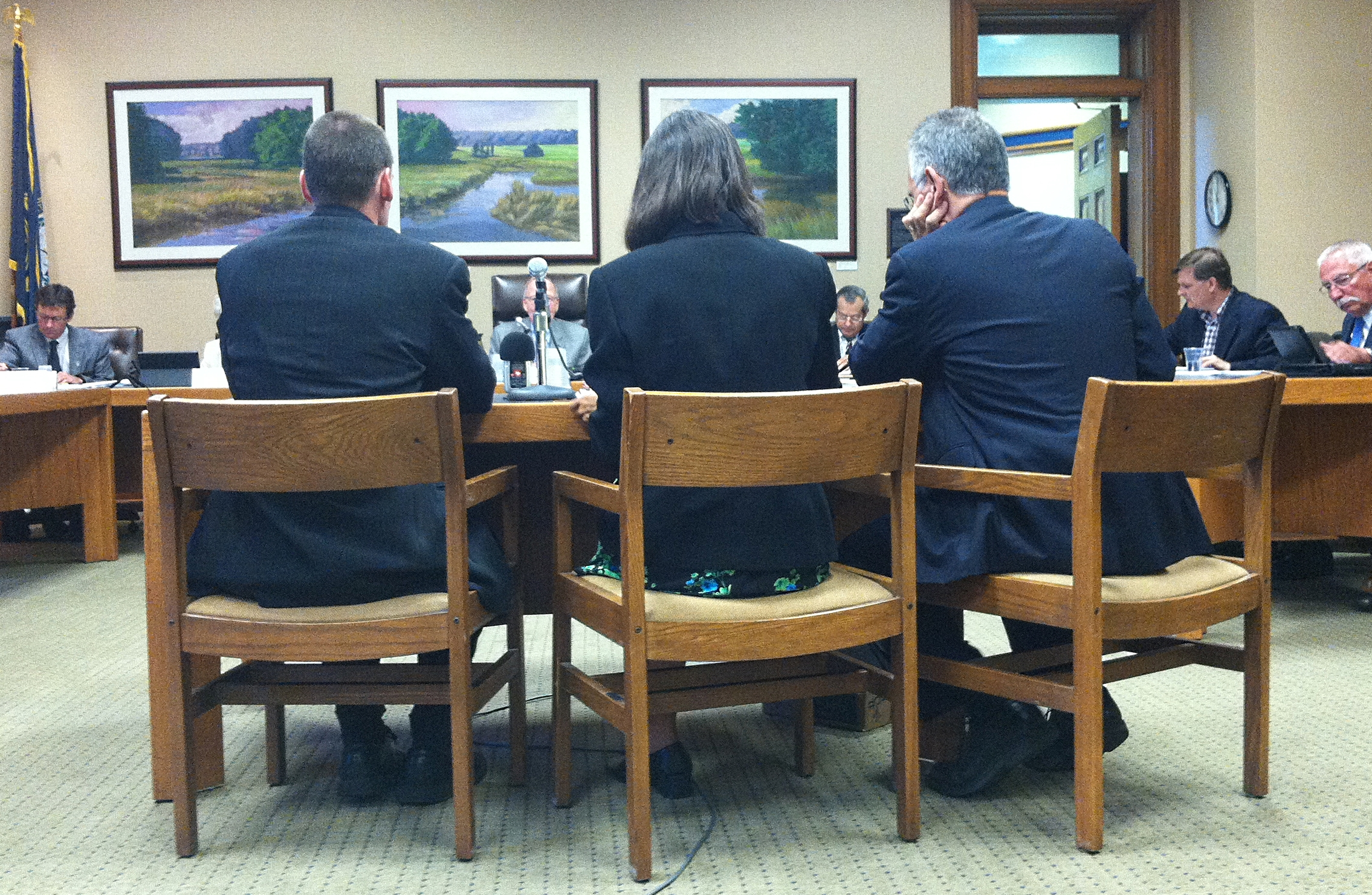
Much has been written and said about “Medicaid Expansion.” When the State Senate refused to go along with the House of Representatives and approve Medicaid Expansion, the legislature established a special Commission to Study the Expansion of Medicaid Eligibility. The Commission was instructed to prepare a recommendation by October 15 that the Senate and the House could vote on later this fall.
The commissioners - including Senator Nancy Stiles of Hampton and Representative Tom Sherman of Rye - have been meeting since July. Two weeks ago, it was reported that a majority on the commission agreed that New Hampshire should accept the up to $2.4 billion in federal money that is available to provide insurance coverage to at least some of the 49,000 uninsured adults who are eligible under the Affordable Care Act (aka “Obamacare”). These are individuals who earn $15,000 or less and families of four with total income of less than $32,500
The commission has two meeting scheduled for this week – one on Tuesday October 1 and the second on Wednesday October 2; both at 12:30 in the Legislative Office Building in Concord.
Find out what's happening in Hampton-North Hamptonfor free with the latest updates from Patch.
Presumably, one of the things that the commission will be voting on is exactly how many people to provide coverage to and how much federal money to accept. Senator Stiles has suggested that individuals who may also be eligible for private insurance, should be required to enroll in that coverage, with the state (perhaps) subsidizing the cost to do so. Anyone who is not eligible for private insurance and earns between $10,800 and $15,000 would be expected to purchase private insurance through the new health exchange where they would be able to receive federal subsidies towards the cost of that insurance. Under this plan, Medicaid would become the insurer of last resort, available only to those individuals who do not have access to private insurance.
There are at least three issues with this approach. First, there is a perception among some members of the commission that the quality of care that someone will receive under “private insurance” is better than what they would receive under Medicaid. That is not true. Insurance companies and Medicaid do not deliver health care, your doctors and hospitals do. Private insurance and Medicaid are simply two different ways to pay for the care that your doctors and hospitals deliver.
Find out what's happening in Hampton-North Hamptonfor free with the latest updates from Patch.
That leads to the second issue. Under private insurance a greater portion of the cost of care is paid for by the patients receiving the care; that is one of the ways that large employers and companies like Anthem use to keep their premiums low. So even if the state or federal government were to subsidize the cost of premiums for individuals earning less than $15,000 many of these people would not be able to afford the deductibles or copayments that are prominent features of those plans. Faced with the choice of a $2,500 or $5,000 annual deductible (for example) and a $50 per visit copay, many of the people that Medicaid expansion was intended to help would have no choice but to continue to rely on the rest of us to pay for the health care they receive in an emergency.
Finally, although the June 2012 U.S. Supreme Court ruling does give each state the opportunity to opt in or opt out of expanded Medicaid, if a state does wish to receive federal funds but also wants to tailor the expansion to its own particular needs it must demonstrate to the federal government that the changes it is proposing are consistent with the goals and objectives of the ACA. Several states applied for such a “waiver” earlier this year and none of these have been approved yet. If the commission endorses an approach that requires a federal waiver it will delay the effective date of the program past January 1, 2014, which will provide no relief to those of who need it the most and it will also reduce the amount of federal money that we are entitled to that can used to support this program.