Politics & Government
House Passes CHARLIE Act Banning CRT, Gender Ideology Instruction In Schools
The GOP pushed through a bill named after conservative Charlie Kirk to stop the teaching of politically motivated race or gender theory.

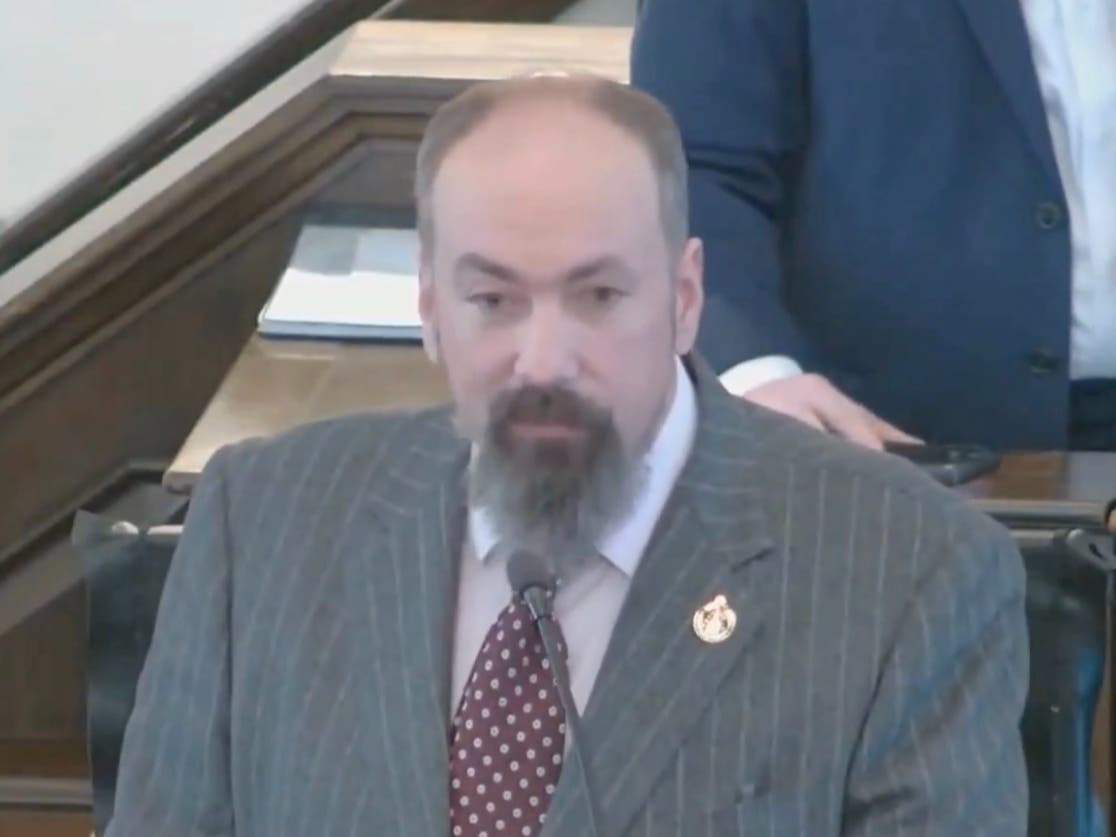
Republicans pushed through a bill named after conservative media figure Charlie Kirk to ban public schools from teaching what supporters call politically motivated race or gender theory.
House Majority Leader Jason Osborne, R-Auburn, said HB 1792 allows New Hampshire schools to focus on core academics while giving parents the ability to hold schools accountable.
Find out what's happening in Londonderryfor free with the latest updates from Patch.
“A vote for the Charlie Act is a vote for parents, a vote for academic excellence, a vote for the basic idea that schools should teach reading, writing and arithmetic and leave the rest to their families,” Osborne said on the House floor Thursday. “And a vote against it is to maintain the status quo. And the status quo, unfortunately, is indoctrination.”
The bill bans curricula such as critical race theory or LGBTQ+ ideology from being used as teaching models in classrooms. Osborne said the bill does not restrict speech or ban books, but instead refocuses how children are taught.
Find out what's happening in Londonderryfor free with the latest updates from Patch.
“HB 1792 prohibits school districts from instructing — not discussing, not mentioning — instructing children in critical race theory and radical gender ideology. It does not ban a single book from a shelf. It does not prevent a teacher from teaching the full, unvarnished history of this country, including, say, slavery, including the civil rights movement, including every hard truth that we want our children to learn about,” Osborne said.
The bill also allows parents to pursue civil lawsuits against schools and school officials who break the law by using indoctrination instead of education.
“You cannot use a public school classroom to tell a child that they are inherently racist because of the color of their skin. You cannot use a public school classroom to push sexual ideology on children whose parents do not consent to it, and if a school district crosses that line, parents have the right to hold them accountable, and that’s what the private right of action in this bill does,” Osborne said.
In a largely party-line split, four Republicans joined a unanimous House Democratic caucus in opposing the bill, which passed 184-164. In what appeared to echo opposition talking points from previous attempts to ban certain ideological instruction from classrooms, Democrats said the bill amounts to a repressive attack on free thought.
“Our students deserve classrooms where they are taught to think, not what to think,” Rep. Loren Selig, D-Durham, said.
Rep. Matthew Coker, R-Meredith, one of the four Republicans to vote against the bill, said the Charlie Act hurts the free exchange of ideas in classrooms.
“We used to believe in debate, we used to believe bad ideas should be defeated in the open, not banned, not buried,” he said.
But Osborne called the Charlie Act a corrective measure to bring sanity back into schools.
“Now, some are going to call this bill extreme, and let me tell you what’s actually extreme. What’s extreme is telling a third grader to rank their racial privilege. What’s extreme is a teacher telling a 12-year-old girl that maybe she’s actually a boy without her parents’ knowledge. What’s extreme is spending millions of dollars on DEI consultants,” Osborne said.
New Hampshire Republicans have previously tried unsuccessfully to keep race- and sex-based ideological instruction, such as the work of Ibram X. Kendi, out of classrooms. The effort was inspired in part by the discovery that race-based training materials were being used by the Manchester school system. It was also found in handouts and recommended reading in Laconia and in Litchfield.
However, a federal judge ruled in 2024 that the state’s anti-CRT was too vague and therefore violated the constitutional rights of educators.
That ruling is currently being appealed.
Executive Councilor Cinde Warmington, a candidate for governor at the time, said the law “sought to undermine public education by subjecting educators to arbitrary and discriminatory enforcement and penalties. I am relieved to see the court’s ruling today declaring this law unconstitutional.”
Warmington announced Wednesday she’s running for her party’s nomination again.
The CHARLIE Act was slated for review by the House Finance Committee, but chair Ken Wyler (R-Kingston) waived the review, and the bill is headed for the Senate.
This story was originally published by the NH Journal, an online news publication dedicated to providing fair, unbiased reporting on, and analysis of, political news of interest to New Hampshire. For more stories from the NH Journal, visit NHJournal.com.