Politics & Government
Londonderry Rep Packard Looks Back On Three Tumultuous Terms As New Hampshire House Speaker
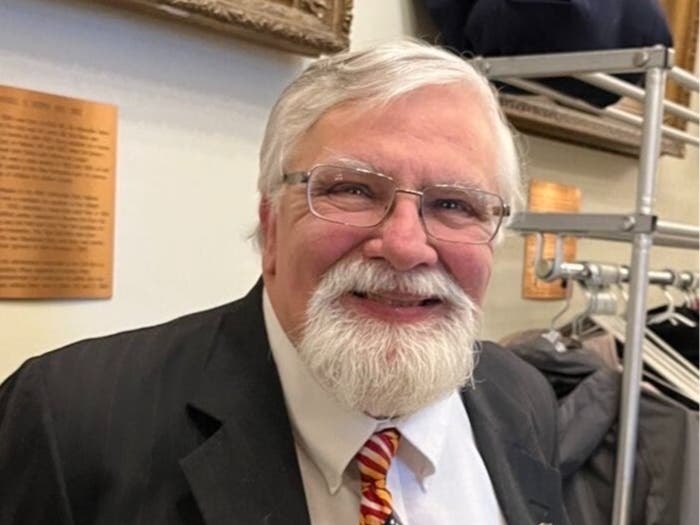
In 1975, Sherman Packard founded the NH Motorcyclists' Rights Organization and spent about 15 years working as an unpaid citizen lobbyist.

A pandemic that forced the nation’s largest state legislature out of its historic chamber. The sudden death of a newly elected speaker. A partisan divide so narrow that control of the House could shift after lunch.
Add an increasingly fractious political culture, ideological divisions inside his own Republican caucus and a broken back that did not keep him away from the State House, and outgoing Speaker of the House Sherm Packard will tell you his tenure has been anything but routine.
Find out what's happening in Londonderryfor free with the latest updates from Patch.
“These have been probably the toughest three terms almost any speaker has ever had,” the Londonderry Republican told the NHJournal podcast.
Listen to the podcast, linked here.
Find out what's happening in Londonderryfor free with the latest updates from Patch.
“I started out with COVID, and last session, on paper, I had, I think, a two-vote margin, which, with 400 people, means you’re pretty much dead even,” Packard said. “This session has just been very tough. I don’t know why. I can’t give you an answer as to why, but it’s been very frustrating.”
Perhaps it has something to do with the more than 30 vetoes issued by fellow Republican Gov. Kelly Ayotte (a record for a governor whose party controls the legislature) and the seven veto overrides (also an intraparty record.)
Despite the turmoil, Packard said he has no regrets.
“I’ve enjoyed it tremendously. It’s been a great honor to have been speaker for three terms.”
Packard became acting speaker after the unexpected death of Speaker Dick Hinch in December 2020, just days after Hinch had taken the gavel. The House formally elected Packard the following month during a pandemic-era drive-in session at the University of New Hampshire.
The logistical challenges of leading the 400-member House during COVID were followed by an almost evenly divided chamber during the 2023-24 session. Republican control sometimes depended on who happened to be in the building when a vote was called.
Rep. Jeanine Notter (R-Merrimack), who served as House Republican whip during that session, called it “a constant balancing act and a daily test of coordination and leadership.”
“This term brought a working majority, yet the job remained tough,” Notter said. “Republicans represent a wide spectrum — from centrist to far right — which makes consensus-building far more complex.”
“His biggest strength was simply rolling with it,” Deputy Speaker Steven Smith (R-Charlestown) told NHJournal.
“First, elected in a parking lot during COVID. Next, managing an almost evenly divided House. In considering his third run, I told him to do it because he deserved at least one normal term as Speaker.”
Packard’s political career began not with ambitions for House leadership, but with his advocacy for motorcyclists.
In 1975, he founded the New Hampshire Motorcyclists’ Rights Organization and spent about 15 years working as an unpaid citizen lobbyist on motorcycle safety and riders’ rights.
“I got to the point where, after roughly 15 years, I said that I’ve done as much as I can on the outside,” Packard said. “Now I’ve got to walk through the door and stand up and work on the inside.”
He first ran for the House in 1988 and lost. Packard tried again two years later and won, beginning his first term in 1991. He went on to chair the House Transportation Committee for five terms and eventually held nearly every major position in the House Republican leadership.
Rep. James Kofalt (R-Wilton) said Packard “has probably faced greater challenges than any speaker in living memory.”
“When he broke his back earlier this year, he continued to show up day after day, barely slowing down at all,” Kofalt said. “After six years in a very, very tough job, Sherm deserves the appreciation of our entire chamber, from both sides of the aisle.”
Politics was part of Packard’s family. His father served in the state Senate during the 1950s and was Senate president in 1959 and 1960. He later ran for Congress and worked for Republican Louis Wyman.
“I’ve been around politics all my life,” Packard said.
What has changed most since his father’s era, Packard said, is the influence of social media.
“I’ve talked to a lot of different speakers in this country over the past six years, and I think, to a T, both parties — whether they be a Democrat or Republican — all say the same thing: Social media has been one of the biggest problems that they’re having,” Packard said.
Packard said lawmakers can no longer speak candidly, make mistakes or resolve differences privately without the possibility that an incomplete or misleading version will appear online within minutes.
“People get on it and they say something absolutely stupid or offensive or nasty, and then you’ve got to deal with it,” Packard said. “Somebody’s making a speech, and within two minutes, it’s on social media. Sometimes it’s totally taken out of context.”
The problem reaches beyond politics, he added.
“Personally, I think it’s changing society as a whole.”
Former Republican House Speaker Donna Sytek said Packard’s “steady hand and love of the institution earned the respect of the members and the public.”
“Whether it was the logistics of meeting during COVID, presiding over an essentially tied partisan balance, or the emergence of factions in his own caucus,” Sytek said, Packard was prepared to lead.
Packard announced in June that he would not seek another term as speaker, though he plans to continue representing Londonderry in the House.
His final scheduled session wielding the gavel ended with another unusual moment: Republican legislators overriding seven vetoes issued by Republican Gov. Kelly Ayotte.
Packard rejected suggestions that the votes represented an organized legislative rebellion against the governor.
“I don’t think it was any kind of organized revolt or anything of that nature,” Packard said.
The most significant override involved Ayotte’s veto of the state’s 10-year transportation plan, which raises tolls on drivers who do not use a New Hampshire E-ZPass transponder. The House voted 292-25 to override the veto, followed by a unanimous 24-0 vote in the Senate.
“Everybody realized the importance of getting those projects done and continuing to repair our roads and bridges and do repaving and fix the intersections that needed fixing,” Packard said.
Ayotte objected to the toll provision because it would affect Granite Staters who pay cash or use another state’s E-ZPass, not merely out-of-state drivers. Packard argued New Hampshire’s tolls remain low compared to those in neighboring states and said the estimated $53 million in additional annual revenue is needed for transportation work.
“We’re talking about raising our tolls from $1 to $2,” Packard said. “Let’s be a little realistic here. That’ll bring in about $50 million a year, and that’ll go a long way in helping us repair the roads and bridges that we need repairing.”
Despite their disagreements, Packard said he and Ayotte maintained a good working relationship.
“I think overall she’s been a good governor,” Packard said. “Obviously, we’re going to disagree on certain issues, but I think on all the major issues, we pretty much agree.”
Ayotte praised Packard for his service and pointed to the policies they enacted together, including bail reform, the school cellphone ban and the state budget.
“I’m glad Speaker Packard plans to continue serving his constituents in Londonderry and know we will continue working together for all of New Hampshire,” Ayotte said.
NHGOP Chairman Scott Maltzie called Packard “a dedicated public servant and a strong leader for both the House and the people of New Hampshire.”
“While he will not seek another term as speaker, we are grateful that he will continue his service as a member of the New Hampshire House,” Maltzie said.
Packard’s governing philosophy, however, has remained largely unchanged throughout his career: Government should live within its means and remember who supplied the money.
“It’s the people’s money. It’s not the state’s money,” Packard said while defending the business tax reductions and repeal of the Interest and Dividends Tax enacted under Republican leadership.
“We’re the ones that are in charge of spending it properly, and that’s what I believe we have done the last three budget cycles,” Packard said.
He used the same argument to dismiss the idea that federal grants amount to free money.
“The federal government has no money,” Packard said. “Don’t tell me it’s federal money. It’s the people’s money that the federal government distributes.”
Of all the legislation Packard has worked on, he said his proudest achievement came before he was elected. In 1989, he helped win passage of the law creating New Hampshire’s Motorcycle Rider Education Program.
“We’re running about 3,000 people a year through that training program right now, and there’s no question that we’ve saved hundreds of lives,” Packard said.
He also cited the state’s graduated driver-licensing system for teenagers, enacted while he chaired the Transportation Committee.
Asked which speaker he most admired during his years in the House, Packard named Sytek, praising “her knowledge of the system” and “her ability to get things done.”
“I just think that she was a phenomenal speaker,” Packard said.
Sytek returned the compliment — and offered Packard some advice for life after leadership.
“After 30 years of public service, he deserves a break from the pressures of leadership,” Sytek said, “and more time to relax and ride his motorcycle.”
This story was originally published by the NH Journal, an online news publication dedicated to providing fair, unbiased reporting on, and analysis of, political news of interest to New Hampshire. For more stories from the NH Journal, visit NHJournal.com.