Politics & Government
In Manchester, Ed Secretary McMahon Makes The Case For Choice
New Hampshire is one of more than 30 states that have accepted President Donald Trump's Education Freedom Tax Credit.

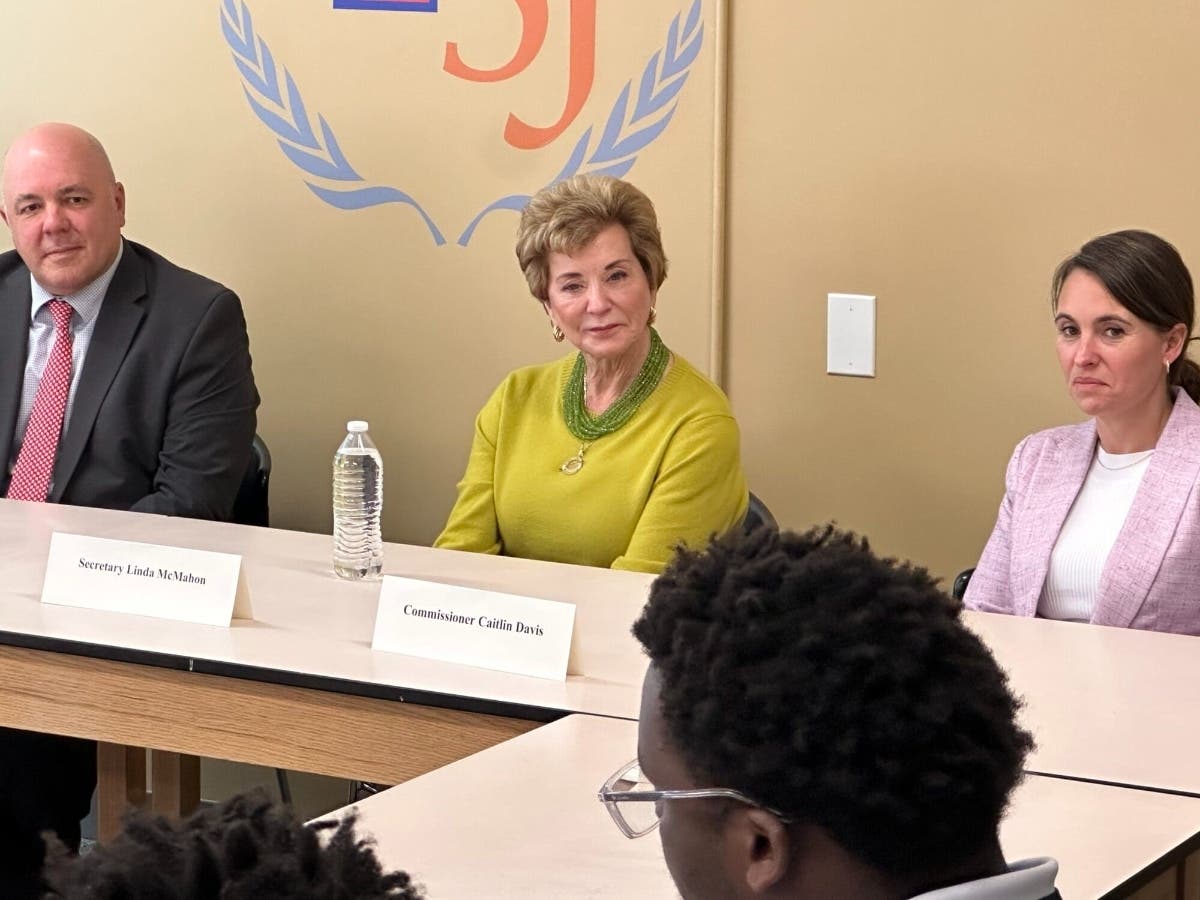
At a stop in Manchester Thursday, U.S. Education Secretary Linda McMahon had a message for Massachusetts Gov. Maura Healey: Take the money.
McMahon visited the Queen City as part of her “Returning Education to the States Tour,” a planned trip through all 50 states to meet educators, parents, and students and identify practices other communities could adopt. She’s also touting President Donald Trump’s Education Freedom Tax Credit, a scholarship program that gives K-12 families, including those in public schools, a choice.
Find out what's happening in Manchesterfor free with the latest updates from Patch.
Families in states that opt into the program can access thousands of dollars in education scholarships for expenses like private school tuition, tutoring, services for students with disabilities, books, and educational technology. Public school families can participate, too.
New Hampshire is already on board, one of more than 30 states that have joined the program, while Massachusetts has not.
Find out what's happening in Manchesterfor free with the latest updates from Patch.
“I was really happy that Gov. Ayotte opted in,” McMahon told reporters after touring St. Joseph High School and Trinity High School.
Even New York’s Democratic Gov. Kathy Hochul has signed up. “I’m not going to leave money on the table when it could help our kids,” Hochul said.
But New England Democrats, including Healey and Ayotte’s opponent Cinde Warmington, are still on the sidelines.
During her Oct. 8 WBZ-TV debate against Republican Mike Minogue, Healey was repeatedly attacked for refusing federal funding at no cost to Massachusetts taxpayers, even after federal regulations for the program had been released.
“What I said is I’ve got to look at it, and I’m not just going to take Trump’s word for it,” Healey said.
And Warmington is a longtime opponent of school choice programs who has pledged to end the popular Education Freedom Account program and, as an executive councilor, voted to reject federal education funds that would have gone to public charter schools.
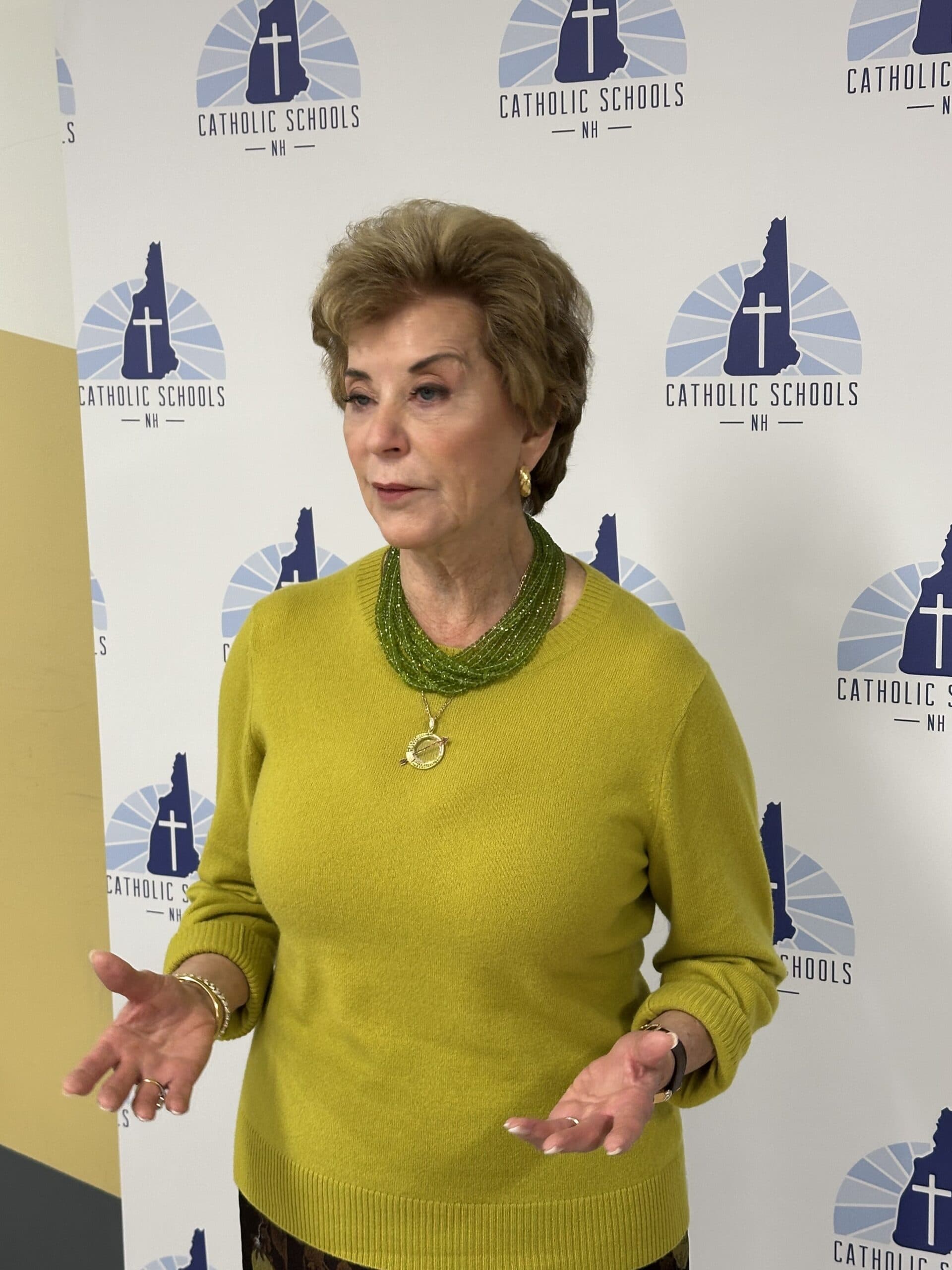 Asked what she would tell other New England governors who have not joined, McMahon urged them to examine the program more closely.
“I would suggest to them that they look at the program very carefully because I think it is a win-win,” she said.
Joined by New Hampshire Education Commissioner Caitlin Davis, McMahon toured Manchester School of Technology, Southside Middle School and the campuses of St. Joseph Regional Junior High School and Trinity High School before concluding with a parent-and-student roundtable.
The conversation was led by Kate Baker Demers, executive director of Children’s Scholarship Fund New Hampshire, which administers the state’s EFA program. She noted a trend of Granite State families mixing and matching their educational opportunities from multiple providers.
She described a Seacoast student taking Advanced Placement classes at a public high school, other courses online and additional classes at a community college.
“That’s what we see over time that families are beginning to use the education freedom account more for learning experiences,” Demers said.
Andrew Garand, a student at Trinity, told the roundtable he intends to do just that, signing up for college-credit classes next semester, likely through Manchester Community College.
His mother, Christina Garand, has six children, three of whom are participating in the EFA program. She said it lets her “give our kids a solid foundation with like good teacher-to-student ratios, and an environment that really helps them succeed.”
McMahon said one reason education innovation is needed is that “we failed our students.”
“We set up a Department of Education in 1980 under the Carter administration. We’ve spent $3 trillion since that time, and we’ve watched (test) scores continue to go down. So we clearly are failing our students.”
The reason choice works is that “the best education is that which is closest to the child. Parents understand their children better. Local school districts, too.”
She pointed to innovation successes like the “Mississippi Miracle.”
“They went from being either next to last or last, but now they’re above the middle of the pack because they adopted the science of reading. They did it on their own.”
“The president wants to remove this bureaucracy of education and return more control to the states, which I believe is absolutely the right answer,” McMahon said.
This story was originally published by the NH Journal, an online news publication dedicated to providing fair, unbiased reporting on, and analysis of, political news of interest to New Hampshire. For more stories from the NH Journal, visit NHJournal.com.