Politics & Government
$2.8M Upgrade to Town Compost Facility Sought
Article 3 on the 2012-13 warrant asks for approval of project that would have no tax impact, be paid for by sewer user fees.




Two of five money-related articles on this year's warrant originate at the Merrimack Wastewater Treatment Facility, and like its counterpart requesting upgrades of the treatment facility itself, a proposal to upgrade the compost facility there would have no tax impact.
Assistant Public Works Director Jim Taylor, who runs the wastewater treatment facility, said both projects will be paid for by user fees collected from sewer customers, and neither would force an increase of the sewer rate, at least in the first year.
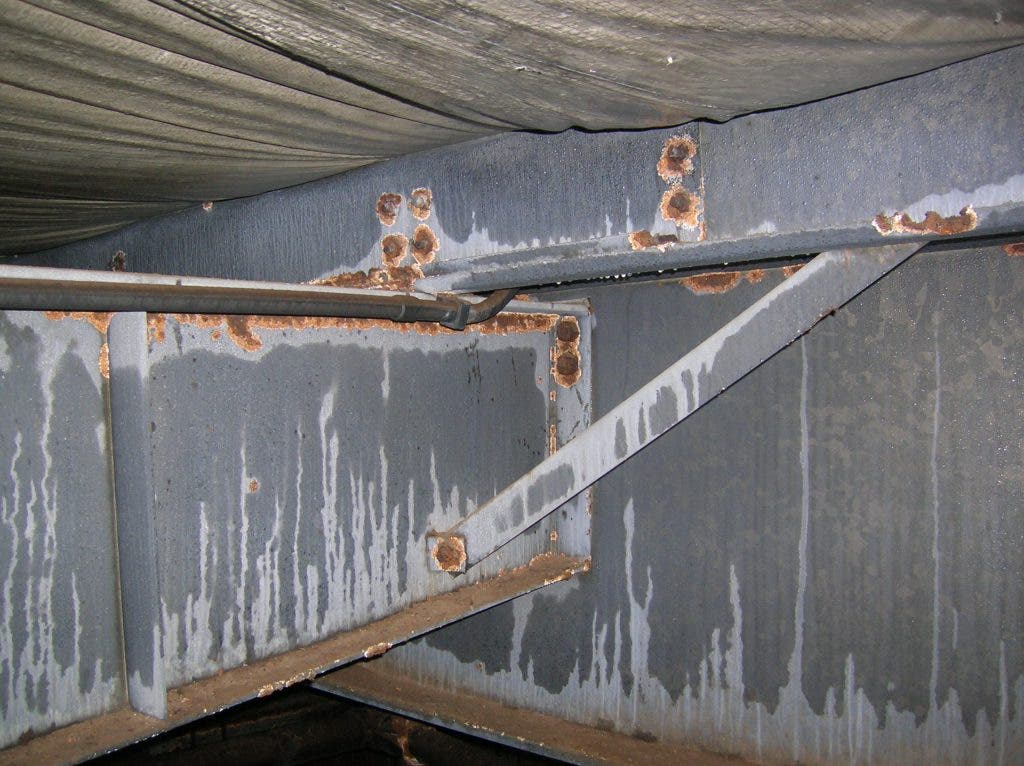
is a necessity to repair 42-year-old equipment and keep the town on track with its Environmental Protection Agency permit, and the compost facility upgrades are needed to repair the building housing the composting machinery and to repair and replace equipment that was installed in 1994.
Find out what's happening in Merrimackfor free with the latest updates from Patch.
The proposal for the compost facility would cost $2.875 million and includes coating the interior of the building, its supporting beams and roof with a sealant that would protect the building from further corrosion; replacing aeration blowers; installing two new agitators; making improvements to the biofilters; making electrical repairs and more.
The Town Council has recommended passage of the articles, both of which need a 2/3 majority vote to pass. Both articles will be up for discussion at the town deliberative session on March 14. The vote will take place during the April 10 election.
Find out what's happening in Merrimackfor free with the latest updates from Patch.
The compost facility treats the sludge that is produced at the wastewater treatment facility, processes it with woodchips and turns it into high-grade compost that can be used on anything from lawns, to flower gardens to vegetable gardens.
Upgrading the facility to keep it in good working order makes sense, Taylor said, because the facility is the most cost-effective option for the town.
“It's an offsetting cost,” Taylor said. “The reason it is the most inexpensive option is because we generate revenue from it.”
The town makes money on the facility by selling its operation to other towns who truck their sludge to the compost center for processing, and by selling the resulting compost to landscapers and contractors.
The facility has been processing sludge from its own facility as well as sludge from other towns at this location for nearly two decades and generates revenue of up to $140,000 a year. In 2011, the revenues were around $103,000.
In fact, the revenue generated by the compost facility in its early years, when it used to process Nashua's sludge, is the reason Phase I of the upgrades to the wastewater facility were able to be paid for with money already in the facility's capital reserve fund.
“Revenues garnered from Nashua essentially paid for the Phase I upgrade,” said Leo Gaudette, chief operator at the wastewater treatment facility.
In addition to it being the cheapest option, – versus trucking it to another facility or taking it to a landfill – it is also the most environmentally-friendly option.
“From an environmental point of view it's recycling at its best,” Taylor said.
Taylor said going to an outside source also puts the town in a position where it wouldn't be able to control its own destiny.
“You're a little at the mercy of outside forces you can't control,” Taylor said.
Merrimack's compost facility has been very well used over the years, both by residents who are invited to pick up loads of compost for their gardens and lawns for free, and by contractors and landscapers who purchase it by the yard and use it commercially.
The compost produced at the facility has been used in such places as Fenway Park, Boston College's athletic fields, Central Park and along the greenway during the Big Dig, among others.
Taylor said they use a marketing agent who markets it all around New England and New York, helping to earn that revenue.
In 2002, the facility won the Environmental Protection Agency's award for being the best operated facility in the country.
With the proposed upgrades to the facility, it would allow the town to approach even more cities and towns to take in their sludge by-product and bring in further revenue.
Since the wastewater facility must dispose of its sludge, the options are to throw it away or transform it into a usable product. Merrimack prefers the latter.
The upgrades would be paid for using a 20-year bond and the bond would be paid back with user fees from the sewer customers in town. Like the wastewater treatment facility upgrades, there is no further cost to the tax payer, and no cost to the residents who aren't connected to the sewer system.
More information about the project can be found on the town website under the Public Works Department, or in the town's Capital Improvements Plan. Additionally, brochures about this project and the Phase II upgrade to the wastewater treatment facility have been placed in locations around town including at the and in the
Get more local news delivered straight to your inbox. Sign up for free Patch newsletters and alerts.