Health & Fitness
The chicken nursery is ready
The incubator is ready and the eggs are all set to be put in. Incubating backyard chickens in Merrimack, NH.
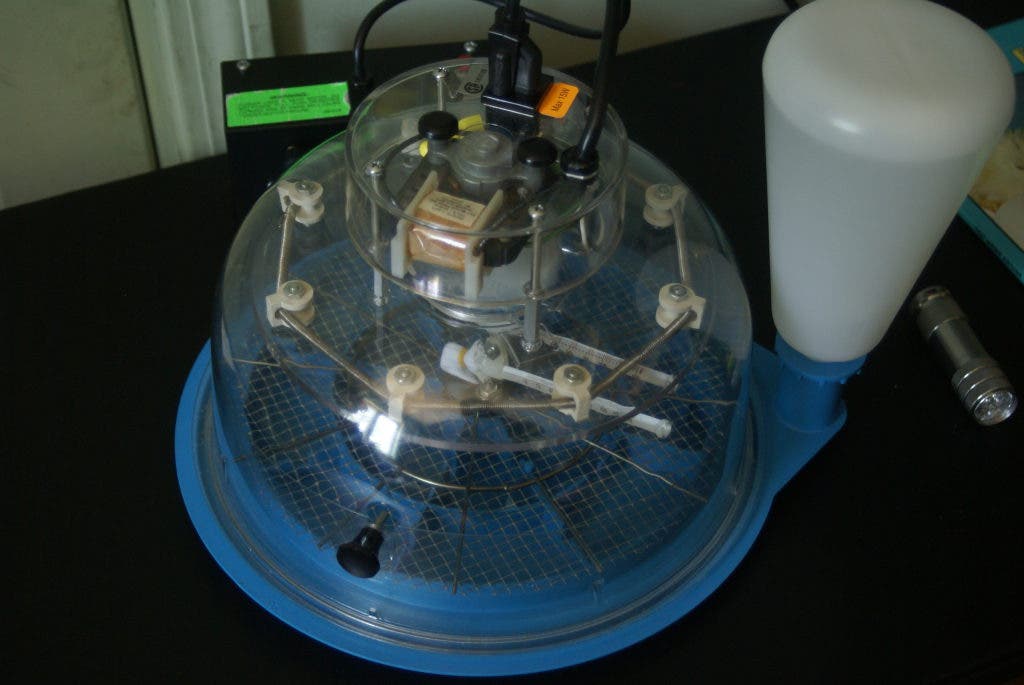
Yesterday my friend came over to help set up the incubator. We’ve decided to keep it in the mudroom (a room off to the side of our foyer with no traffic) instead of down in our basement. Even with a dog gate which must be carefully climbed over, it’s still easier on the knees than going up and down rickety stairs.
While setting up the incubator I got a crash course in the optimal egg hatching environment. Not only do we have to make the sure the incubator temperature stays consistent with a degree or so (optimal temp is 99.5 F which is maintained by heater with fan inside the incubator) but we also need to keep track of the humidity.
This is done by tracking a second mercury thermometer wearing a cotton sock that is sitting in the tray’s water reservoir. As the water is wicked up the sock, it cools the thermometer through evaporation giving you an indication of relative humidity. The temperature for that thermometer should be around a tepid 85 degrees.
Find out what's happening in Merrimackfor free with the latest updates from Patch.
Each day you need to keep on eye on these two temperatures making tiny adjustments as necessary. (although I’m told that once the temperature is set, there shouldn’t be too much need for adjustment there. The humidity on the other hand, will require closer tracking as things like outside temperature, air conditioning (ha!) and wet weather can affect it. All in all, it’s a pretty darn in-genius system.
The humidity is kept constant with that white water bottle. By increasing and decreasing the height of the bottle to the opening (done by adjusting a screw around the mouth), you control how much water is allowed into the incubator. More water equals a lower temperature. A higher screw distance means more water in, if you want less you lower the screw. My friend dropped off two gallons of distilled water to use saying that tap water is not the best as it tends to leave mineral deposits behind as it evaporates.
Find out what's happening in Merrimackfor free with the latest updates from Patch.
Once the incubator is set up it needs to run for about 24 hours to make sure everything works correctly and so that the temps can become stable. I looked at the temps last night and made a tiny adjustment downward for the heater to lower it under 100 degrees.
Lastly, the black box off to the side is a “turner”. Every hour a wire arm attached to a knob on the incubator pulls and then pushes the tray on which the eggs will rest about ¼ of a turn, this will ensure that the eggs don’t get “overcooked” on one side.
We’ll still have to turn the eggs completely over in the evenings but I’m looking forward to it, it’ll sort of be like tucking the little ones into bed each night.
Follow the adventures of raising children and chickens at Simple Thrift.