Politics & Government
Merrimack Primary Turnout as Expected; Slow and Steady
Moderator projects about 3,700 votes cast by the time polls close at 7 p.m.


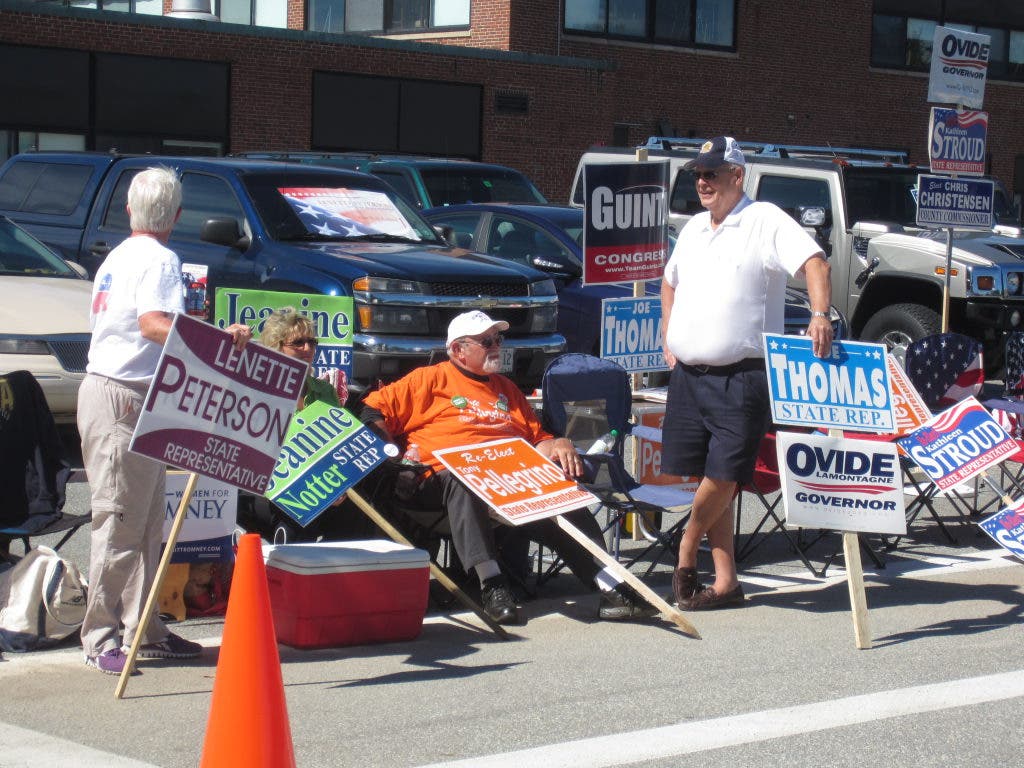


About midday, Moderator Lynn Christensen said voter turnout in Merrimack's primary had been about what moderator Lynn Christensen expected: slow, but steady.
As of 3 p.m., according to the read on the ballot machine, 1,311 Republican ballots had been cast to 621 Democratic ballots.
“We're probably running 2-1, which is typical of any election in Merrimack” Christensen said on Republican to Democrat ballots.
Find out what's happening in Merrimackfor free with the latest updates from Patch.
Back at a single polling location for the first time in about eight years, Christensen said to the first part of the day there have not been any problems with lines, either at new voter registration or voter check-in. Voters are all being funneled to James Mastricola Upper Elementary School for today's election.
The evening, being the busier time, will probably see some increased traffic, Christensen said, but she still didn't anticipate any problems handling voter flow at this election.
Find out what's happening in Merrimackfor free with the latest updates from Patch.
It's November that she thinks could get a little crazy, as she expects to have 14,000-15,000 of Merrimack's 19,000 registered voters head out to the polls on Nov. 6.
But by that point, Christensen hopes the single polling location will be conducted at Merrimack High School, rather than at JMUES.
Christensen said she'd received some comments earlier in the day, from people who said they were happy Merrimack had gone back to a single polling location, noting to her that it makes the town feel more cohesive.
Despite the fact that Merrimack has been voting in multiple locations for the better part of a decade, the town is still just one voting district, one of the largest single-voting districts in the state. Cities like Nashua and Manchester are broken into Wards and each polling location is separate from the other, electing their own aldermen to represent their neighborhoods.
Christensen said after Merrimack split into three locations, a petitioned warrant article came up at a town meeting to elect selectmen from each district, but the intent has never been to segregate the town, she said, and that article “went down in flames.”
“People don't want that kind of division in town,” Christensen said.
But just a few minutes later, Christensen was approached by Julie Bernard, a resident of South Merrimack who wanted to know why everyone had been melded back into one location.
Christensen explained to her how and why the decision had been made, but Bernard still had her reservations about traffic later in the night.
“She doesn't know what she's talking about,” Bernard said of Christensen's reassurances that lines for traffic and voter registration would be under control even in the busier voting hours. “I was here in '96 and it was a nightmare. We waited in lines out the door forever.”
While Bernard called driving from South Merrimack to JMUES inconvenient as compared to traveling to St. John Neumann Church, just a couple miles down the road, her bigger concern was the voters who will stay away because they think it's going to be a nightmare.
“We want people to vote freely and openly here. And I'm afraid that's not going to happen,” Bernard said.
Bernard said she'd heard earlier in the day from a neighbor who said her husband wouldn't be voting today because he didn't want to deal with long lines.
“That's just not right,” Bernard said. “I just don't want to see this decision cause voter suppression.”
But by all accounts, turnout through the day didn't appear to be any lower than usual for a state primary. The tell might be in the evening when it's generally busier, if the same numbers don't come out, but Christensen was still optimistic for about 3,750 voters to turn out, which is admittedly a small part of the checklist, but nothing if not typical she said.
Should lines get busy, Christensen said they can break out the checklist and split lines to make them move faster. If there's a line out the door at 7, she said, she'd keep the polls open.
"We do everything we can to make it as easy for people as possible," Christensen said.
For voter Elaine Brisson, who has been voting at JMUES all along, today was no different than usual and she said she was happy to continue on a lifelong tradition of teaching young voters early.
Brisson was at the polls with her two-year-old grandson, Cam Brisson, who has joined her at the polls for the last three elections she's been to.
“We come to the primaries and the general election,” Brisson said. “I cast my ballot, he gets a sticker. Of course, he won't remember this, but it's fun."
Brisson said it's been a long time family tradition to bring young ones to the polls. She started going when she was little, too, she said. Though back in those days, children were not allowed inside the building.
“We just carry on the tradition, he votes with me every year,” she said. “We come early in the day, and his parents will be here tonight.”
Get more local news delivered straight to your inbox. Sign up for free Patch newsletters and alerts.