Politics & Government
NH Drug Czar Offers Opioid Crisis Recommendations
Jack Wozmak issues 22 points to strengthen Granite State efforts to combat heroin, substance abuse problems.


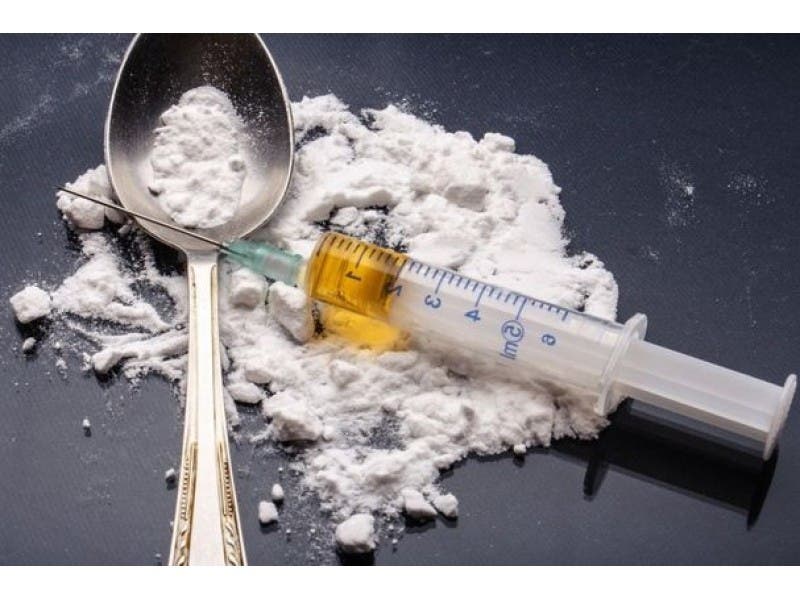
Gov. Maggie Hassan, D-Exeter, announced the initial list of 22 recommendations made by her Senior Director of Substance Abuse and Behavioral Health, Jack Wozmak, aimed at strengthening the state’s efforts to combat the opioid and substance misuse crisis, according to a press statement.
These recommendations include making it easier for families to access Narcan, expanding access to substance abuse treatment, strengthening the provider network, facilitating more substance abuse treatment for people involved in the legal system, and boosting education and awareness efforts.
Wozmak, the state’s ”drug czar,” will meet with Hassan and the Executive Council to discuss the recommendations.
Find out what's happening in Merrimackfor free with the latest updates from Patch.
“The opioid and substance misuse crisis facing our state is our most pressing public health and safety challenges,” Hassan said. “The growing number of opioid users and the increasing number of overdose deaths affect families and communities across the state, touching people from all walks of life. As these recommendations make clear, we must tackle this challenge with a multi-pronged approach, focusing on prevention, treatment and recovery. In the words of law enforcement officials, we cannot arrest our way out of this crisis.”
In partnership with the New Hampshire Charitable Foundation, Hassan appointed Wozmak in February to serve as Senior Director of Substance Abuse and Behavioral Health in order to coordinate the state’s efforts on substance misuse crisis and to serve as a liaison to the New Hampshire Governor’s Commission on Alcohol and Drug Abuse Prevention, Intervention, Treatment and Recovery. Wozmak, the governor noted, has met with more than 100 individuals, organizations and other stakeholders across the state to develop his initial recommendations, work on many of which is already ongoing.
Find out what's happening in Merrimackfor free with the latest updates from Patch.
“New Hampshire is in the midst of a profound public health crisis that affects the quality and availability of the workforce, drains the economy of resources and interferes with economic growth,” Wozmak said. “The human toll cannot be measured. To address this crisis we must reach out to our youngest citizens and impart the strongest prevention messages possible – we must change the way the next generation thinks about all substances that they ingest, we must provide treatment for those who are currently addicted and we must provide avenues of recovery to help our citizens remain healthy.”
Wozmak has come under fire from some officials for reportedly not meeting with anyone in Manchester about the epidemic, including Ted Gatsas, the mayor of Manchester.
Executive Councilor Chris Sununu, a possible 2016 gubernatorial candidate, said the lack of communication between local officials and Wozmak was ”the latest example of a disappointing pattern of mismanagement on substance abuse issues” by Hassan.
“I am deeply troubled by this situation and recent revelations that the governor’s office was unaware that New Hampshire is receiving a $12 million federal grant to combat substance abuse,” he stated. “I also believe that the governor made a serious mistake by vetoing the state budget that included an immediate 75 percent increase in substance abuse funding.”
William Hinkle, a press spokesman for Hassan, countered that she had “worked to address this challenge with a multi-pronged approach, which includes increasing access to treatment services through our bipartisan health care expansion plan, increasing the safe and effective use of Narcan and strengthening the state’s prescription drug monitoring program.”
Wozmak’s recommendations include:
1) Increase Narcan Availability: Develop an implementation plan for the recently enacted legislation making naloxone (Narcan) available to third parties. While the legislature authorized family members to obtain prescriptions for Narcan, families are reporting difficulties in accessing and filling prescriptions. Work in a collaborative effort with the New Hampshire Medical Society, the New Hampshire Board of Pharmacy, the New Hampshire Attorney General’s Office, the New Hampshire Department of Health and Human Services, the major pharmacy chains (Walmart, Walgreen’s, Rite Aid, CVS) and others to formulate working protocols for prescribing, distribution and patient education for Narcan prescriptions. Protocols by September 2015.
2) Move up the Expansion of Substance Abuse Services to the Existing Medicaid Population: Moving up implementation of the expansion of substance abuse services to the existing Medicaid population will help fill an important gap in treatment services, and support efforts to expand treatment options.
3) Reauthorize the New Hampshire Health Protection Program: In less than a year, the New Hampshire Health Protection Program has provided thousands of Granite Staters with substance abuse and behavioral health treatment services. However, New Hampshire still lacks an adequate network of substance abuse providers, including in-treatment facilities. Uncertainty about the future of NHHPP is deterring critical investments in new treatment options.
4) Expand Drug Courts and Treatment Options: New Hampshire should review and expand Drug Courts, and continue work to leverage Medicaid to expand treatment options for individuals on probation and parole.
5) Better Utilize the State’s Prescription Drug Monitoring Program (PDMP): The PDMP is an essential tool to identify sources of prescription drug diversion. Legislation passed in 2015 will allow for access and use of valuable prescribing information not previously available. By improving the ease of use of the PDMP and enhancing its capabilities, it will no longer be an underutilized resource. We will begin analyzing prescribing patterns and exchanging this data with other Northeast states, consistent with the national goal of monitoring the abuse of narcotics. Establish metrics by October 2015.
6) Expand Health Care Provider Education on Best Practices Regarding Opioid Prescribing: Coordinate the scheduling of continuing medical education for best practices related to opioid prescribing and alternative approaches to chronic pain management. Prescription drug abuse is often a pre-cursor to heroin use. Linking education providers with each major hospital & medical center and coordinating the roll-out of this education is a critical function of this position in order to effectively reach the more than 12,000 licensed physicians, nurse practitioners, physicians assistants, dentists and veterinarians authorized to prescribe narcotics. The New England High Intensity Drug Trafficking Area (HIDTA) has agreed to provide funding for this important effort and the Boston University School of Medicine has developed a highly regarded education curriculum and agreed to provide the training. Educational programs should begin in the fall.
7) Review State Medicaid System Policies Regarding Opioid Prescribing: In coordination with the Governor’s Commission, the Managed Care Companies and New Hampshire Medicaid, examine reimbursement and other policies regarding Medicaid’s opioid coverage practices. Make recommendations to the Governor, Commissioner and the legislature regarding changes and/or restrictions in reimbursements or dispensing regulations pertaining to opioid medications. Identify and remove perverse incentives that reimburse for opioids over other treatment options, such as physical therapy, and recommend the development of clinically appropriate responses to chronic pain management from the insurance reimbursement point of view. Report by December 2015.
8) Develop a System to Monitor Parity Compliance: Coordinate the efforts of the University of New Hampshire Institute of Health Law and Policy Program, the New Hampshire Department of Insurance, the New Hampshire Providers Association and others to examine the policies of each health insurance company licensed in New Hampshire to ensure compliance with requirements for parity in substance abuse and behavioral health coverage. Make recommendations for removing ”first-fail” barriers and certain prior authorization practices that delay the initiation of appropriate clinical treatment.
9) Facilitate the Implementation of Programs and Prevention Efforts for Schools: Partner with the New Hampshire Department of Education, the New Hampshire Endowment for Health, the New Hampshire Children’s Behavioral Health Collaborative, the New Hampshire Department of Health and Human Services, the New Hampshire School Administrators Association, the Bureau of Drug and Alcohol Services and others to cultivate and sustain an integrated, comprehensive children’s behavioral health system in New Hampshire schools and to expand Student Assistance Programs; targeting 12-17 year olds, and providing extensive assessment of substance use issues in 18-25 year olds, especially related to the New Hampshire opioid/heroin epidemic.
10) Assess the Need for Mandatory SUD/BH Coverage: Facilitate the work of the Governor’s Commission and the New Hampshire Department of Insurance to examine and make recommendations regarding legislation/regulation requiring coverage for substance abuse treatment for anyone admitted to an emergency room or other medical facility with an overdose. Report by December 2015.
11) Implement the Use of Naltrexone (Vivitrol) in Correctional Settings: Partner with the New Hampshire Department of Corrections to develop a pilot program for offering inmates for Naltrexone prior to reentry into the community. Naltrexone aids in the prevention of drug-use relapse when part of a comprehensive reentry program. This will increase the likelihood of success as an inmate transitions into the community or longer-term sober housing situation. First pilot program launched by November 2015.
12) Partner with New Hampshire 211 to Expand Access for Individuals Seeking Information on Treatment and Recovery Services: Leveraging the information on-line at NHTreatment.org, New Hampshire should partner with the Bureau of Drug and Alcohol Services, NH 211, the New Hampshire Medical Society and others to develop and expand access to a statewide database of available treatment services accessible to clinicians and consumers by phone and internet.
a. As a subset of this, consider creating a provider hotline to offer decision support for prescribers. This might be hosted by the New Hampshire Medical Society or one/more of the major medical centers with opioid/pain management specialties.
13) Expand Treatment Options: Develop recommendations for New Hampshire regarding the availability of services within the state, cognizant of the individualized approach to assessment guided by the ASAM treatment criteria (American Society of Addiction Medicine) for the approximate balance between Outpatient Services, Intensive Outpatient/Partial Hospitalization Services, Intensive Outpatient, Partial Hospitalization Services and Clinically Managed Residential Services. This will be a collaborative effort between the Bureau of Drug and Alcohol Services, treatment providers and others. Report by March 2016.
14) Establish a Network of Independent, Standardized Assessment Centers: In cooperation with existing healthcare facilities, establish substance use/behavioral health assessment centers to provide valid, independent standardized assessments using ASAM criteria to determine the appropriate cost-effective level of care.
15) Consider Strict Regulation/Oversight of Methadone Clinics: Request the Governor’s Commission, in cooperation with the New Hampshire Medical Society and the New Hampshire Department of Justice, to develop recommendations on methadone treatment centers and protocols. Seek recommendations that are compatible with the move towards integrating substance misuse and behavioral health issues into primary care settings. Closely review the value and efficacy of free-standing clinics.
16) Review Regulation/Oversight of Free-Standing Pain Clinics: Request the Governor’s Commission, in cooperation with the New Hampshire Medical Society and the New Hampshire Department of Justice, to develop recommendations on free-standing, independent pain centers. Seek recommendations that are compatible with the move towards integrating pain management issues into primary care settings or into medical centers having pain management protocols.
17) Increase the Number of Medication Take-Back Boxes: There are currently 33 medication drop boxes in New Hampshire located only at police departments. Legislation has cleared the way for boxes to be located at pharmacies. Partner with the pharmacies to establish acceptable policies and procedures to allow medication drop boxes at most pharmacies.
18) Establish Increased Housing Opportunities for Those with Substance Misuse/Behavioral Health Disorders: Review New Hampshire Housing Finance Authority policies to expand housing options for people in recovery. Gather data on the impact housing policies have on this vulnerable population with particular regard to Bridge housing and Section 8. Partner with Governor’s Commission to make recommendations for policy changes, if appropriate.
19) Increase Transitional Housing for Women: With particular regard for the hundreds of women released from prison and jail each year, many with substance abuse issues, the need for transitional housing is critical. Develop proposals with a goal of adding 200 beds of transitional housing for women dispersed around the state.
20) Increase the Availability of Data to Law Enforcement Agencies: Integrate/centralize the aggregation of drug enforcement data to create an improved statistical database relating to drug use and trafficking and make this information available to all law enforcement agencies in real-time.
21) Facilitate the Creation of a Coordinated Statewide Telehealth System: There is currently no statewide coordinated telehealth/telemedicine system in New Hampshire although some small pilot projects have evolved. A statewide coordinated system can become a fundamental tool in the delivery of a coordinated continuum of care for SUB/BH as well as all medical and mental health conditions. Report by December 2016.
22) Establish a Network of Recovery Houses: Recovery Houses for those in recovery are a very important element of reducing recidivism and relapse. Support the efforts of New Hampshire Hope for Recovery to establish 12 Recovery Houses.
Get more local news delivered straight to your inbox. Sign up for free Patch newsletters and alerts.