Politics & Government
WMUR-TV, Union Leader Debate Exclusion Irks Libertarians
Sponsors say, there's only room for two.


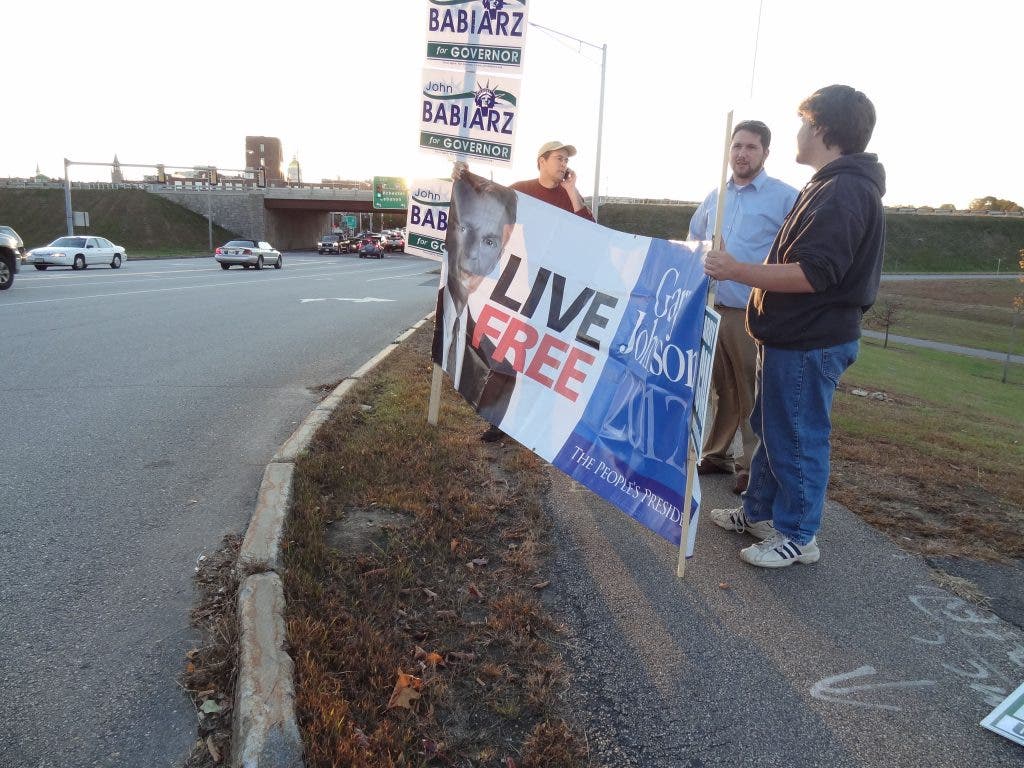

Despite gathering nearly 20,000 signatures from registered voters in New Hampshire to gain ballot access for its candidates, the Libertarian Party of New Hampshire’s gubernatorial and congressional candidates will not be included in the last debates of the 2012 campaign, co-sponsored by WMUR-TV and the New Hampshire Union Leader.
The exact reason why varies, depending on who you talk to.
The candidates said they were not included in previous debates because they had not met the historical standard of 3 percent in political polls. The news director of WMUR-TV said the candidates didn’t qualify based on a number of different criteria but the candidates deny ever receiving any criteria requirements. The television station’s lawyer in North Carolina stated that the station is unable to include the three candidates because of time, logistics, and lack of newsworthiness.
Find out what's happening in Merrimackfor free with the latest updates from Patch.
This week, Hardy Macia, the 2nd Congressional District candidate, accused the station of keeping the candidates out of debates by not informing them on how they could gain access to the debates, creating a circle of exclusion. News Director Alisha McDevitt, he said, stated via email that the station followed federal communications law and used a good-faith journalistic judgment to determine criteria and the Libertarians didn’t qualify. Macia said that when he repeatedly asked for specific criteria for inclusion, his requests went unanswered.
Macia said that the station had included him, gubernatorial candidate John Babiarz, 1st Congressional District candidate Brendan Kelly, in segments including both serious and lighthearted short question and answer features, which made him curious as to why the candidates would not be included in the official debate, where they could get more than a few minutes time to discuss issues with voters.
Find out what's happening in Merrimackfor free with the latest updates from Patch.
“I've had a lot of strangers telling me they've seen me on TV and they like what they hear as compared to the other candidates,” he said. “They are looking for change from the abysmal 9 percent approval rating Congress currently has."
Sponsors respond
McDevitt stated via email that other “objective factors were considered” before deciding to exclude the Libertarians from the debates. Those criteria, she said, went beyond polling and included “campaign activities, financial support from the community, support from volunteers in all counties, regularly-updated campaign websites and social media presence.”
When asked when the candidates were told about the criteria they needed to meet, the date they were notified of the criteria standard, so they could work on meeting it, and when the station decided not to include the candidates, McDevitt declined to respond.
After repeatedly asking for criteria standards, Howard Wilson, a Libertarian state Senate candidate who had previously run for Congress and was not included in debates, received a letter from Mark Prak, of Brooks, Pierce, McLendon, Humphrey, & Leonard, LLP, in Raleigh, N.C., the station’s federal communications law counsel, addressing the request.
In the letter, Prak stated that the exclusion of the candidates was “consistent with federal law” and that some candidates were not being included “because of time, logistic limitations, and the editorial team’s judgment as to their newsworthiness.” Prak said that under Section 315 (a)(1)-(4) of the Communications Act, “a television station’s broadcast coverage of bona fide newscasts, bona fide news interviews, bona fide news documentaries and ‘on the spot coverage’ of bona fide news events are exempt from the equal opportunity requirements. Debate coverage is treated as ‘on the spot coverage’ of a bona fide news event under the law.” Prak closed that if the law did not provide this kind of “editorial discretion to stations, there would be little broadcast news coverage of political campaigns.”
WMUR-TV General Manager Jeff Bartlett chose not to respond to the issue allowing McDevitt to respond.
Joe McQuaid, the publisher of the Union Leader, the other sponsor of the debate, did not respond to a request for comment.
Drew Cline, editorial writer for the newspaper, said he didn’t know who at the newspaper could respond to questions about why the candidates were being excluded.
Down this road before
Babiarz, who has run before, has seen this situation from both sides of the fence.
In the past, he has been included in debates and forums. The access leads to campaign support, donations, and votes. For 2012, he said, the station never set the criteria for debate inclusion with any of the candidates even though the news department has been communicating with the campaigns.
Babiarz commended WMUR for including him in the question and answer segments. He said part of the problem could be that the major party candidate primaries were the focus of the voters and the news media for most of the summer and Libertarians weren’t included in any of the polling.
“It’s a Catch 22 thing,” he said. “Some of these polls weren’t even asking my name. If a party has no primary, they never do the polling. How can you meet the polling criteria if your name isn’t in the poll? The system is so gamed.”
The logistics of having multiple candidates on a stage is a minor one, Babiarz said, noting that the Democratic party primary debates included all three candidates and included one – Bill Kennedy – who had little visible support and even less money. During the Republican presidential primaries, WMUR and others organized debates with eight or nine candidates on the stage, he noted. Babiarz also questioned the notion that a debate was “on the spot” news coverage, especially since the station was a planned, co-sponsor of the debate.
The Union Leader, he noted, is not a public broadcasting entity and had no obligation to include him in any sponsored forum or debate. However, WMUR-TV does, even if the station's attorney now insinuates that it is “just recording the debate … I don’t know how the decision was made,” he said.
In previous races, Babiarz and other independents, like Mary Brown who ran for governor in 2002, were included in both televised debates and candidate forums organized by organizations the chambers of commerce and the League of Women Voters.
“I used to get upset about it but now I don’t get upset,” Babiarz said. “It’s the corporate media.”
Fighting cancer is easier
Recently, Macia was diagnosed with lymphoma and is in the process of a chemotherapy regiment while still campaigning for Congress, assisting Gary Johnson’s campaign, and running his software apps company. He had been joking with friends that fighting his cancer, as difficult as it was, would be easier than getting into a televised debate. The joke took a spin this week when Macia recorded his latest chemo treatment and produced an Internet ad (WATCH attached media) that makes the visual point in a gripping way.
“It’s true, it’s easier to battle the cancer than to get into the debate or even get a straight answer on why we’re not in the debate,” Macia said.
Macia said he had been included in a number of forums around the district and he added that he was “very appreciative” that the station gave him five minutes on a Sunday show to talk about his campaign and appearances in the question and answer segments. But it wasn’t the same coverage, Macia noted, as a head-to-head debate with Charles Bass and Ann McLane Kuster.
“It’s really strange that they would include me in one thing but they aren’t letting me into the debate,” he said.
Colluding with the major parties?
Over in the 1st District, Kelly believed he was being excluded because of collusion between media outlets and the two major parties, to keep other voices out.
“It’s the only time those two parties come together is when anyone else tries to get in on their game,” he said. “They did it to Ron Paul, when he was the only one down there telling the truth … they did it to Johnson … the entire media is ignoring the candidates who tell the truth.”
Kelly, who is entering his sixth year as a selectman in Seabrook, said he felt “blessed” that WMUR had allowed him to participate in some of the news segments as well as the Union Leader, for publishing his campaign profile. But it was puzzling that now, he couldn’t participate in an hour-long debate where thousands of voters will be focused on how to vote, when compared to Frank Guinta and Carol Shea-Porter.
“We’re going to go in there and tell people the truth,” he said, “and there is nothing in the truth for those two parties ... they are just the puppets and they know there are no strings on me.”
Get more local news delivered straight to your inbox. Sign up for free Patch newsletters and alerts.