Arts & Entertainment
Stoddard: For The Love Of Live Theatre
Jessica Wells and Colin Malette talk about their love of community theatre.


NASHUA, NH — You have to love community theatre to participate and stay with it. Those who do will spend multiple nights a week for two months at a stretch to get the play or musical to the point where it’s ready to be performed for a live audience. And you do this for no money, no payment, in fact, you will end up paying to participate.
“You do this for the love of the craft,” says Colin Malette, a well-known community theater actor. “It’s a way to just get out and do our own thing. So while I do know there are theatre companies around like Seacoast Repertory Theatre in Portsmouth, I was a good friend of the previous owners. They have offered [saying] oh, you should come out and rehearse with us. Well, they rehearse during the day. And I have a day job. So yes, I would be getting paid for it, it’s very bare bones. You’re basically getting paid just enough to stay afloat while supplementing all that with bartending in the evenings.”
Find out what's happening in Nashuafor free with the latest updates from Patch.
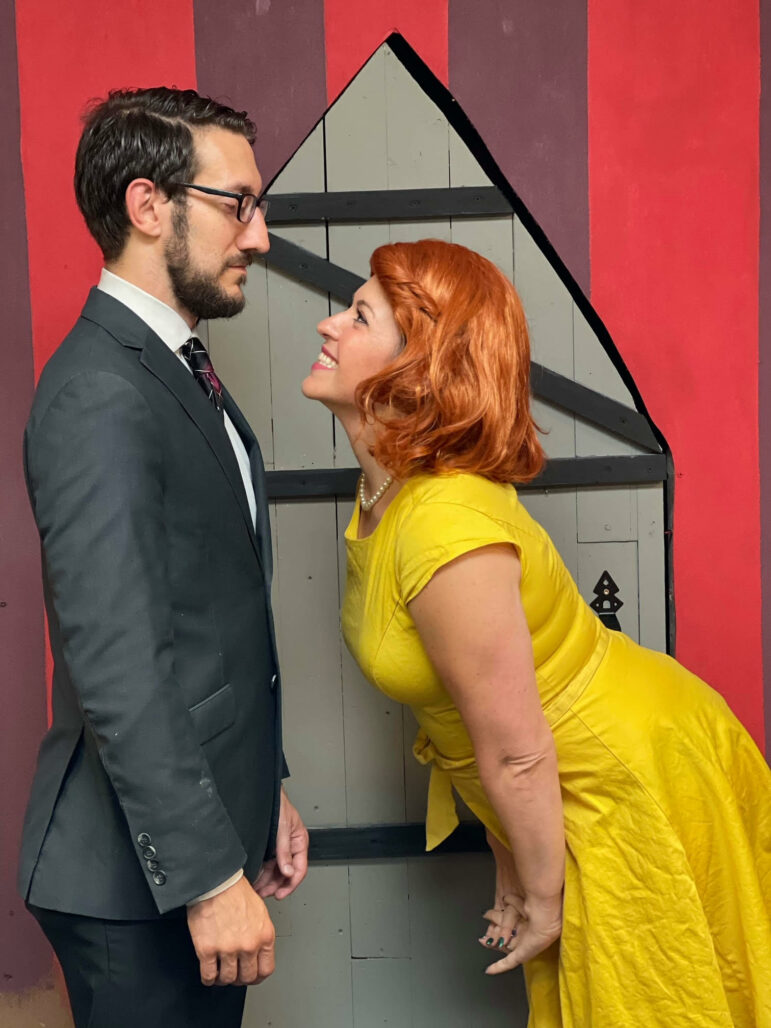
Jessica Wells, actor and frequent acting partner with Colin, then explains that it’s an either-or situation of paid theatre work versus community theater work which is essentially a volunteer position. Jessica, who works in IT, explains, “When you do certain shows you can get points in order to get your union card, but you have to be in very specific productions. To qualify, you have to be part of the union. And so if he and I ended up being in the union, we could not be in any community theater. We just do this for fun.”
Find out what's happening in Nashuafor free with the latest updates from Patch.
Still, fun comes at a cost. Colin, who has averaged three to five plays a year since 2002, explains.
“There are production fees, script rentals, that sort of thing. Somebody pointed out to me that usually, you have to become a member of the theatre company to be covered under that company’s insurance. The stage is the only place you can walk underneath 1000s of pounds of mechanical equipment without a hard hat as far as OSHA is concerned. So the insurance for theatre companies is very high.”
They estimate that somewhere between 500 to 1000+ folks are working in community theatre. Colin explained, “For every page of the script, you need one hour of rehearsal time. For a 100-page script, and you need 100 hours of rehearsal with three to four-hour rehearsal nights that’s maybe two months.”
“When you’re in a professional play, all of the people around you are actors,” Jessica added. “But when you’re in a community theater play, you’re with teachers, and nurses and accountants and all walks of life.”
Malette and Wells are known in the theatre community as having great chemistry on stage and can play comedy, and drama, and “take a lot of pride in figuring out the intention of the line rather than just delivering it.” They have developed a nonverbal form of communication and became a great dynamic duo. Some of the work they’ve acted in includes Philadelphia Story, House on Haunted Hill, and The Addams Family.
Colin, Jessica, and I met at the NH Writers’ Project 603 Convention in June. As a member of the Board of Trustees, I attended as a volunteer and worked the raffle table with another trustee. Colin was working at the convention. He was tasked to read author pitches to a panel of writers. The winner of the pitch party would receive $250 and get invaluable critiques of their story’s pitch to guide them along in the publishing process. Jessica attended as a bystander until we needed some help announcing the winners of the raffles, and with her acting skills, she was persuaded to help with the announcements from the stage. In meeting them, I was intrigued to find out more about this acting duo.
Colin joined the drama club at Alvirne High School in Hudson, NH in 2002 encouraged by his mother who wanted him to do something social, but he didn’t want to do athletics. That led him to go on to college at Plymouth State University where he majored in acting. He teases that “he majored in waiting tables.” Practicality drew him to needing a day job and he became a certified medical assistant.
Jessica’s love of theatre started later in life for her, and she chose UMass Lowell to learn the music business to pursue sound design or music production. She says, “I wanted to be more behind the scenes,” but, caught the acting bug when as a freshman she got a role in Godspell. Wells worked at a local Apple retail store paying the bills until she tried her hand with a move to New York City.
“I went to a couple of auditions in New York, but it’s nuts. It’s a lot,” and came back to New Hampshire.

In 2019, the Actorsingers theatre group based in Nashua, New Hampshire, who usually mount their productions at Nashua’s Keefe Auditorium, was offering a smaller production that would be at the Hatbox Theatre in Concord. The show titled, [Title of Show], is a one-act musical with music and lyrics by Jeff Bowen and a book by Hunter Bell and called for just two boys, two girls, and four chairs. This was where the two like-minded people met each other.
“It’s a play about two guys who get the idea to submit a musical to a theatre festival. But they need to write something original. So the musical they write about is the show that you’re currently watching. It’s the show about them writing a show about writing a show.” Colin sings these lines, “These are the notes that will open our show, and then we’ll add this and then we’ll add this, he stopped singing, “and then just turn it into a big thing. And they just sing about putting on a musical that the audience is currently watching. It’s very clever.” Colin and Jessica auditioned for the musical and both got parts.
“This was sort of what we like to look at as fate. After doing that show together, in subsequent shows, we were either playing opposite each other as bad guys or as love interests. I’ve directed a show that she’s performed in, she’s directed a show that I’ve helped her co-direct.”
When I explored the idea of speaking to an actor, I asked how can you tell if you are conversing with the person or the character.
Jessica explained it this way. “If you’re talking to an actor, you’re talking to the most authentic version of themselves, because even though you don’t necessarily know where they’re at, or what they’re thinking, all the characters that I’ve ever played before, have that little piece of me and when I finish a play that character gets added to my resume, that character is now a part of me as well.” Colin added, “I almost feel that I’m more genuine, authentic than most people that you meet because I’m aware of my sense of self.”
To follow up to that question we talked about the idea of theater showmances, an invented word created by people in the acting industry.
Colin explained some of the dynamics that go on behind the scenes of creative people creating. “When you’re in a theater family, the bond you create between the cast is unmatched. It can go [from] complete strangers you’ve never met in your entire life, in February, when the show goes up at the end of April, say, even just that one week of being backstage in the dark, making sure your props are in the right places, setting up costumes, you’re all working towards the same task. You all go out and feel that rush of the audience and feel the applause. And in that moment, you were an actual family. And sometimes then in just these two months, however long it takes to put up the show, you can make bonds with people that last forever. So, that’s sort of where the showmance thing comes in, is, you know, acting like you’re in love with somebody, the veil between who the character is and who the actor is, is very thin, because you see them a lot as just the other actor. Your brain sort of plays that and puts them into that sort of fantastical.”
“Colin and I,” Jessica adds, “We have great chemistry on stage. I think that’s why we’re such a great dynamic duo in that we are comedic actors, very much so and we take a lot of pride in figuring out the intention of the line rather than just delivering it. Anybody can read a script and say it out loud. But the good thing about us is that I know how to play off his strengths and he knows how to play off mine.”
For those who wonder if live theatre is still relevant or important, The Acting Studio Chicago gives us “5 Reasons Why Theatre is Still Important, including “to see a different perspective from our own, reminding us we are not alone, the immediacy is evolving and always different, it promotes social discourse, dialogue, and potential social change, as well as promoting education and literacy.
For all the years Colin has been involved in community theatre, this was his take on it. “I have a very strong opinion about theater being more important than any sort of athletics or sports, because while yes, sports promote team building, so does theater. It also promotes empathy. It teaches music and it teaches history. It teaches everything, everything, everything, everything. There’s something for everybody in the theater. And because theater is always about rooting for the underdog and wanting things to have a happy ending, it’s a place that those underdogs can go to, because they are understood and appreciated and fit in.”

Colin Malette and Jessica Wells will be appearing in the upcoming performance of Prelude to a Kiss, the Nashua Theatre Guild’s new production on September 27, 28, and 29. The play, by Craig Lucas, is being directed by Larry Watson. Jessica describes it as similar to the movie, Freaky Friday, when a young woman, soon to be married, and an Old Man kisses her, and they exchange souls. For more information and tickets go to NashuaTheatreGuild.org, phone 978-300-2444, or email, nashuatheatreguild@gmail.com.
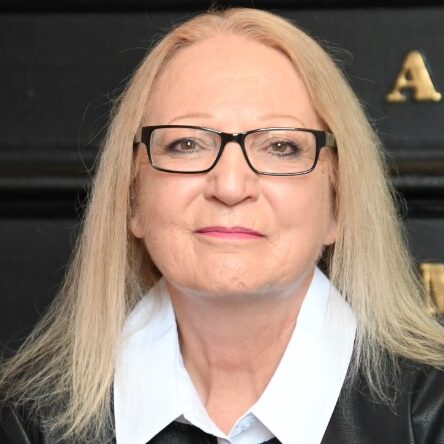
Beverly Stoddart is an award-winning writer, author, and speaker. She is on the Board of Trustees of the New Hampshire Writers’ Project and serves on the board of the New Hampshire Center for Public Interest Journalism. She is the author of Stories from the Rolodex, mini-memoirs of journalists from the 1960s, 1970s, and 1980s.
This story was originally published by InDepth NH.