Schools
Every Day is Earth Day: UNH Scientists Make a Career of Caring for the Earth
William McDowell, a long-time experiment station researcher, recently was named the 2017 distinguished professor at UNH.


DURHAM, NH — Earth Day may come just once a year, but for scientists at the University of New Hampshire, every day is Earth Day. Experiment station scientists work to care for the Earth’s resources, conducting leading ecological research in a diverse range of areas. William McDowell, a long-time experiment station researcher, recently was named the 2017 distinguished professor at UNH, according to a press statement.
A professor of natural resources and the environment, McDowell has been at UNH since 1989, where he has been studying the connections between land and water, specifically how watersheds and watershed processes affect stream chemistry. His lab group conducts chemical analyses of rain water, groundwater, and surface water to understand spatial patterns in stream chemistry across a landscape, and to document long-term changes in water quality at key locations. His lab’s fundamental goal is to understand the role of trees, soils, rocks, aquatic biota, and people in shaping water quality.
Invasive, non-native plants have a significant detrimental impact on Granite State forests. In a new experiment station-funded research project “Invasive Plant Impacts on New Hampshire Forest Ecosystem Services,” John Gunn, research assistant professor of forest management, will assess the status and distribution of invasive plant species throughout New Hampshire that pose the greatest threat to the state’s forest systems, with the goal to help foresters and landowners minimize the risk of invasive plants to the state’s economically important forests.
Find out what's happening in Portsmouthfor free with the latest updates from Patch.
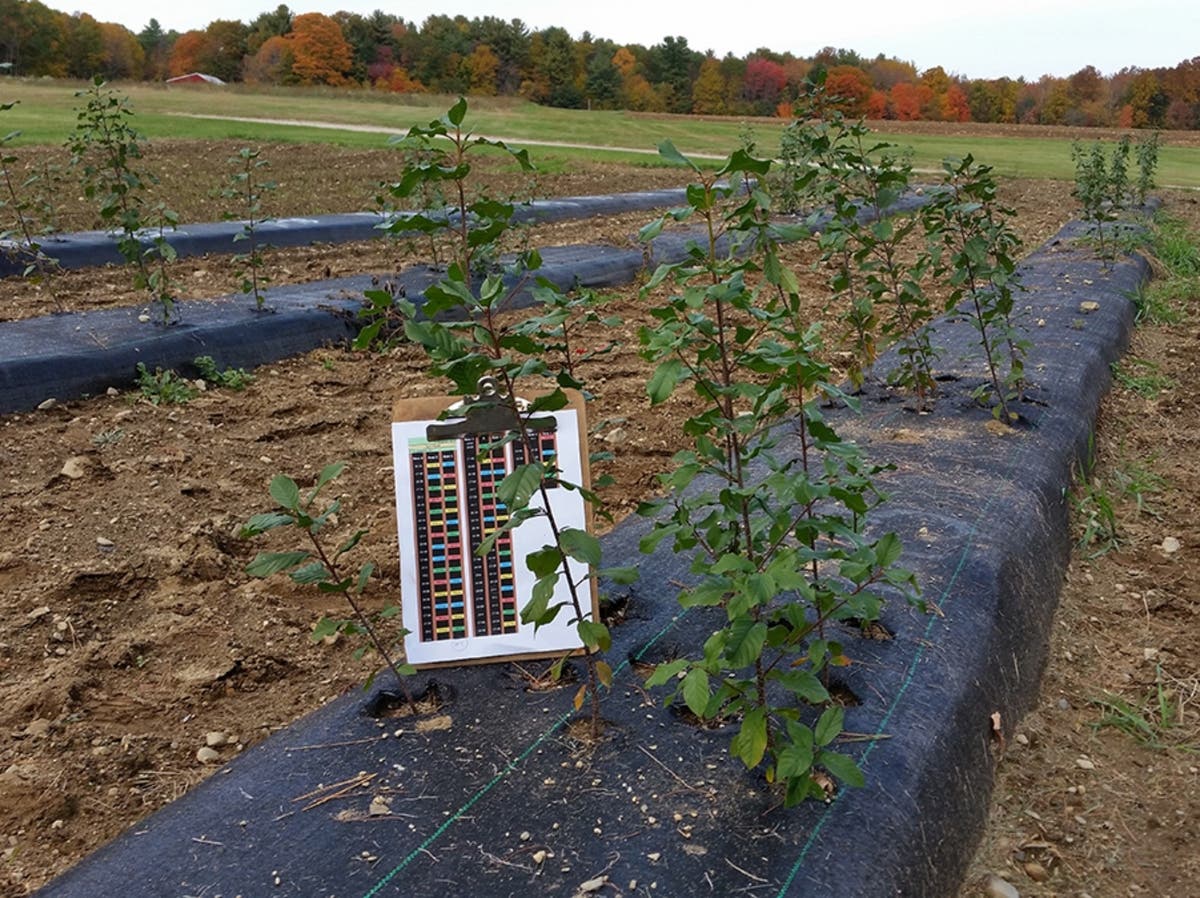
Gunn’s research builds on the work of Tom Lee, associate professor of natural resources and the environment. Lee and his research team recently found that the economically valuable eastern white pine thrives when the invasive glossy buckthorn shrub is actively managed in New Hampshire forests.
New Hampshire and New England were hit hard in 2016 by drought. Scientist Heidi Asbjornsen, associate professor of ecosystem ecology, has found that certain tree species in New Hampshire fared better at the height of the 2016 New England drought and were able to continue taking up water even when soils were very dry. Asbjornsen and her team are trying to understand the impacts of drought on New Hampshire’s forests, and the potential impacts on providing important ecosystem services to the state’s communities such as water resources; the production of timber, maple syrup, and other forest products; flood mitigation; and recreational opportunities.
Healthy soil is rich in organic matter, but scientists have yet to fully understand exactly how that organic matter is formed. Recently a team of scientists have uncovered evidence that microbial pathways – not plants – are the chief originator of the organic matter found in stable soil carbon pools. The new insight provides promise for designing agricultural systems that promote microbial communities to optimize soil organic matter formation. The research was conducted by Cynthia Kallenbach, former UNH graduate student now at Colorado State University, her advisor, Stuart Grandy, associate professor of natural resources, and Serita Frey, professor of natural resources.
Find out what's happening in Portsmouthfor free with the latest updates from Patch.
Submitted by Lori Wright.
Get more local news delivered straight to your inbox. Sign up for free Patch newsletters and alerts.

