Politics & Government
Hassan Speaks at 'Many Faces of Addiction' Conference
In address in Portsmouth before the New Hampshire Medical Society, governor outlined state's efforts to combat heroin, opioid crisis.


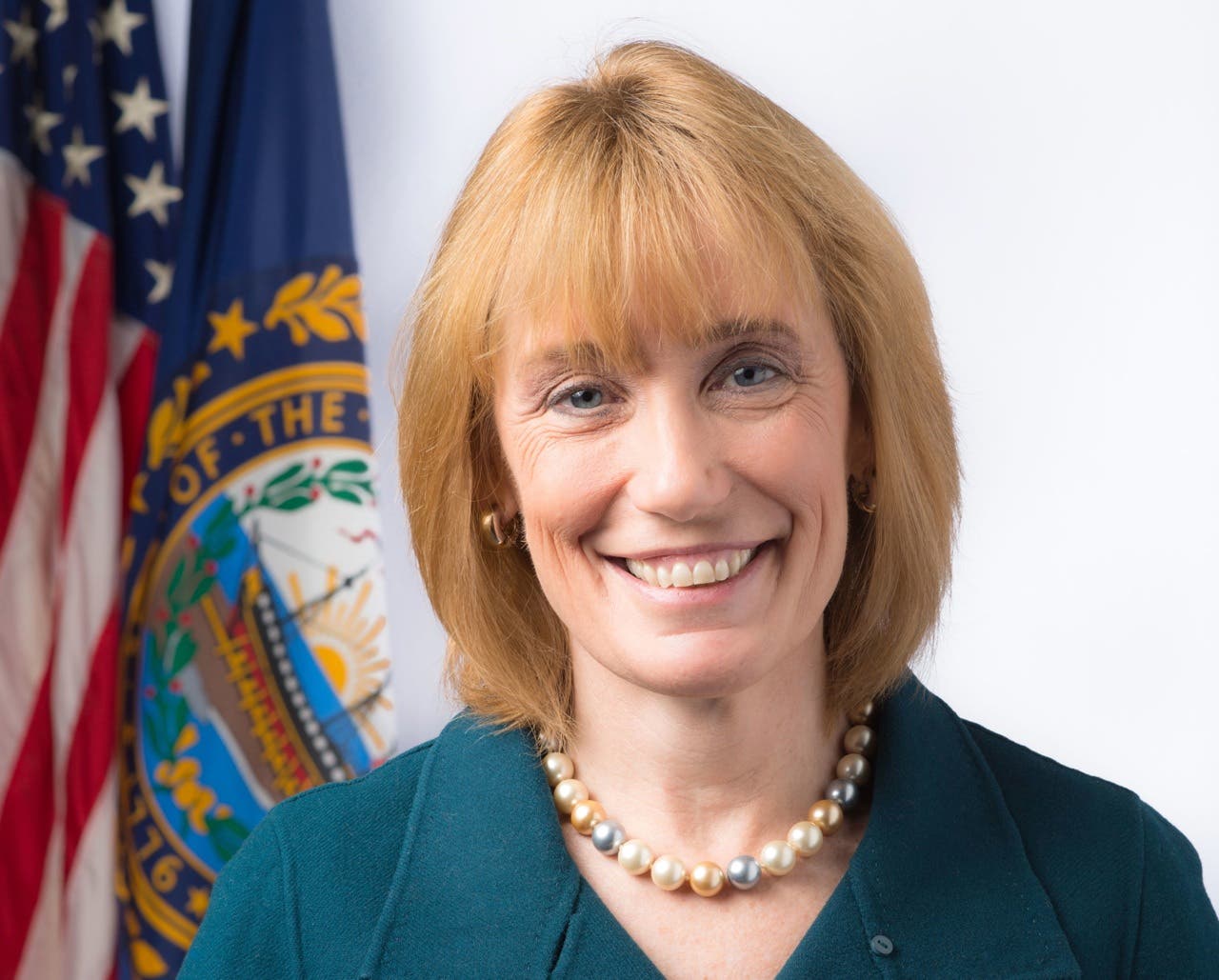
On Friday, Nov. 6, Gov. Maggie Hassan, D-Exeter, addressed the New Hampshire Medical Society Annual Scientific Conference “The Many Faces of Addiction - The Journey of Prevention: from Awareness to Best Practices” in Portsmouth, according to a press statement.
The Governor outlined the state’s efforts to combat the heroin and opioid crisis and save lives and discussed the need to continue efforts to develop stronger, more explicit and more up-to-date rules on the prescribing of opioids.
“We know that this crisis stems at least in part from the overuse, misuse, and abuse of addictive prescription opioids.,” Hassan said. “This is not to say that addiction always begins with prescriptions – nor to suggest that opioids cannot play an important role in pain management and our healthcare system. Rather, it is an important recognition of the very real role that addictive prescription opioids have played in this crisis.”
Find out what's happening in Portsmouthfor free with the latest updates from Patch.
Hassan applauded the Board of Medicine’s recent adoption of emergency rules to help stem the tide of opioid addiction, including requiring a detailed informed consent form and eliminating the reference to a statement that opioids aren’t addictive, and she thanked the New Hampshire Medical Society, other providers and patients for engaging in the process. The Governor also addressed the society’s concerns and committed to continue working together on permanent rules and additional reforms.
“I understand that the Medical Society was concerned about both the use of the emergency rules process and the content of our initial draft proposal,” Governor Hassan said. “And I also understand that I am asking for significant changes that are difficult to make. But that is not an excuse for inaction, and I will continue working with you as we develop permanent rules.”
Find out what's happening in Portsmouthfor free with the latest updates from Patch.
“I am also going to continue to push you to do hard things as we work to strengthen our efforts to combat this crisis,” the Governor said. “Because you are leaders in our state and we all have an important role to play in order to stem – and reverse – this tide.”
The full text of the Governor’s prepared remarks is below:
Thank you, Dr. Kolm, for the introduction, and everyone here for your commitment to the health and well-being of our people and for dedicating this year’s conference to the most pressing public health and safety challenge facing our state – the heroin and opioid crisis.
Across our state, people are dying in this epidemic – at least 258 of our family, friends and neighbors already this year. Hundreds more have overdosed, their lives saved only by the quick action of first responders, their family and friends, and of course, you, our medical providers.
Everywhere I go, I hear from people who have been affected by substance abuse. It touches people from all walks of life, and I know you in the medical community see this devastation firsthand.
This truly is an “all-hands-on-deck” moment for our state, and we must all work together, every single day, on a comprehensive approach in order to stem this tide – and to reverse it.
Our efforts to combat the crisis are ongoing, and we have taken a number of important steps.
Last month, we announced two grants to support law enforcement and other first responders on the front lines.
And in our fiscally responsible, budget compromise, we added two additional state police detectives to help combat the opioid crisis.
While we will continue to look for additional creative ways we can make more resources available to support law enforcement, we all agree that we cannot arrest our way out of this problem.
That is why we also continue our efforts to increase the safe and effective use of Narcan, a life-saving treatment that can reverse the effects of an opioid overdose.
We have already increased the safe and effective use of Narcan by our first responders and law enforcement officials.
And earlier this year, I signed bipartisan legislation that allows doctors to prescribe Narcan to the families and loved ones of those at risk of an overdose. To help facilitate access to Narcan as quickly as possible, we recently made thousands of Narcan kits available at community health centers across the state.
We must do everything that we can to save lives in the event of an overdose. And we have to stop the supply of these dangerous drugs entering our state. But it is absolutely critical that we address the demand side of the issue as well.
That is why our comprehensive approach must also focus on strengthening prevention, treatment and recovery efforts.
As part of those efforts, we increased funding for the Governor’s Commission on Alcohol and Drug Abuse Prevention, Treatment and Recovery in our fiscally responsible, budget compromise.
In addition, our prescription drug monitoring program is up and running, and we continue working to improve the program. Earlier this year, I signed bipartisan legislation that strengthens the program and facilitates data-sharing with other states.
Our bipartisan health care expansion program has helped thousands of Granite Staters access substance abuse and mental health services since coverage began last August. And reauthorizing this critical program as soon as possible is the single most effective step we can take to increase treatment capacity in our state.
Many of you have effectively advocated for expansion. I thank you for your efforts and ask that you continue to push for the reauthorization of this critical program.
To build on our efforts thus far, the legislature will be returning for a special session later this month to consider comprehensive substance abuse legislation, a great deal of which already has strong bipartisan support.
We must act quickly to give patients, providers, parents and law enforcement better tools to combat this epidemic. And I look forward to working with the legislature and dedicating our full attention to combating substance abuse and saving lives during the special session.
While each of these individual steps is important, we know that this crisis stems at least in part from the overuse, misuse, and abuse of addictive prescription opioids.
I saw this firsthand when I visited Phoenix House in Dublin last week. Many of the residents told me that their addiction began when they were prescribed opioids, often large doses for routine procedures such as having their wisdom teeth removed.
And during a visit to DEA’S New Hampshire headquarters earlier today, they explained how criminals know that prescribing rates in New Hampshire are outliers and target our state.
This is not to say that addiction always begins with prescriptions – nor to suggest that opioids cannot play an important role in pain management and our healthcare system.
Rather, it is an important recognition of the very real role that addictive prescription opioids have played in this crisis.
As you all know, in September, I called on the Board of Medicine to develop and adopt stronger, more explicit and more up-to-date rules on the prescribing of opioids.
And earlier this week, the board adopted important reforms, including requiring a detailed informed consent form and eliminating the reference to a statement that opioids aren’t addictive. I applaud the board’s courage for swiftly adopting these rules, and I thank all of you – as well as physicians and patients across the state – for engaging in the process.
I understand that the Medical Society was concerned about both the use of the emergency rules process and the content of our initial draft proposal.
And I also understand that I am asking for significant changes that are difficult to make. But that is not an excuse for inaction, and I will continue working with you as we develop permanent rules.
I am also going to continue to push you to do hard things as we work to strengthen our efforts to combat this crisis. Because you are leaders in our state and we all have an important role to play in order to stem – and reverse – this tide.
Our extremely talented medical community in New Hampshire is one of the reasons we are recognized as one of the healthiest states year after year.
We need you to be able to continue to effectively do your jobs. And no one wants to affect the ability of those with acute or chronic pain or illness to receive the medication they need.
But just as I saw at Phoenix House, we know that we can prevent addiction and save lives with stronger and updated prescribing practices. And I am confident that you will help us lead the way.
We will have to continue to fight together – each and every one of us, every single day – to build on our efforts to combat this crisis.
It is going to be difficult, and it will require our constant vigilance and perseverance. But we will be successful, because we are Granite Staters and we work together to do hard things.
And again I ask you and all physicians across our state to bring your expertise and a true sense of urgency to the table and help us stem this tide of addiction.
Thank you.
Get more local news delivered straight to your inbox. Sign up for free Patch newsletters and alerts.
