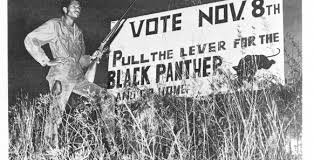
The guard stood watch at the corner of an old house, staring intently down the street, the familiar carbine resting comfortably in the crook of his arm. In another hour the sun would be up and he could move on with his day, a long shift at the bottling plant before grabbing a couple of beers and then early to bed. Back up at three o’clock, he’d be back in this spot – or across the street, he liked to mix it up – for another three-hour watch, to start another long day.
A car turned briefly onto the street, snapping him from a half-doze. The mild jolt of adrenaline sent shivers up his spine. Tightening his grip on the carbine, the weapon suddenly felt a little heavier to him. His heartbeat slowed, returning to normal as the vehicle’s driver executed a quick u-turn and sped off back the way it had come.
The guard suspected it had been a probe, checking to see if anyone was standing ready. They must have seen him. More importantly, he thought, they likely saw that he was armed.
Find out what's happening in Portsmouthfor free with the latest updates from Patch.
It was quiet in the pre-dawn light, so he jumped a little at the sound of footsteps close behind him. Glancing over his shoulder, he saw his neighbor was out grabbing the morning paper. The neighbor smiled briefly, nodding; the guard nodded back. Checking his wristwatch, it was almost time to go. He wanted to leave before his brother woke up. Yesterday’s argument had been particularly nasty.
The sun was fully up now, burning off the last of the morning’s mist, promising a warm day ahead. Opening the front door, careful to minimize any noise, he unloaded the carbine before resting it in a corner of the living room. Noise from the kitchen meant his mother was up already, making breakfast for him and his brother. Jimi Kenyatta took a deep breath and walked into the room.
Find out what's happening in Portsmouthfor free with the latest updates from Patch.
“You’ll be hungry,” his mother said, keeping her broad back to him as she stood facing the stove. Without looking at Jimi she pushed a cup of coffee his way and went back to cooking. It tasted good; he wondered if it would be worth it to stay. He also wondered if it was worth making conversation, deciding to err in favor of silence.
Sitting at the table, Jimi watched his mother. A strong, forceful woman, Shamoan Kenyatta was old before her time. Jimi couldn’t remember when she didn’t look old and tired, the lines on her face like trenches from a long lost battle with time, and circumstance. Worn down by years of working multiple jobs and raising two boys on her own, she said very little, preferring instead to issue a hard look that usually conveyed far more than words. Setting a plate down in front of him, she took a chair opposite and watched him eat as she sipped coffee.
“Workin’ today?” she asked, feigning indifference, after a few awkward minutes of silence. He nodded as he chewed. Looking up, he saw now that she was watching him closely. Averting his eyes, he shoveled his food quickly into his mouth, still hopeful that he would get away before his brother got up. Glancing once more at his watch, Jimi took a last swig from his cup and put his dishes in the sink. Turning to leave, he saw his brother standing in the doorway, blocking his exit.
“You goin’ to work?” Martin Kenyatta asked, not moving to let Jimi pass.
“Soon as you get out of the way,” Jimi replied, standing in the middle of the kitchen. Martin shrugged, moving over to the table and taking a seat. Shamoan was already putting a plate down for him when Jimi spoke to the room.
“I’m leaving now,” he said, readying himself for the battle he knew was coming, “and when I get home later, I better find that gun right where I left it.” Pausing only briefly, he added, “I’m pullin’ guard duty again in the morning.”
Shamoan was on her feet so fast the chair tumbled over behind her, the big woman leaning forward and placing both hands flat down on the table. Her eyes flared, her voice uneven. “Jimi boy,” she said, urgency causing her composure to slip, “this can’t go on. How much longer you think it’s gonna be, before we get a bomb in the mailbox, or another Molotov cocktail thrown on the porch? Stop this nonsense, and listen to me and your brother: This sentry business is tearing us apart.” The strain was clear on her haggard face.
Jimi deflated a little, his shoulders hunching slightly forward as his bead bowed, chin down and almost resting against his chest. Raising his hands, he wrapped them around his face, squeezing slightly, fingertips massaging his forehead. Without looking up, he spoke again, but this time his voice was angry and defiant.
“What would you have me do instead?” he hissed, lowering his hands to reveal a face set firmly, eyes bulging with rage. “They killed Medgar,” he continued, looking back and forth from his mother to his brother, one hand pointing vaguely, at the anonymous perpetrators. “They killed Charley Caldwell, and they blew poor George Metcalf to pieces.” He paused now, leveling his gaze on his brother. “For Christ’s sake, Martin – they killed your best friend! Beat him to death behind the dry cleaners!” Jimi threw his hands up, exasperated. “What would you have me do instead?” he repeated, his booming voice filling the room, fists clenched tightly by his sides as if ready to strike a blow in that very instant.
The silence that followed this outburst was deafening. Jimi’s mother still stood by the table, watching him. His brother had stopped eating and sat with hands on the table, holding his knife and fork vertically as he stared straight ahead, not saying anything. Unable to bear the tension, his mother finally broke the silence by setting her chair back upright and taking a seat. Pulling a pack of cigarettes from her pocket, she shook one loose and lit it, exhaling the smoke toward the ceiling and picking a bit of tobacco from the tip of her tongue, eying it briefly before flicking it away.
Finally, Martin set his utensils down and carefully pulled a napkin from his lap, slowly wiping the corners of his mouth before turning his gaze on his brother.
“How dare you?” he growled, voice low but aptly conveying his indignation. One elbow was up on the table now, his other hand wrapped around his thigh. “What happened to Hartmann is none of your goddamn business. He was a damn good man, Jimi – sure as Hell I’m not going to sit here and listen to you justify violence while you’re standing over his grave!”
The words came like a slap to Jimi, snapping his head up and causing him to take an involuntary step forward. His fists were raised now, at his chest, and he pounded them against his own flesh to emphasize his words. “My violence?” he bellowed, fists hard at work. “You’re gonna tell me that it’s my actions that got Hartmann beat to death?”
Shamoan was between them now, the big woman moving quickly, arms raised and outstretched to keep the two of them apart. “Baby,” she pleaded, looking at Jimi, “we’ve got to turn the other cheek, honey – show them we are better than that.” Her eyes were tearing up now as she watched her younger son, wanting more than anything for him to understand her fear, and her hope.
Jimi wasn’t having any of it. “Turn the other cheek, you say?” he shouted back at her, mockingly. “Why, so those bastards can smack the other side of our faces? Is that what you want for your children? Is that the price of peace – that only we must be willing to die?”
He waited for a reply, looking from one to the other of them, and when no retort was forthcoming he continued. “Mama, I love you,” he said, lowering his voice, pleading. He looked at his brother. “Martin, I love you too,” he said, “but it’s time you all realized what’s going on around here—”
“I don’t need you to tell me what’s happening here,” his mother interrupted, her own voice raising with her temper. “It was going on long before you came into the world, youngster. But God willing maybe – just maybe – we can show them enough love to change this unjust world – to help them see that it’s time for a change.”
Jimi stared back at his mother, incredulous. “There’s just one problem with that,” he said, raising an index finger out for both of them to see, meeting his mother’s gaze with an equal intensity. Softening a little, he carefully – but firmly – took her hands from his shoulders, speaking in a tone that begged for understanding. “They don’t think we’re human beings,” he said, with finality. “We’re nothing but dogs to them – animals to be kicked and beaten and shot and bombed, until we cower back into our little holes in the ground, and keep on lettin’ them walk over us.”
Stepping to the side, he spoke directly to his brother now. “It’s time for a change, alright,” he said. “It’s time they understood that we’ve got guns too – we can make bombs too.”
Walking to the window, he looked out at a point somewhere in the distance, his hands buried deep in his pockets. “The only thing they’ll ever understand is this: If you shoot at my home, I will shoot back; if you bomb one of our churches, we’ll bomb one of yours,” he said. Turning back to face the room, he saw the horror in their faces. “That’s all they understand,” he concluded, stiff index finger placed firmly in the middle of his chest now, “and if there’s to be more trouble – and you can bet there will be – let it be us causing it for a change.”
Shamoan Kenyatta walked slowly, defeated, toward her youngest son now, arms reaching out, beckoning him to embrace her. “Jimi, don’t you want peace?” she asked, head cocked questioningly to the side, stopping before she reached him. “Don’t you want us to have peace?” she asked, gesturing at herself, Martin, the empty room and the world outside of it. Jimi’s brow furrowed, confusion milling with anger on a face that suddenly looked so many years beyond its actual age.
“Is this peace, Mama?” he asked, tears gathering at the corner’s of his eyes, lump growing in his throat, choking him, reducing his words to little more than a harsh whisper, looking past her at Martin, then back to his mother. “None, but the worst jobs – if we’re lucky? No say in how we live our lives? Police kicking in our doors, beating our people in the streets – just for asking that we be treated with some measure of respect – that we may maintain some measure of our dignity?”
Jimi was shaking his head now, looking at the floor as he trembled with rage. “I can’t speak for you, Mama,” he said, impatiently wiping a tear from his cheek, “but if this is peace, at what price have we purchased it?” Again he stared at his brother, defiant. “Whatever it is, it’s not worth it to me.”
Martin had had enough. Coming to the center of the room, he stood squarely before his brother, chest pushed out, arms folded across it. “Well, aren’t you a man all of a sudden,” he snapped, patronizingly. Jimi didn’t miss a beat. Raising his chin, he looked his brother straight in the eye.
“Well it’s about time someone in this house started actin’ like one,” he said.
Martin lunged forward, pushing past Shamoan and grabbing Jimi by the throat. Shoving him hard against the wall, he raised his right fist high behind his ear, ready to strike. Jimi stood motionless, the tears coming uncontrollably now. Head up, arms by his side, he was ready to receive the blow.
“How is it, you can’t get this angry at them,” he said, baring his teeth as he forced the words past thinning lips, head nodding toward the brutal world that waited outside.
Shamoan was between them again now, pushing Martin back away and throwing her arms around Jimi’s trembling shoulders. Sobbing, she held him tightly, as his eyes bore holes in Martin’s soul. Turning away, Martin sat, defeated, in a chair, slumped forward, head in his hands. After a moment, Jimi could see that he, too, was crying. They stayed that way for what seemed like ages.
The phone rang, pulling them back to reality. Martin didn’t move. Shamoan looked around, wiping a big forearm across her face as she walked slowly over to answer it. Muttering a greeting, she was cut short by the excited voice at the other end. Looking at Jimi, she hung up the phone, eyes wide with fright.
“Jimi,” she said, unable to go on; her chest tightened as her heart raced uncontrollably. Looking away, a hand went to her midsection, trying to catch her breath as fear overwhelmed her.
“Jimi,” she said again, gathering the strength to speak. “They’re at the school, where them young girls went to protest today,” she said, lips trembling, looking at Martin helplessly – knowing already she was too late to stop what would come. “They’re beatin’ ‘em, Jimi – with clubs, and settin’ dogs on ‘em,” she said, looking at him again. Seeing his jaw muscles clench, the blood filling his eyes, she fell to her knees, grabbing his shirttails, trying to pull him to the ground with her. He reached down and forced her hands away, but she wrapped her arms around his knees instead, sobbing loudly.
But he was too strong for her. Stepping out of her grasp, he ran toward the door, grabbing the carbine from the corner where it rested, swiping the magazine from the windowsill and loading the weapon as he ran down the front steps and out into the street. Shamoan lay on the floor, staring after him. Martin sat motionless, head still in his hands. In the distance, they heard the gunfire begin.
This story originally appeared in the Spring/Summer 2015 issue of River Poets Journal. It was inspired by two works of non-fiction: The Deacons for Defense: Armed Resistance and the Civil Rights Movement by Lance Hill and We Will Shoot Back: Armed Resistance in the Mississippi Freedom Movement by Okinyele Omowale Umoja.